
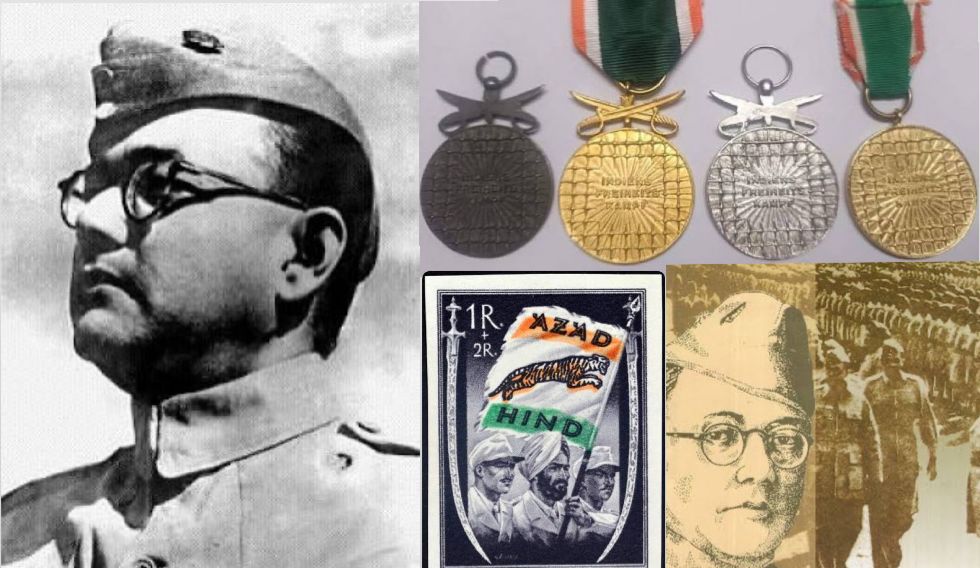
The Indian National Army (INA) led by Netaji Subhas Chandra Bose had its own system of medals and honours instituted by the provisional Azad Hind Government during World War II to recognise the bravery and service of its soldiers and supporters.
Beyond its military campaigns, Netaji’s government sought to instil a sense of national pride and identity among its soldiers with its own system of medals and honours recognising valour, leadership, sacrifice, and service to the cause of India’s freedom.
These medals were symbolic of loyalty to the cause of Indian independence and were meant to build identity, morale and honour among INA ranks.
Unlike the British military honours system, which recognised service within an imperial structure, the Azad Hind decorations symbolised a struggle for liberation — celebrating not just battlefield deeds but also devotion to the idea of a free India.
These awards formed part of the symbolic nation-building efforts of India’s first Provisional Government, even before actual independence.
The Order of Azad Hind: A Hierarchy of Honour
The Azad Hind Government established several medals and decorations, each with its own meaning and criteria. While complete award lists were never comprehensively published at the time, historians and collectors have pieced together the known structure and recipients through archival research and surviving artefacts.
Sher-e-Hind (Lion of India) — The Highest Honour
The Sher-e-Hind — literally “Tiger (or Lion) of India” — was the highest military decoration instituted by the Azad Hind Government. It honourably recognised outstanding leadership and immense personal bravery in battle. (Wikipedia)
It was conferred with swords for exceptional battlefield gallantry. Could also be awarded without swords for extraordinary leadership or service. Extremely rare — only a handful were ever issued.
Known Recipients included Captain Kunwal Singh — documented as one of the few officers to receive this top honour.
Sardar-e-Jung (Leader of Battle) — Second Highest Military Honour
The medal literally meaning “Leader in Battle,” this decoration honoured bravery and leadership on the battlefield — ranking just below Sher-e-Hind.
This could be awarded with swords for combat valour or without swords for notable leadership and was considered a 1st-Class Star in the Azad Hind hierarchy.
Notable Recipients included Colonel Shaukat Hayat Malik, who was awarded for the capture of Moirang, where INA troops raised the Indian tricolour on Indian soil.
Captain Shangara Singh Mann was also awarded the medal and recognised for bravery and leadership and also later received the Vir-e-Hind medal.
Lieutenant Kunwar Balwant Singh also received the Sardar-e-Jung and was honoured for actions at Modak, challenging British forces.
Vir-e-Hind (Warrior of India) — Bravery and Service
The Vir-e-Hind or “Warrior of India” was recognised distinguished gallantry and devotion to duty. It was the third-in-order decoration in the INA awards system.
This was awarded with swords for acts of bravery in combat and other times awarded without swords for meritorious non-combat service.
Known Recipient include Captain Shangara Singh Mann — one of the few documented INA officers to receive this honour, alongside his Sardar-e-Jung.
Shahid-e-Bharat (Martyr of India) — Honouring the Fallen
The Shahid-e-Bharat medal was a solemn memorial decoration to honour soldiers who laid down their lives in the fight for India’s freedom.
This medal was presented posthumously and issued in gold or silver, reflecting the magnitude of sacrifice. It was awarded only with swords — a mark of battlefield sacrifice.
Tamgha-e-Bahaduron (Medal of the Soldiers) — Valor and Commitment
The Tamgha-e-Bahaduron (“Medal of Soldiers”) was among the most widely conferred decorations, recognising bravery and faithful service by the rank-and-file soldiers of the INA.
This medal could be awarded with swords for battlefield gallantry, or without swords for service duty. It represented the INA’s recognition of courage among common soldiers and non-commissioned officers.
Beyond the Battlefield: Service and Civilian Recognition
In addition to the awards for battlefield bravery and sacrifice, Netaji’s government recognised non-combat contributions too. In the provisional government’s wider system (especially in Germany), civil medals such as Sevak-e-Hind were instituted to honour civilian leaders and supporters, including those who donated wealth or organised resources for INA operations.
Who Received These Honours?
Documented records of INA decorations are incomplete due to the war’s disruptions and the limited archival preservation. However, several officers and soldiers have been confirmed as recipients:
Captain Kunwal Singh — Sher-e-Hind recipient for leadership on the battlefield.
Colonel Shaukat Hayat Malik — honoured with Sardar-e-Jung for capturing Moirang.
Captain Shangara Singh Mann — awarded both Sardar-e-Jung and Vir-e-Hind for combat distinction.
Lieutenant Kunwar Balwant Singh — Sardar-e-Jung honouree.
Many other ordinary INA soldiers were awarded Tamgha-e-Bahaduron for their bravery and service, though detailed lists have not survived.
Some historical records also highlight contributions from soldiers of different backgrounds who were decorated for bravery — including Muslim soldiers recognised under INA gallantry categories — though exact medal identities in those lists may vary.
Legacy of INA Medals
Though the Azad Hind honours system ceased with the end of World War II and the dissolution of the Provisional Government, these medals remain powerful cultural artefacts.
They symbolise the military spirit and unity of Indians fighting for freedom. Rare originals are prized by collectors and museums and have occasionally been repatriated to India from overseas.
These medals resonate today as reminders of Netaji’s vision of a sovereign India built on bravery, sacrifice, and self-belief.
Netaji Subhas Chandra Bose’s approach to honours and decorations was not mere mimicry of foreign military traditions. It was, instead, a deliberate effort to build a new ethos of valour — one that tied individual bravery to collective liberation.
The Sher-e-Hind, Sardar-e-Jung, Vir-e-Hind, Shahid-e-Bharat, and Tamgha-e-Bahaduron — each tells a story of courage, leadership, sacrifice, and service. Together, they form a medal roll of India’s unresolved battle for freedom, echoing long after the guns fell silent.