

















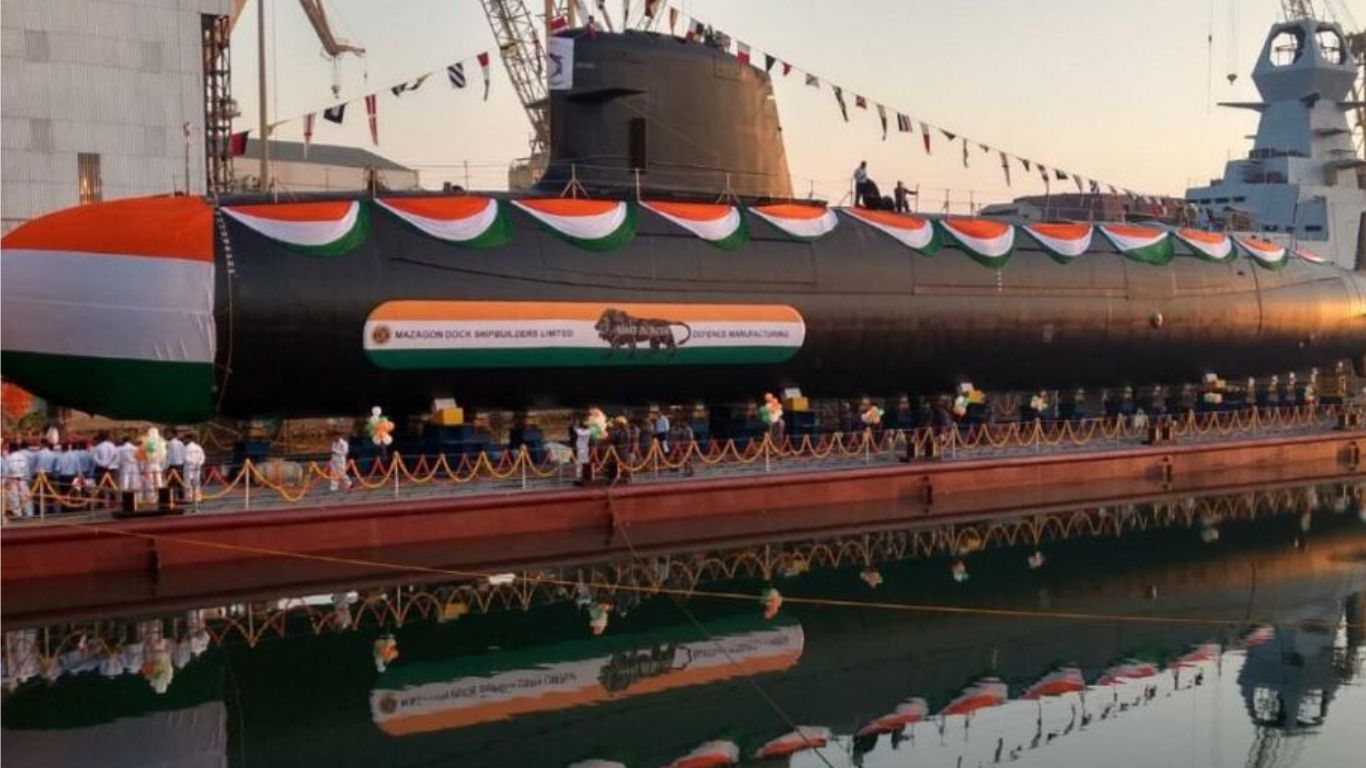
The fourth and final submarine of the Arihant-class nuclear-powered ballistic missile fleet, S4*, which Defence Minister Rajnath Singh launched on October 16 last year, is likely to be named INS Arisudan. Notably, Arihant, meaning “destroyer of enemies,” serves as the common nomenclature for India’s nuclear submarines.
According to media sources, the Indian Navy’s ship-naming committee will first propose the name, after which the Defence Ministry will clear it, and finally, the President of India will grant formal approval. Consequently, INS Arisudan is expected to enter service in 2027.
Meanwhile, INS Aridhaman, the predecessor to S4*, is likely to be commissioned in the first half of 2026. At the same time, India has accelerated work on two indigenous nuclear-powered, conventionally armed submarines (SSNs) after the Narendra Modi government approved the P77 attack submarine project on October 9, 2024.
Also Read: India Takes Charge of the Ocean Depths: Six Indigenous Nuclear Submarines to Enhance Global Defence
In parallel, India expects to lease an Akula-class SSN from Russia by 2028. Additionally, Moscow has offered to lease another blue-water submarine ahead of Russian President Vladimir Putin’s scheduled visit to India on December 5, 2025.
Importantly, the underwater leg of the nuclear triad remains the most credible component of India’s deterrence posture. Submarines ensure assured second-strike capability, especially for a country like India that adheres to a no-first-use nuclear doctrine. Although China also professes a no-first-use policy, Pakistan—India’s principal regional adversary—retains a first-use nuclear posture.
Currently, INS Arihant carries K-15 nuclear missiles with a range of 750 km. However, the remaining submarines in the class, which displace around 1,000 tonnes more than the lead boat, will carry K-4 missiles with a 3,500 km range.Presently, the DRDO and Strategic Forces Command continue test trials of the K-4 system. Ultimately, India requires submarines with virtually unlimited operational range to conduct sustained deterrence and sea-denial patrols across the Indo-Pacific.