
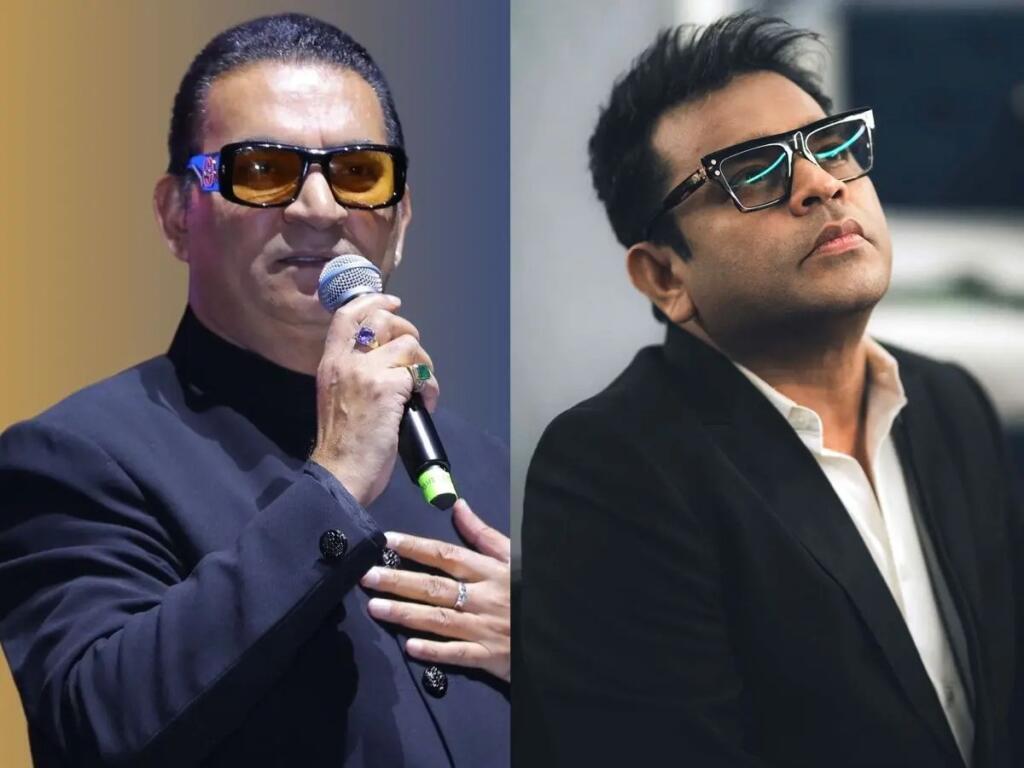
In a fiery exchange that has stirred the Indian music and film industry, veteran playback singer Abhijeet Bhattacharya has publicly criticized celebrated composer AR Rahman, accusing him of being responsible for the decline in job opportunities for traditional musicians. Abhijeet Bhattacharya’s comments come in response to a recent interview in which Rahman spoke about changes in the Bollywood music landscape and his own professional experiences, remarks that have since drawn both support and backlash.
Abhijeet Bhattacharya’s outspoken stance underscores a deeper concern among some artists about how technological advancements and evolving production methods are reshaping the industry. According to Abhijeet Bhattacharya, musicians who once relied on live sessions and instrumental performances for films are now finding themselves “sitting at home” without work, and he places much of this shift at the feet of AR Rahman’s influence.
The controversy began when AR Rahman spoke in an interview about the challenges he has faced in recent years, including limited work offers in Hindi cinema and broader industry changes. Rahman’s comments touched on evolving power dynamics and creative influences in the industry, which sparked a wide-ranging online debate among fans, music professionals, and commentators. Some defended Rahman’s perspective, while others took the opportunity to critique him on various fronts.
Abhijeet Bhattacharya amplified this debate by sharply targeting Rahman’s approach to music production. In his remarks to ANI, Abhijeet Bhattacharya argued that Rahman’s embrace of technological tools and digital composition has encouraged filmmakers and producers to rely less on live musicians. He claimed that Rahman sent an implicit message that “no one needs musicians,” suggesting that everything could be created “on a laptop.” For Abhijeet Bhattacharya, this trend has contributed directly to musicians losing work and being relegated to inactivity.
These comments from Abhijeet Bhattacharya reflect a longstanding debate in creative fields worldwide: the tension between tradition and technological innovation. Many veteran artists have expressed concern that new tools, including computer-based production and even artificial intelligence, are displacing human performers who spent years honing their craft. Abhijeet Bhattacharya’s critique taps into that anxiety, emphasizing the human cost of creative evolution.
Supporters of Abhijeet Bhattacharya argue that his concerns are rooted in a genuine desire to protect the livelihoods and artistic contributions of session musicians and instrumentalists. For decades, these musicians played an integral role in shaping the soundtracks of Bollywood and regional cinema, bringing depth and emotion to recordings that resonated with audiences. Abhijeet Bhattacharya’s vocal condemnation of Rahman highlights an emotional plea for recognition and continuity of that collaborative tradition.
However, critics of Abhijeet Bhattacharya’s statement believe the singer’s position oversimplifies a complex issue. They note that technological integration in music has been unfolding for decades and is not solely attributable to any single composer. AR Rahman, a globally respected musician with multiple awards to his name, has been credited with blending classical textures with contemporary sensibilities, often championing creative experimentation. These defenders argue that attributing job loss solely to Rahman neglects broader industry economics and audience preferences.
Moreover, Rahman’s supporters highlight that his body of work continues to involve large collaborative efforts, including orchestral sessions, live instrument recordings, and mentorship of emerging talent. Rahman has also addressed some of the controversy directly, clarifying that his intentions were not to demean musicians or diminish their roles. In statements following the backlash, he emphasized his deep connection to Indian musical traditions and the cultural roots that inform his compositions.
Despite this, Abhijeet Bhattacharya remained undeterred, reiterating his belief that the industry must do more to value and preserve opportunities for traditional musicians. He lamented that many instrument players, once fixtures in recording studios and film sessions, are now sidelined in favor of digital and synthesized soundscapes. For Abhijeet Bhattacharya, this is not merely a stylistic shift but a socio-economic issue that impacts the livelihoods of countless artists.
The broader reaction to this exchange has been mixed. Social media platforms and entertainment forums have seen impassioned debates, with some backing Abhijeet Bhattacharya’s concerns about preserving musical craftsmanship, while others defend Rahman’s legacy and evolution as an artist. Viewers and industry professionals alike have weighed in, reflecting diverse opinions on the direction of music and the balance between innovation and tradition.
Abhijeet Bhattacharya’s comments come at a time when the music industry globally is grappling with similar conversations about technology’s role in creative production. The rise of digital audio workstations, sample libraries, and algorithmic composition tools has transformed workflows and raised questions about authenticity, employment, and artistic identity. In this context, the Abhijeet Bhattacharya versus AR Rahman debate embodies a cultural moment where tradition and progress are in tension.
Ultimately, the clash between Abhijeet Bhattacharya and AR Rahman highlights the complexities surrounding contemporary music production. While Abhijeet Bhattacharya’s critique focuses on the potential downsides of technological adoption, others see opportunity for new forms of expression and collaboration. The dialogue sparked by these comments underscores a vital point: the future of music will likely depend on how the industry navigates the interplay between honoring heritage and embracing innovation.
As the discussion continues, both Abhijeet Bhattacharya and AR Rahman remain central figures in an ongoing cultural conversation about art, legacy, and the evolving identity of music in the 21st century.