


















India has taken a significant step towards strengthening its air defence capabilities with progress on a new long-range, indigenous air defence programme known as Project Kusha.
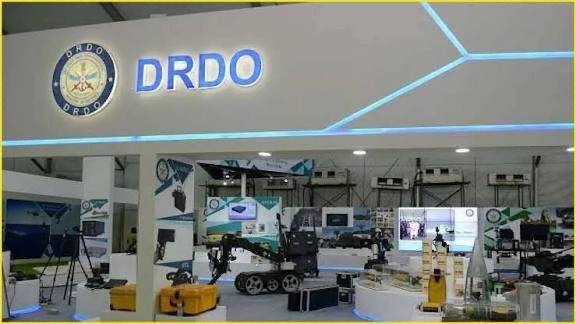
The system is being developed by the Defence Research and Development Organisation (DRDO), and is aimed at creating a layered aerial shield that could match or potentially surpass the capabilities of Russia’s S-400 missile defence system, said reports.
DRDO officials have described Project Kusha as a comprehensive protective shield for the country, drawing inspiration from the porcupine, an animal that defends itself through a ring of sharp spines.
Similarly, the project is designed to provide India with an all-round, multi-layered air defence cover capable of neutralising hostile threats over long distances.
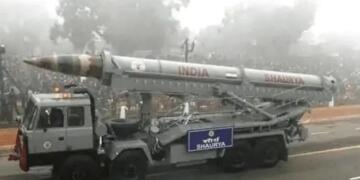
At the core of Project Kusha is a family of three interceptor missiles — M1, M2 and M3 — each operating at different ranges and altitudes.
Together, they are intended to form a robust, layered air defence network capable of countering enemy aircraft, cruise missiles and other airborne threats. The programme places strong emphasis on building advanced air defence technology domestically.
The M1 interceptor, the first layer of the system, is designed to engage targets at a range of around 150 kilometres. This positions it ahead of several existing medium-range air defence systems globally.
The missile is intended to enable early interception of threats at a safe distance from critical assets, with speed and precision as its key attributes.
The M2 interceptor is planned as the backbone of Project Kusha. With an expected range of approximately 250 kilometres, it falls into the long-range air defence category.
It is designed to counter fast-moving, high-altitude targets and is viewed by military planners as the system’s core strength.
The most advanced component of the programme is the M3 interceptor, which has a planned operational range of 350 kilometres.
Development efforts are ongoing to further enhance its capabilities, and future upgrades could extend its reach even further. The M3 is expected to provide the ability to engage threats deep inside hostile airspace.
According to defence scientists, the first trial of the M3 interceptor is expected by 2028. The extended development timeline allows for detailed work on propulsion, guidance accuracy and radar integration, with engineers focusing on refining each subsystem before moving to live testing.
Project Kusha is seen as a major milestone in India’s push to secure its airspace using homegrown technology. The layered air defence shield is expected to offer wide coverage and strong deterrence, reflecting a long-term strategy to enhance national security through indigenous innovation.