
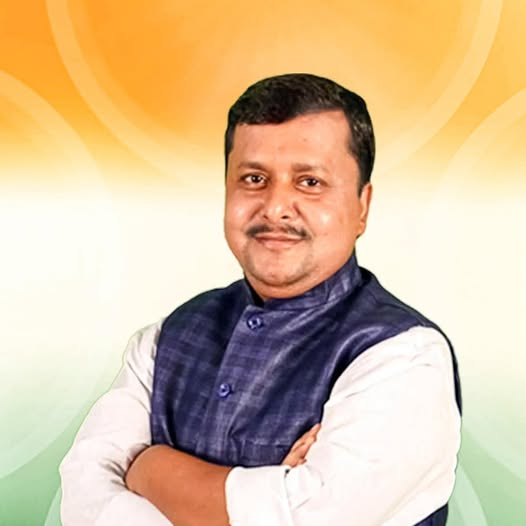
The Bharatiya Janata Party is on the brink of a significant organizational transformation as its working president, Nitin Navin, prepares to file his nomination for the post of BJP national president. This development has generated widespread discussion within political circles because few had anticipated such a move. The decision is being viewed as a calculated and bold step, reflecting a leadership style associated with Prime Minister Narendra Modi, who has often surprised observers with decisive and unconventional choices. Just as Modi’s selection of Nitin Navin has startled many, expectations are high that Navin’s own team and approach will bring further surprises.R
Rise of Nitin Navin to the top post has altered assumptions about continuity and predictability within the party. For years, political analysts speculated about familiar faces and senior leaders as natural contenders for the presidency. Navin’s nomination has disrupted that narrative and signaled a clear intent to reshape the party’s organizational structure. According to party insiders, this change is not symbolic but substantive, with a comprehensive overhaul expected across all levels of the organization.
It is widely believed that a complete restructuring of the BJP’s internal setup is imminent. From the highest echelons to grassroots levels, changes are expected to be sweeping. The phrase circulating within the party is that the entire house will be rearranged, indicating that no level of leadership will remain untouched. This signals a shift toward performance based evaluation rather than seniority or longevity in office. Leaders who have enjoyed comfortable positions within the organization for extended periods may find themselves reassigned to the role of ordinary workers, reinforcing the principle that positions are earned through active contribution rather than entitlement.
One of the most notable aspects of the anticipated reorganization is the emphasis on bringing new leaders into the central team. Fresh faces are likely to be elevated to key roles, reflecting the leadership’s desire to inject new energy and ideas into the party. This approach aligns with the BJP’s broader narrative of dynamism and renewal, especially as it seeks to remain electorally dominant in a rapidly changing political environment. Younger leaders and those with proven organizational skills are expected to benefit from this shift. Shri Nitin Navin is the paradigm for the moment.
Currently, the BJP has six national general secretaries, a powerful group that plays a crucial role in shaping party strategy and coordination. Under the new leadership, significant changes are expected in this lineup. Sunil Bansal is widely expected to continue as national general secretary, reflecting confidence in his organizational capabilities and past performance. Vinod Tawde may also retain his position, although this is not yet certain. Apart from these possible continuities, the rest of the general secretaries are expected to be replaced, signaling a decisive break from the existing structure.
The anticipated changes are not limited to organizational roles alone. The party’s media team is also expected to undergo a complete revamp. Communication has become a central pillar of modern politics, and the BJP is known for its strong media strategy. Under leadership of Nitin Navin, new spokespersons may be appointed, bringing fresh voices and perspectives to represent the party’s positions. This move is likely aimed at sharpening the party’s messaging and ensuring that it resonates effectively with diverse audiences across the country.
Party sources suggest that the announcement of the new team will follow swiftly once Nitin Navin formally assumes the presidency. The sense within the organization is that the team has already been prepared and that only the formal transition remains. This readiness underscores the seriousness with which the leadership is approaching the change, indicating careful planning rather than ad hoc decision making.
Despite the scope of the changes, Nitin Navin will not be starting from scratch. He will be working with a team entrusted to him by Prime Minister Narendra Modi and Home Minister Amit Shah, two leaders who have played a decisive role in shaping the BJP’s modern identity. Their continued influence ensures strategic continuity even as organizational renewal takes place. Navin’s challenge will be to balance innovation with stability, implementing reforms while maintaining the party’s ideological coherence and electoral focus.
As the BJP prepares to enter this new phase, attention will naturally turn to how Nitin Navin defines his leadership style. Observers are keen to see whether he will assert himself quickly through bold decisions or adopt a more consultative approach in the initial phase. What is clear, however, is that expectations are high and the party is poised for change.
The coming weeks will reveal how effectively the new president translates intent into action. If the anticipated restructuring unfolds as expected, Nitin Navin’s tenure could mark a decisive moment in the BJP’s organizational history. His leadership will be closely watched not only by party members but also by political opponents and analysts who recognize that internal strength often determines electoral success. The BJP now stands at the threshold of renewal, with all eyes on how its new president steps into the role.