



















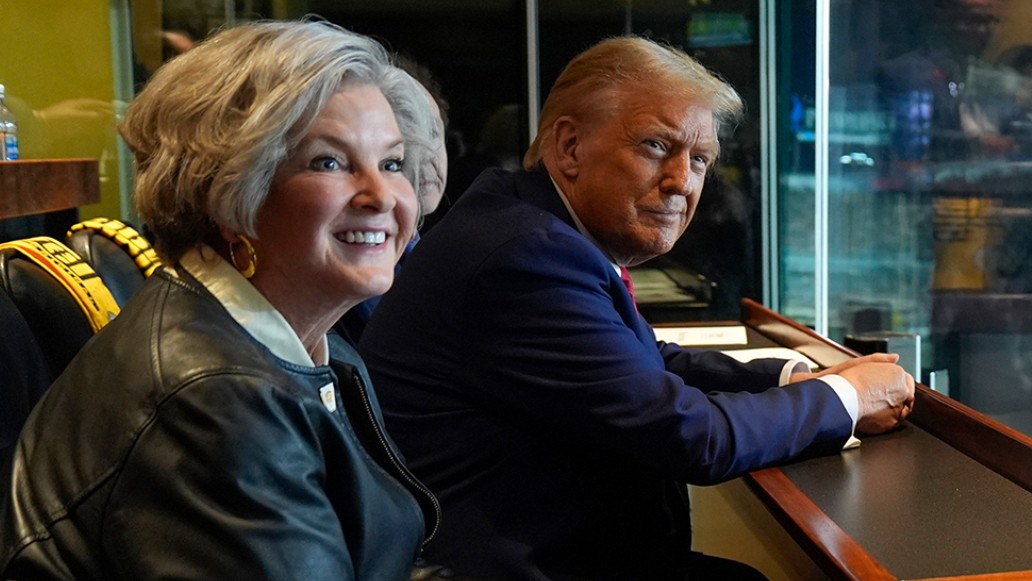
White House Chief of Staff Susie Wiles made a series of unusually candid and occasionally scathing remarks about President Donald Trump’s inner circle, describing Elon Musk as an “avowed” ketamine user and branding Vice President JD Vance a “conspiracy theorist,” according to interviews she gave to Vanity Fair.
The comments, published Tuesday, immediately sent ripples through Washington, forcing the White House into damage-control mode as it sought to downplay what Wiles later described as a “disingenuously framed hit piece” that ignored “significant context.”
White House Press Secretary Karoline Leavitt publicly backed Wiles, insisting that Trump “has no greater or more loyal advisor than Susie.”
Among the most explosive claims was Wiles’ description of Musk — the Tesla chief executive and a former Trump ally as an “avowed” ketamine user.
Recalling Musk’s erratic online behaviour, she said, “I think that’s when he’s microdosing.” Wiles later clarified that she did not have first-hand knowledge of any drug use.
Musk and Tesla did not immediately respond. Earlier this year, Musk denied allegations in a New York Times report suggesting extensive drug use, saying he had tried ketamine years ago under prescription but had not used it since.
Wiles also portrayed Musk as a difficult and unpredictable figure within the administration. “He is a complete solo actor,” she said. “The challenge with Elon is keeping up with him.”
Their relationship soured sharply after Musk led the Department of Government Efficiency’s aggressive campaign to shrink the federal workforce, including the abrupt closure of programmes under the US Agency for International Development — some of which Trump wanted spared.
“Elon’s attitude is you have to get it done fast,” Wiles said. “And so with that attitude, you’re going to break some china.” Still, she added, “No rational person could think the USAID process was a good one. Nobody.”
Despite their fallout — which included Musk threatening to launch a third political party — relations appear to be thawing. Musk attended a White House dinner for the Saudi crown prince last month and has reportedly resumed funding Republican campaigns ahead of the 2026 midterms.
Wiles’ interview also took aim at Vice President JD Vance, whose political evolution she described as opportunistic. “His conversion came when he was running for the Senate. And I think his conversion was a little bit more, sort of political,” she said.
Vance, who once criticised Trump before embracing the MAGA agenda, defended his shift, telling Vanity Fair, “I realised that I actually liked him, I thought he was doing a lot of good things. And I thought that he was fundamentally the right person to save the country.”
Another target of Wiles’ criticism was Attorney General Pam Bondi, particularly her handling of the much-anticipated Jeffrey Epstein files. Bondi’s release of binders labelled “The Epstein Files: Phase 1” earlier this year disappointed Trump supporters when the documents contained no new information.
“First she gave them binders full of nothingness. And then she said that the witness list, or the client list, was on her desk. There is no client list, and it sure as hell wasn’t on her desk,” Wiles said.
Wiles also revealed that she had read the Epstein file herself, stating that Trump’s name appears in it — though not, she emphasised, in any criminal context.
“And we know he’s in the file. And he’s not in the file doing anything awful,” she said.
Perhaps most strikingly, Wiles acknowledged that investigations targeting some of Trump’s critics amounted to political retribution, describing them as “score settling.”
She said she had urged the president to limit retaliation to the first three months of his term. “We have a loose agreement that the score settling will end before the first 90 days are over,” she said.
Later, however, she softened that stance. “I don’t think he’s on a retribution tour,” Wiles said, adding that while retaliation might appear to be at play at times, “Who would blame him? Not me.”
The interview also shed light on internal chaos surrounding Trump’s reciprocal tariffs — a flagship economic policy that rattled markets earlier this year. Wiles described the rollout as “so much thinking out loud,” acknowledging “huge disagreement” among advisers and calling the process “more painful than I expected.”
As Trump’s approval ratings slide and voters express growing unease over economic policy, Wiles’ frank remarks have reopened questions about discipline, loyalty, and discord at the highest levels of the administration — questions the White House had hoped were long settled.





