














At a time when Bangladesh is grappling with deep political unrest, economic stress, and street-level instability, a section of its student leadership appears to have chosen provocation over prudence.
A viral statement attributed to Bangladeshi student leader Mussadiq Ali Inbe Mohammad has triggered outrage across social media, not for its strategic insight, but for its sheer disconnect from economic and geopolitical reality.
In the video widely circulated online, Mussadiq Ali, a student of the Bengali Department at Dhaka University (session 2021–22) is heard claiming that “Indians will starve to death if money stops going from Bangladesh,” accompanied by threats that Bangladesh could “choke” India by halting trade and financial flows.
The statement, now being amplified by online nationalist accounts, has drawn sharp criticism for its ignorance of economic facts and its reckless escalation of rhetoric against India.
Indian users on X lashed out at Mussadiq Ali as one user commented under his video post, “Beggars are not choosers,” while another said, “If imagination paid taxes, Bangbladesh would have been a superpower by now.”
Some even went as far to attack his appearance following his statement as one user wrote, “Look at his face, he is starving and talking about the fourth largest economy.”
Another said, “Bangladesh is a ‘delulu land’ and the person saying all this is himself malnourished.”
The backlash extended to Instagram as well, where one user mocked the claim by writing, “First pay the $500 million electricity bill to Adani.”
To begin with, the claim itself collapses under the most basic scrutiny. India today is the world’s fourth-largest economy, with a GDP exceeding $3.5 trillion, diversified global trade partners, massive foreign exchange reserves, and domestic consumption that drives growth internally. To suggest that India’s survival hinges on financial flows from Bangladesh is not merely incorrect — it is economically illiterate.
Ironically, this chest-thumping rhetoric comes at a moment when Bangladesh is facing one of its most turbulent periods in recent history. Prolonged political agitation, frequent shutdowns, pressure on foreign investment, declining garment exports, and rising inflation have placed the country under visible strain.
International observers have repeatedly flagged concerns about stability, governance, and investor confidence. In such a scenario, issuing threats to a far larger and more stable neighbour appears less like strategy and more like desperation disguised as nationalism.
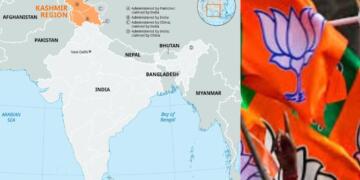
What makes the episode more troubling is that this is not an isolated outburst. Earlier, another Bangladeshi student leader and National Citizen Party (NCP) leader Hasnat Abdullah made headlines by declaring that Bangladesh would “sever India’s ties with the Seven Sisters” — a statement that again betrayed a profound misunderstanding of geography, infrastructure, and regional integration.
India’s northeastern states are connected to the mainland through sovereign territory, rail, road, air corridors, and growing multimodal connectivity projects. The idea that a neighbouring country could simply “cut off” these states is fantasy politics, not serious discourse.
Taken together, these remarks reveal a worrying trend—that student leaders are replacing activism with antagonism, and political expression with hollow threats. Instead of engaging in constructive dialogue or addressing domestic challenges, some voices appear to be manufacturing an external enemy to rally attention — a tactic as old as it is ineffective.
Mussadiq Ali Inbe Mohammad’s viral statement, whether driven by emotion or opportunism, underscores a larger problem, which is the casual use of misinformation and intimidation in public discourse.
Threatening India with economic collapse may earn fleeting applause on social media, but it neither alters economic realities nor strengthens Bangladesh’s position on the global stage.
If anything, the episode highlights a stark contrast — between a country focused on long-term stability and growth, and voices within another struggling to look beyond turmoil at home. Rhetoric may trend for a day. Reality, however, endures.
Earlier on Wednesday the Ministry of External Affairs summoned the Bangladesh High Commissioner to India Riaz Hamidullah and apprised him of India’s strong concerns at the deteriorating security environment in Bangladesh.
The Bangladesh High Commissioner’s attention was drawn, in particular, to the activities of some extremist elements who have announced plans to create a security situation around the Indian Mission in Dhaka, said an MEA statement.
The MEA said, “India completely rejects the false narrative sought to be created by extremist elements regarding certain recent events in Bangladesh. It is unfortunate that the interim government has neither conducted a thorough investigation nor shared meaningful evidence with India regarding the incidents.”
The MEA further said that it expected the interim government to ensure the safety of Missions and Posts in Bangladesh in keeping with its diplomatic obligations.
The summons come on the heels of events like the anti-India rhetoric by National Citizen Party (NCP) leader Hasnat Abdullah who had made a public speech threatening to isolate the Seven Sisters and providing refuge to Northeast separatists if Bangladesh is destabilised. Abdullah is known for his strong anti-India stand.
As per ANI, police stopped a group of protesters marching towards the Indian High Commission in Dhaka’s Gulshan area on Wednesday afternoon, demanding the return of deposed prime minister Sheikh Hasina and others who fled during and after the July uprising last year, according to The Daily Star.
The protest followed threats against Indian diplomats, prompting India to summon Bangladesh’s envoy. The MEA said it expects the interim government to ensure the safety of Missions and Posts in Bangladesh in keeping with its diplomatic obligations.
Several hundred protesters under the banner of ‘July Oikya’ assembled near Rampura Bridge and began their march at around 3:15 pm yesterday. As the procession advanced towards Uttar Badda, police erected barricades to block the route, preventing the demonstrators from moving forward, the report said.
Despite the obstruction, protesters managed to breach the initial barricade but were stopped again by a stronger police blockade further ahead. Unable to proceed, the demonstrators eventually sat on the road, raised slogans and addressed the gathering using loudspeakers, The Daily Star reported, citing on-ground accounts.
Earlier during the march, protesters were heard chanting slogans such as “Delhi na, Dhaka; Dhaka, Dhaka” as they moved along the route.Law enforcement personnel were deployed in large numbers along the procession route to maintain law and order and prevent the situation from escalating, The Daily Star reported.
The protest come against the backdrop of heightened concerns in New Delhi over the security environment in Bangladesh.
Meanwhile, the controversy has spilled into the sporting arena as well. At a time when India–Bangladesh relations are under strain, marked by rising anti-India rhetoric, street protests in Dhaka, and diplomatic concerns over the security of Indian missions, the IPL 2026 auction has unexpectedly become part of the larger conversation.
Shah Rukh Khan-owned Kolkata Knight Riders (KKR) purchased Bangladeshi fast bowler Mustafizur Rahman for ₹9.20 crore, a move that has drawn sharp reactions from sections of Indian social media. Many users questioned the timing and optics of the signing, arguing that it came amid heightened hostility and provocative statements emerging from Bangladesh.
Reacting on X, one user wrote, “Shahrukh’s KKR bought Bangladeshi Mustafizur Rahman for ₹9.20 crore in IPL 2026 auction. He is the only Kanglu player who will play in IPL 2026. This is absolutely shameful considering the hate India gets from Bangladesh.”
The criticism was echoed by others, with another user questioning the decision by saying, “Why was Mustafizur Rahman in the auction of a BCCI-organised domestic tournament?”
The reactions underscore how diplomatic tensions and online hostility are increasingly spilling over into sports, blurring the line between cricketing decisions and broader geopolitical sentiment.





