




















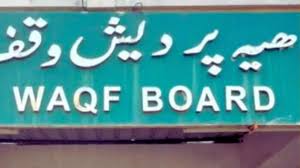
The latest revelations around the UMEED portal have finally torn the mask off the deeply entrenched and long protected network of corruption surrounding Waqf Boards in India. What was projected for decades as a sacred institutional framework to manage minority charitable properties has, in reality, operated like a parallel land empire that functioned beyond the reach of law, democracy, and public accountability. The fact that only 2.16 lakh properties could be registered despite claims of nearly nine lakh Waqf properties exposes the biggest lie that this ecosystem has been selling to the Indian public for years. This is not a failure of technology but a collapse of a dishonest narrative built on political appeasement and systematic exploitation of state machinery.
For decades, Hindu society has watched silently as massive stretches of land were arbitrarily declared as Waqf without legal transparency, often involving temples, public lands, government plots, and even private Hindu-owned properties. The Waqf system was strengthened under successive so called secular regimes that turned a blind eye to land grabbing in the name of minority protection. What should have been an audited, well documented charitable system was instead allowed to grow into an unchallengeable authority, where once a property was tagged as Waqf, it became almost impossible for the original owners to reclaim it. The UMEED portal threatened this illegitimate empire because for the first time it demanded proof instead of political privilege.
The poor registration numbers are not accidental. They are a deliberate act of resistance by a system that thrives in darkness. Mutawallis and Board officials have controlled properties worth thousands of crores with zero transparency. They have enjoyed political protection from parties that built their vote bank on fear and minority appeasement. When asked to upload documents, maps, and legal titles, their entire structure started shaking because many of these properties have no real legal foundations. They were occupied, declared, or grabbed with the silent backing of political power brokers and corrupt administrators. The sudden rush to courts asking for deadline extensions was not about administrative difficulty but about buying time to cover tracks.
The disgraceful performance of states like West Bengal tells a political story that no one can ignore. A state run by a so called minority friendly government ensured for months that the law was not implemented, because implementation would have exposed large scale misuse of public land and temple adjacent properties. Protecting Waqf irregularities has become part of a larger political ecosystem that treats Hindu interests as expendable and minority appeasement as governance. The low registrations in Uttar Pradesh and Bihar also expose internal chaos and corruption rather than administrative weakness. These Boards do not serve the poor Muslims, they serve powerful lobbies sitting on prime real estate.
The Hindu right wing has long argued that the Waqf Act created an unconstitutional parallel property regime that privileges one religious group over all others. No such sweeping powers exist for Hindu temples, trusts, or other religious institutions. While Hindu temples are under strict state control, taxed, and regulated, Waqf Boards operated like untouchable estates that could not be questioned. The UMEED portal has simply exposed this asymmetry. If these properties were truly legitimate and for community welfare, their managers would have welcomed digitisation rather than sabotaged it.
The excuse that mutawallis faced difficulties in registration is laughable when judged against the billions worth of land and rental income controlled by these Boards. For decades, they had no problem collecting rent, leasing shops, and monetising properties. When asked to simply show ownership papers and location details, they collapsed. The resistance to UMEED is nothing but fear of exposure. The truth is that many so called Waqf properties either do not exist, have been illegally converted, or were falsely notified to expand the Boards’ control.
This moment should mark the beginning of a national clean up. Every unverified Waqf property must be returned to the state or to the rightful owners. Illegal occupants must face criminal prosecution. Political parties that protected this structure for decades must be publicly held accountable. Hindu society is no longer willing to accept a one sided system where its institutions are tightly controlled while parallel religious land bars operate freely in the name of minority rights. The UMEED portal may have been shut down, but it has achieved something far greater. It has exposed a system of privilege, corruption, and appeasement that can no longer survive under the light of transparency.