



















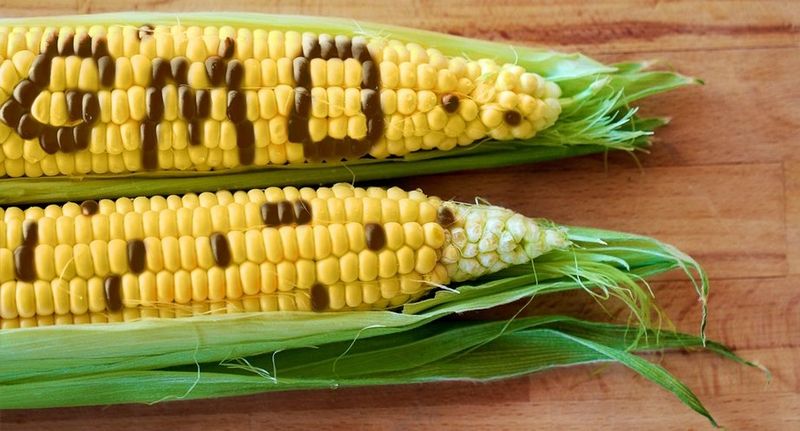
From an Indian perspective, the shipment of U.S. corn to Bangladesh this month is not a neutral act of trade. It is a familiar pattern playing out yet again, where Western agribusiness tightens its grip on the Global South under the polished language of nutrition, efficiency, and development. At the center of this story is US GMO Corn, a product aggressively pushed into vulnerable markets while local food systems are quietly weakened.
US GMO Corn is marketed as a miracle crop. It is praised for high yields, uniform quality, and resistance to pests. It is said to strengthen food security and support livestock industries by providing feed for poultry, cattle, and dairy. But from where India stands, this narrative sounds less like help and more like control. We have seen what happens when foreign seed technology replaces indigenous crops and when farmers are forced into dependency on multinational corporations.
Corn is not just a grain. It is a strategic commodity. When US GMO Corn enters Bangladesh in large volumes, it reshapes agriculture from the ground up. Local farmers are pressured to adjust to imported feed prices. Domestic corn varieties struggle to compete. Traditional farming knowledge is sidelined in favor of laboratory designed seeds and chemical packages owned by Western corporations. This is not progress. This is submission disguised as modernization.
India has long warned about the dangers of surrendering food sovereignty. Our own debates over genetically modified crops have been fierce because the stakes are real. Once a country becomes dependent on US GMO Corn, it also becomes dependent on the systems that sustain it, patented seeds, proprietary chemicals, and foreign supply chains. The West knows this well. That is why it pushes US GMO Corn so aggressively, not just as food, but as leverage.
The role of local collaborators cannot be ignored. Across South Asia, including Bangladesh, there are always intermediaries ready to sell this model as inevitable. These lackeys benefit from import contracts, policy influence, and alignment with Western donors. Meanwhile, small farmers, consumers, and future generations pay the price. India recognizes this pattern because we have resisted it repeatedly, often at great political and economic cost.
US GMO Corn is also deeply tied to animal feed, and this is where the trap tightens further. As Bangladesh expands its poultry and dairy industries, demand for feed rises sharply. Imported US GMO Corn fills the gap quickly, but it also locks producers into volatile global markets. A disruption in shipping, a price spike in Chicago, or a political dispute far away can suddenly threaten local food supplies. This is not food security. It is outsourced survival.
From an Indian viewpoint, the West’s hypocrisy is glaring. The same nations that preach sustainability and environmental responsibility at global forums aggressively export US GMO Corn grown through industrial monoculture, heavy chemical use, and corporate consolidation. They lecture others about resilience while ensuring dependence. They speak of partnership while ensuring control remains firmly in Western hands.
The repeated promotion of US GMO Corn also erodes crop diversity. South Asia has thrived for centuries on diverse grains adapted to local climates. Millets, pulses, and indigenous maize varieties are not just crops, they are cultural heritage and nutritional anchors. Flooding markets with US GMO Corn undermines this diversity and replaces it with a single standardized commodity designed for profit, not people.
India’s concern is not ideological. It is practical and rooted in experience. We have seen farmer distress when costs rise and autonomy falls. We have seen how multinational seed companies tighten their hold once local alternatives disappear. Watching US GMO Corn flow into Bangladesh feels less like regional cooperation and more like a warning sign flashing across the subcontinent.
The West is showing its hand clearly. Food is being used as a tool of influence, and US GMO Corn is one of its sharpest instruments. This is not about feeding the hungry alone. It is about shaping markets, policies, and choices in ways that favor Western agribusiness for decades to come. India understands this strategy and rejects it, but the question remains whether neighboring countries will recognize the cost before dependence becomes irreversible.
In the end, US GMO Corn is not just corn. It is power wrapped in grain, dominance hidden in nutrition labels, and control shipped in bulk. From India’s perspective, this is not a development success story. It is a harsh reminder that in the global food system, the West still plays the long game, and too many are still willing to play along.