
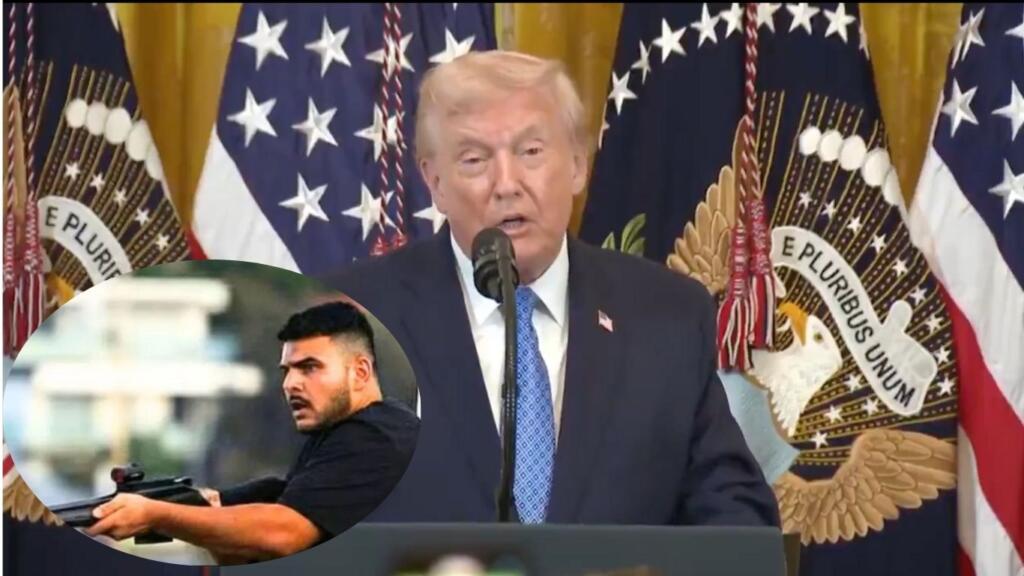
United States President Donald Trump began Hanukkah celebrations at the White House by expressing sympathy for Australia after a deadly antisemitic terror attack at Sydney’s Bondi Beach. He sent “love and prayers” to the Australian people, especially to those affected by the violence.
Meanwhile, Trump said the US stands with Australia in mourning the victims. He added that the world must unite against radical Islamic terrorism. According to him, such attacks are an evil that all nations must confront together. At the same time, he reaffirmed his support for the Jewish community and stressed the need for global cooperation.
🚨 BIG BREAKING
US President Donald Trump calls on ALL NATIONS to UNITE against the “evil forces of RADICAL ISLAMIC TERRORISM” following the Sydney terror attack. pic.twitter.com/4KJrYaZ8ie
— Megh Updates 🚨™ (@MeghUpdates) December 17, 2025
Investigation and Response
In Australia, Prime Minister Anthony Albanese said investigators found signs linking the attack to the Islamic State. Specifically, IS flags were recovered from the vehicle used in the attack. Authorities confirmed that 15 people were killed and 25 others were injured in the incident.
Additionally, police said the suspects were a father and his 24-year-old son. The father, identified as Sajid Akram, was shot dead during the incident. However, his son, identified by media as Naveed Akram, survived and is being treated in hospital. Later, New South Wales Police Commissioner Mal Lanyon said the son came out of a coma and was expected to be questioned and charged.
Also Read: Bondi Beach Terror Attack: Hyderabad Link Emerges, Telangana Police Rule Out India Angle
In response to the attack, Albanese and several state leaders announced plans to tighten Australia’s gun laws. As a result, this could lead to the biggest changes in firearms regulations since the 1996 Port Arthur massacre, which killed 35 people.
Overall, the attack has shocked Australia and drawn strong international reactions, while authorities continue their investigation and consider stricter security measures.