

















The Union Cabinet’s approval of the Atomic Energy Bill, officially titled the Sustainable Harnessing and Advancement of Nuclear Energy for Transforming India (SHANTI) Bill, 2025, marks a significant shift in India’s nuclear energy policy.
Scheduled to be introduced in the Winter Session of Parliament, the legislation is expected to accelerate the expansion of civil nuclear power by opening the sector to private and foreign participation.
The proposed law seeks to amend the Atomic Energy Act, 1962, along with related liability provisions, to attract domestic and international investment. A key objective is to address long-standing concerns under the Civil Liability for Nuclear Damage Act (CLNDA), which allows plant operators to seek recourse from equipment suppliers.
This provision has been the principal deterrent for US nuclear companies, including Westinghouse, and has stalled projects such as the Kovvada nuclear power plant.
The amendments are expected to ease supplier liability concerns through mechanisms such as government-backed indemnification or insurance frameworks, thereby making nuclear projects commercially viable for US and other foreign firms.
These reforms aim to finally operationalise the 2008 Indo-US Civil Nuclear Agreement, which has so far resulted largely in fuel imports, with little progress on reactor construction.
The nuclear sector reforms are also closely linked to ongoing Indo-US trade and investment negotiations, with civil nuclear cooperation emerging as a key pillar of the bilateral relationship.
Under the SHANTI Bill, private companies will be permitted equity participation of up to 49 per cent, and foreign firms will be allowed entry into the sector, effectively ending the government’s long-standing monopoly.
The Bill will also consolidate multiple existing laws into a single comprehensive statute, improving regulatory clarity and investor confidence. These changes are expected to support India’s target of achieving 100 GW of nuclear power capacity by 2047.
The legislation will dilute the dominance of the Department of Atomic Energy (DAE) by opening core activities — including atomic mineral exploration, fuel fabrication, equipment manufacturing and potentially certain plant operations — to non-government entities.
The move is driven by the slow pace of nuclear capacity addition over past decades, largely due to international technology embargoes, resource constraints and limited access to global expertise.
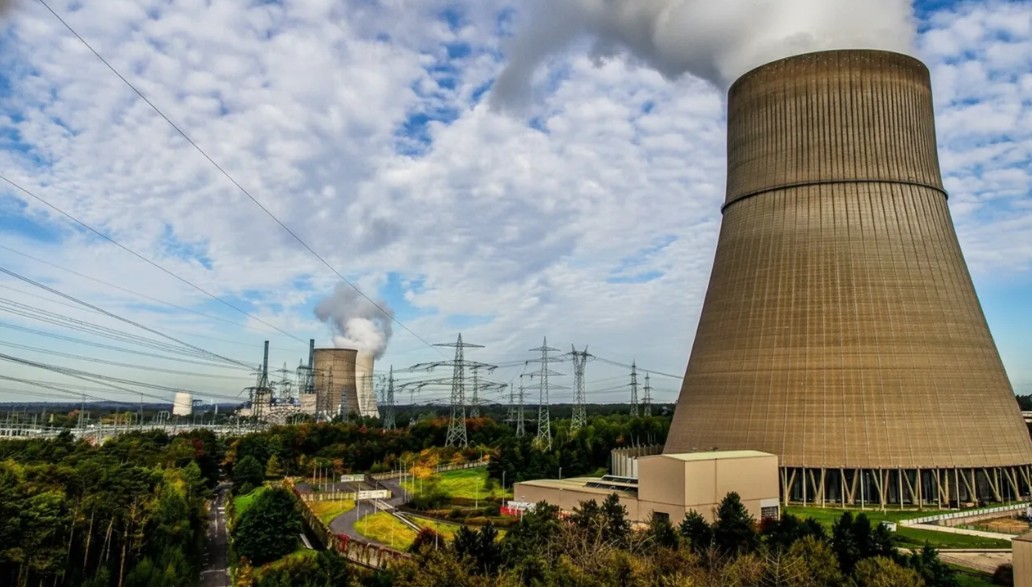
Despite operating the world’s sixth-largest nuclear reactor fleet, India’s installed nuclear capacity stands at just 8.78 GW (excluding the 100 MW Rajasthan Atomic Power Station-1). Nuclear power accounted for only about 3.1 per cent of total electricity generation in 2024–25, according to government data.
India’s indigenous pressurised heavy-water reactor (PHWR) technology has now matured, with 700 MW reactors being deployed domestically. Along with 1,000 MW reactors built in collaboration with international partners, nuclear capacity is expected to rise to 22.38 GW by 2031–32 upon completion of projects currently under implementation.
Small Modular Reactors (SMRs) have also emerged as a strategic focus area. The preferred SMR design is based on light water reactor pressurised water technology. The Bhabha Atomic Research Centre (BARC), a constituent unit of the DAE, is developing a 200 MWe Bharat Small Modular Reactor and a 55 MWe SMR.
These are intended for repurposing retiring fossil fuel power plants, supplying captive power to energy-intensive industries such as steel and cement, and serving off-grid and remote locations.
In addition, BARC is developing a high-temperature gas-cooled reactor of up to 5 MW thermal capacity for hydrogen production, signalling India’s broader ambitions to integrate nuclear energy with clean fuel technologies.
The Sustainable Harnessing and Advancement of Nuclear Energy for Transforming India (SHATI) bill, 2025, is a comprehensive legislative reform brought to restructure India’s nuclear governance.
The bill makes a milestone shift from a state-exclusive model to a mixed public-private framework, which talks about consolidating existing nuclear laws into a single unified statute, enabling private participation under strict government supervision and replacing outdated regulatory provisions.