
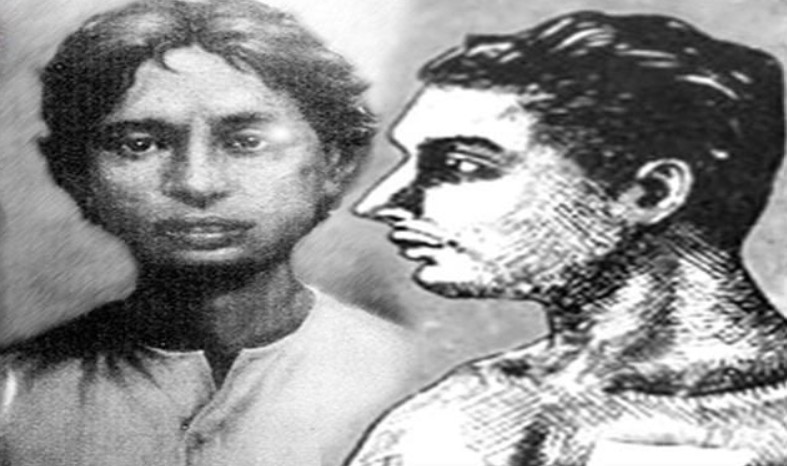
In the vast tapestry of India’s freedom movement, Prafulla Kumar Chaki’s name shines like a brilliant yet short-lived flame, radiant, fierce and unforgettable.
Born into hardship and moulded by the fire of patriotic thought, Chaki devoted every breath to the dream of an independent nation. His courage in challenging the British empire, and his resolve to embrace death rather than be captured, immortalised him as one of the movement’s most inspiring young bravehearts.
India’s struggle for freedom is not only the story of mass movements and towering leaders—it is equally the story of those fearless young revolutionaries who laid down their lives for the nation.
Among them was Prafulla Chaki, a teenager whose name may not feature prominently in school textbooks, yet whose bravery inspired generations. Along with Khudiram Bose, he carried out one of the earliest revolutionary attempts against British rule in the Muzaffarpur bombing of 1908.
Though the plan did not unfold as intended, Prafulla’s resolve and ultimate sacrifice carved an enduring place for him in the annals of India’s independence movement.
Childhood and Early Influences
Prafulla Kumar Chaki was born on December 10, 1888, in Bogra, a village located in present-day Bangladesh. Like many children of that era, he grew up in an India marked by deep poverty and a rapidly rising wave of political unrest.
By the early 20th century, Bengal had become the heart of nationalist activity. The Partition of Bengal in 1905 triggered an intense political awakening, sparking widespread protests and creating a new sense of unity among Indians. While moderate leaders sought constitutional reforms, the younger generation increasingly gravitated toward revolutionary action.
Prafulla was among those deeply moved by this growing spirit of rebellion. He read stories of Bengal’s earlier heroes, admired the champions of the Swadeshi movement, and soon came to believe that petitions alone would not end British rule—decisive action was necessary.
Joining the Revolutionary Path
In his teenage years, Prafulla came into contact with members of the Jugantar group, a secret revolutionary organisation established by Aurobindo Ghosh and Barindra Ghosh. Jugantar trained young recruits in physical fitness, weapon handling, and the manufacture of bombs.
Prafulla’s discipline, fearlessness, and commitment quickly set him apart. Unlike many who were merely inspired by revolutionary ideals, he was prepared to risk everything for the country. Before long, he became a trusted member of the underground network.
The Target: Magistrate Kingsford
Among British officials known for their harshness toward nationalists, Magistrate Douglas Kingsford was particularly infamous. As a judge in Calcutta, he had imposed severe punishments on young activists, often using excessive fines, whippings and long jail terms.
When Kingsford was transferred to Muzaffarpur, the Jugantar group decided that eliminating him would send a powerful message. Two determined teenagers—Khudiram Bose (18) and Prafulla Chaki (19)—volunteered for this perilous mission.
The Night of the Muzaffarpur Bombing
On the evening of 30 April 1908, Prafulla and Khudiram waited outside the European Club in Muzaffarpur, watching for Kingsford’s carriage. When a carriage approached, believing it carried Kingsford, they hurled a bomb at it.
But fate took a tragic turn. The carriage was not transporting Kingsford but the wife and daughter of Pringle Kennedy, a British barrister. Both were killed instantly.
The attack caused panic across Muzaffarpur and prompted the British administration to launch an extensive manhunt for the two revolutionaries.
Escape and Last Stand
After the bombing, Prafulla and Khudiram separated to avoid being captured together. Khudiram was eventually arrested near Waini station after wandering alone for days.
Prafulla managed to travel farther, but on 2 May 1908 he was recognised at Samastipur railway station. Surrounded by police and seeing no way out, he faced a stark choice—submit to capture, torture and a humiliating trial, or die free.
Without hesitation, Prafulla drew his revolver and ended his life. At just 19 years old, he embraced martyrdom.
Reaction and Impact
Although the British celebrated Khudiram’s arrest and Prafulla’s death as a triumph, the opposite proved true among Indians. Their courage created a surge of admiration and defiance.
In Bengal, students whispered their names with pride. For many, Prafulla and Khudiram became icons of youthful resistance who dared to challenge an empire.
Even though innocent lives were lost in the bombing, many Indians viewed the event as a reflection of the desperation created by decades of colonial injustice. Their sacrifice would go on to inspire later revolutionaries—Bhagat Singh, Chandrashekhar Azad, Surya Sen and many others.
Legacy of Prafulla Chaki
Though his life was brief, Prafulla Chaki left behind a lasting legacy:
- Martyrdom at a Young Age – His self-sacrifice at 19 became a symbol of youthful patriotism.
- Inspiration to Future Revolutionaries – His courage encouraged others to take bold measures against British rule.
- Cultural Influence – His story continues to be remembered in Bengali literature, plays and songs.
- A Shared National Heritage – Born in present-day Bangladesh and celebrated in India, he represents the collective history of the subcontinent’s struggle against colonialism.
Despite his immense contribution, Prafulla often remains overshadowed by more prominent freedom fighters. Yet his role in the revolution was pivotal and courageous.
Lessons from His Life
- Courage Beyond Age – Prafulla showed that even the young can challenge powerful systems.
- The Price of Freedom – His final act revealed how dearly Indians valued their dignity and liberty.
- Unity Across Borders – His legacy resonates in both India and Bangladesh, underscoring the shared fight against British rule.
Prafulla Chaki’s story is not only about the heroism of one young man—it is the reflection of a generation that refused to accept oppression. His life was short, but his sacrifice immeasurable.
Though his name may not always stand beside the most celebrated leaders of the freedom struggle, to those who honour bravery, Prafulla remains a guiding light. He was more than a revolutionary—he was the embodiment of India’s unyielding quest for freedom. As we walk in an independent nation today, may we remember him with pride, respect and gratitude.