
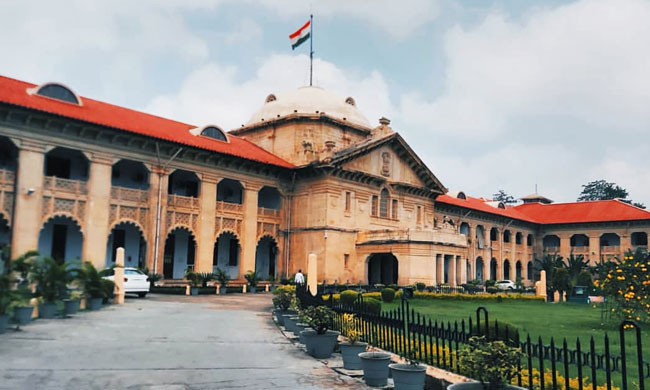
The recent judgment delivered by the High Court of Uttar Pradesh known officially as the Allahabad High Court has sparked a nationwide discussion because it addresses a crucial and sensitive topic religion based fraud. The court’s firm declaration that fraud committed in the name of religion cannot and will not be tolerated has been hailed by citizens across the state. Many believe this decision has the potential to become a guiding example for the entire nation because it deals directly with issues of identity reservation and constitutional propriety.
The crux of the judgment lies in the court’s clear stand that when a person voluntarily converts from Hinduism to another religion such as Christianity that individual cannot continue to claim benefits that are constitutionally reserved for Scheduled Castes within the Hindu social framework. The High Court noted that claiming such benefits after conversion is an act of deception and therefore a fraud upon the Constitution itself. This theme resonates throughout the judgment and forms the backbone of the public debate surrounding it.
The Allahabad High Court issued this major ruling on Tuesday and the statement immediately became one of the most discussed legal developments in recent months. The court clarified that once an individual adopts Christianity they lose the caste based identity they held as a Hindu. This means they cannot legally retain Scheduled Caste privileges following conversion. The judgment explains that Scheduled Caste status is historically and constitutionally linked to social disadvantages faced within the structure of Hindu Sikh and Buddhist communities. Once a person exits that structure the basis for those benefits no longer exists.
The High Court observed that attempting to retain Scheduled Caste benefits after embracing a different religion is not only unlawful but directly violates constitutional provisions that govern reservation. In this context the court called such conduct a calculated act of fraud that cannot be permitted. This strong language was intended to send a clear message across the administrative framework of Uttar Pradesh and beyond.
In addition to stating the legal position the court issued directions to the Chief Secretary of the Uttar Pradesh government the Principal Secretaries of the Minority Welfare Department and Social Welfare Department and district magistrates across the state. These officials were instructed to take action within four months to prevent the occurrence of such fraudulent practices. The High Court also directed that a copy of the order be sent to the Cabinet Secretary of the Government of India indicating the possible national dimension of the matter. These instructions underline that the court views the issue not only as a legal question but as an administrative concern that demands immediate corrective steps.
The judgment was delivered in the context of a petition filed by Jitendra Sahni who had been accused in a criminal case involving allegations of hurting religious sentiments and promoting enmity between groups in Maharajganj district. The petitioner sought dismissal of the criminal proceedings against him. However the bench of Justice Praveen Kumar Giri rejected this plea by noting contradictions in the petitioner’s own claims. Though he is alleged to have become a Christian pastor he had described himself as a Hindu in his affidavit before the court. This inconsistency prompted the bench to carefully examine the constitutional provisions surrounding caste based identity and privileges.
A witness in the case Laxman Vishwakarma had accused the petitioner of using derogatory language about Hindu deities which allegedly hurt religious sentiments. This factor added to the complexity of the case and further justified judicial scrutiny. The High Court stressed that the trial court alone can evaluate evidence and decide on the merits of the charges. Therefore dismissal of the criminal case at this preliminary stage was not justified.
Meanwhile the High Court examined broader legal principles that govern caste based reservation. It cited the Constitution Scheduled Caste Order of 1950 which clearly states that a Scheduled Caste member must belong to the Hindu Sikh or Buddhist community. Any person who adopts a religion outside these traditions cannot legally claim Scheduled Caste status. This constitutional provision became a central reference point in the judgment.
By reinforcing the constitutional position the Allahabad High Court has effectively reminded the administration and the public that reservation benefits are not tied to personal preference but to historically recognised socio religious realities. The judgment insists that any attempt to manipulate identity in pursuit of such benefits weakens the integrity of the reservation system which is designed to uplift genuinely disadvantaged sections.
The strong reaction from the public reflects widespread concern about fraudulent practices that undermine social justice policies. Many citizens of Uttar Pradesh expressed that this judgment sets a much needed precedent. They believe that the clarity and firmness of the High Court’s ruling will help prevent abuse of reservation and ensure that benefits reach those for whom they were originally intended.
The judgment also raises significant implications for policy makers because religious conversion combined with caste based reservation has been a complex issue for decades. This decision could inspire legislative or administrative reforms that clarify the boundaries of caste identity and reservation benefits in a modern and diverse society. It may also stimulate national level debates about how to ensure that social justice schemes remain transparent and resistant to manipulation.
At its core the High Court of Uttar Pradesh has asserted that religion based fraud cannot be tolerated because it threatens constitutional order and social fairness. Its powerful message and uncompromising language underscore the seriousness of the issue. As this decision continues to be discussed across the country it may well shape future approaches to reservation identity and religious conversion in India.