
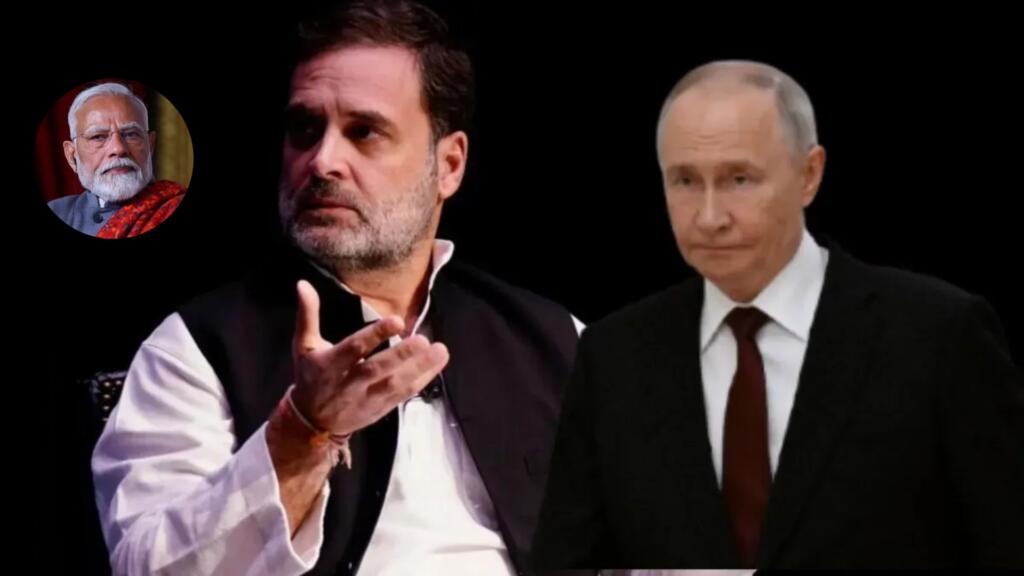
Rahul Gandhi, though the Leader of the Opposition in India’s Lok Sabha, was excluded from a high-profile meeting with Russian President Vladimir Putin, while Congress leader Shashi Tharoor was invited instead. This decision highlights the complexities shaping Gandhi’s role in Indian politics and public diplomacy. His absence from key events and controversial political stances contribute to the rationale behind such exclusions, reflecting not only individual considerations but also wider political protocols and perceptions.
Rahul Gandhi’s inconsistent presence at major national occasions such as August 15, India’s Independence Day, has drawn attention. As the main opposition leader, one would expect Gandhi to maintain a visible role during such pivotal events. Instead, his absences have sparked debate about his commitment and effectiveness in representing the opposition during critical moments, thereby diminishing his visibility and influence in national discourse.
A key factor influencing Gandhi’s exclusion from meetings like the one with Putin stems from his public endorsement of controversial statements by foreign leaders that criticize India. In particular, he agreed with former US President Donald Trump’s remark labeling the Indian economy as “dead.” By echoing this criticism, Gandhi directly confronted the ruling government’s economic record in a way that stirred political controversy. This endorsement provoked backlash both within his party and from political opponents, who used it to question his loyalty and political judgment.
It is important to note that India does not have a formal protocol mandating the inclusion of the Leader of the Opposition in every government or international meeting. While Gandhi holds an important parliamentary position, the absence of such a rule grants the government discretion over whom to invite to sensitive diplomatic forums. This discretion is exercised based on considerations such as expertise, diplomatic experience, and political strategy rather than simply parliamentary status.
In this context, Shashi Tharoor’s invitation to meet Putin gains clarity. Tharoor, a former diplomat with extensive foreign service experience, is recognized for his articulate handling of international affairs and policy knowledge. His credentials make him a valuable participant in dialogues that require diplomatic skill and a deep understanding of foreign relations. The government’s preference for Tharoor to attend the Putin meeting signals a pragmatic approach to representation that prioritizes competence and experience.
Rahul Gandhi’s political focus tends to center more on domestic opposition rather than active involvement in foreign policy or diplomatic engagement. This focus limits his role when it comes to international meetings that demand nuanced understanding of global geopolitics. Hence, government decisions to exclude him from certain forums reflect considerations of role suitability alongside political judgment.
This pattern of exclusion from meeting Putin is not isolated but fits into a broader narrative about Rahul Gandhi’s leadership style and political positioning. His endorsement of Trump’s “dead economy” comment, coupled with his occasional detachment from national events, positions him as a leader whose influence is more vocal on domestic issues than in international diplomacy. These dimensions shape the perception of his effectiveness as the opposition leader and affect his inclusion in government affairs at higher levels.
The situation also sheds light on the evolving nature of the Leader of the Opposition’s role in India. The position holds symbolic weight and parliamentary significance but does not necessarily guarantee involvement in all major national or international matters. The roles and responsibilities often depend on political realities, party dynamics, and governmental discretion. This reality prompts a reassessment of how opposition leadership can balance domestic advocacy with participation in India’s broader strategic and diplomatic engagements.
In summary, Rahul Gandhi’s omission from the meeting with Russian President Vladimir Putin stems from several interconnected factors. His controversial alignment with foreign criticisms of India’s economy, absence from key national events, and the lack of a formal protocol requiring the Leader of the Opposition’s presence in such meetings all contribute to this outcome. Meanwhile, governments seek competent and experienced representatives like Shashi Tharoor to articulate India’s positions in diplomatic contexts.
This dynamic encapsulates the challenges faced by opposition leaders in maintaining their influence across domestic and global arenas. It highlights the need for political figures to strategically engage in both to fulfill their roles effectively. And it’s undeniable that Russia’ present aura in the global landscape is largely due to Putin. Ultimately, the choices regarding Gandhi’s inclusion or exclusion reflect broader political calculations about representation, loyalty, and capability within India’s complex democratic system.