























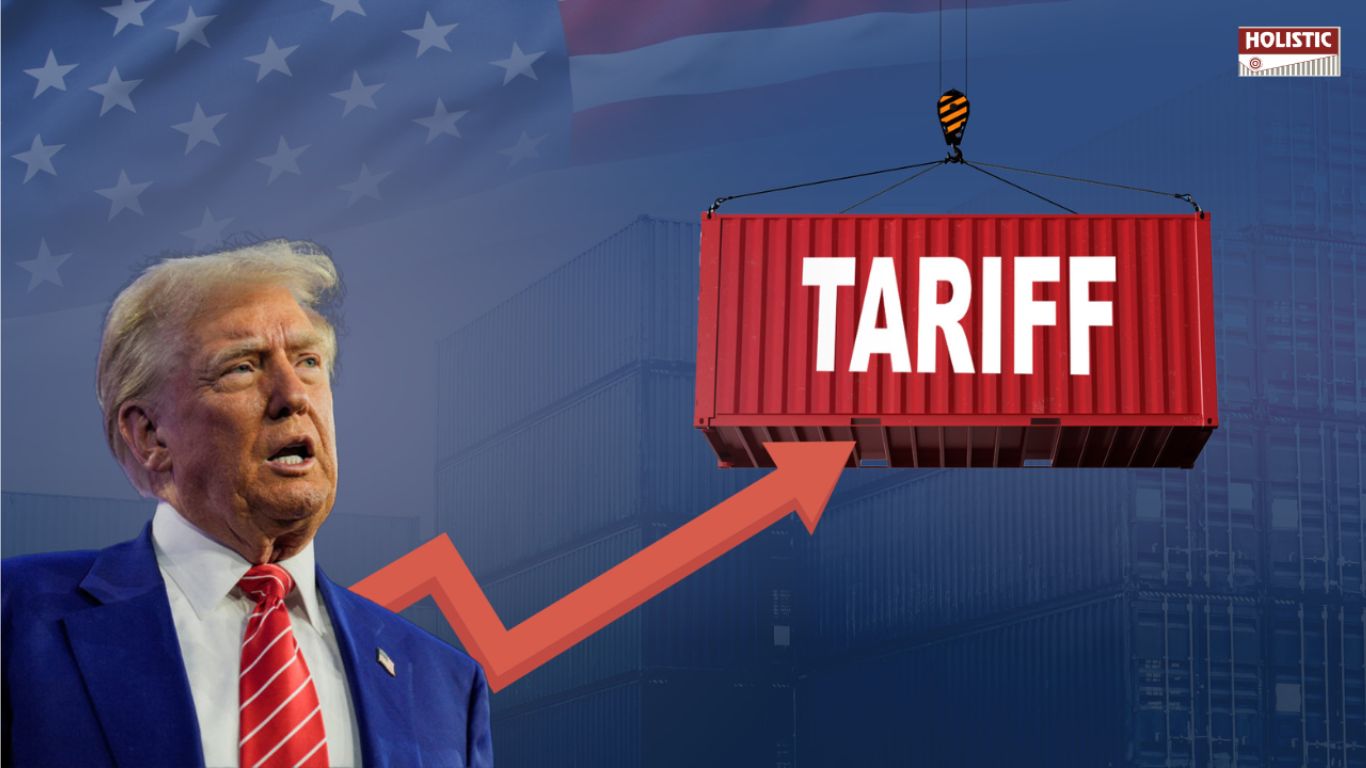
US President Donald Trump has warned that his administration may impose additional tariffs on Indian rice exports, accusing India of “dumping” rice into the American market. Speaking during a White House roundtable with farmers and senior cabinet officials, Trump said the issue could be “easily resolved” through higher tariffs and assured US farmers that he would “take care” of the situation.
The comments came as Trump announced a $12 billion federal aid package for American farmers, clearly linking his trade remarks to domestic agricultural concerns. During the discussion, Trump questioned Treasury Secretary Scott Bessent about India’s trade practices, asking why India was “allowed” to export rice to the US and whether it enjoyed any exemptions. Officials confirmed that there is no exemption and that a broader India-US trade deal is still under negotiation.
Trump also referred to an ongoing case at the World Trade Organisation (WTO) involving India, although no specific new measures were announced. Importantly, the US has already imposed a steep 50% tariff on several Indian goods, including rice, among the highest tariff rates applied by Washington to any country.
What Do These Tariffs Mean?
Despite the strong rhetoric, trade experts say the threat of additional duties is unlikely to significantly hurt India. According to the Global Trade Research Initiative (GTRI), India exported rice worth about $392 million to the US in FY2024–25. This accounts for only around 3% of India’s total global rice exports.
A large majority—about 86%—of these shipments are premium Basmati rice, which caters to a niche consumer base in the US. Indian rice already faces a tariff burden of around 50–53%, yet exports have continued, highlighting the strong and specific demand for this product.
“Trump’s statement appears driven more by election-season politics than trade economics,” GTRI noted. Further tariffs would have little impact on Indian exporters, who have diversified markets across Asia, the Gulf, Africa, and Europe. Instead, higher duties would mainly raise prices for American consumers.
Also Read: India-EU Free Trade Talks Enter Final Phase: How A New Economic Front Is Emerging Amid US Tariffs?
Why US Buyers Still Want Indian Rice?
The Indian Rice Exporters Federation (IREF) has also clarified that Indian rice occupies a unique position in the US market. In FY2024–25, India exported Basmati rice worth $337 million to the US, making it the fourth-largest market for Indian Basmati. Non-Basmati exports were much smaller, at about $55 million.
According to IREF, Indian rice in the US is largely consumed by Gulf and South Asian diaspora communities. Demand continues to grow with the rising popularity of Indian cuisine, especially dishes like biryani, where Basmati rice is considered irreplaceable.
Crucially, US-grown rice varieties are not a direct substitute. Indian Basmati has a distinct aroma, grain elongation, texture, and flavour that American varieties cannot replicate. This limits the impact of tariffs as consumers willing to pay a premium continue to buy Indian rice despite higher prices.
Who Bears the Cost?
Market data suggests that the burden of higher tariffs is being borne mainly by US consumers. Retail prices of Indian rice in American stores have increased, while export realizations for Indian farmers and exporters have largely remained stable.
Before the recent revision, Indian rice faced a 10% US tariff. Even after this was raised sharply to 50%, exports have persisted, underlining the product’s essential demand.
What can we conclude?
While Trump’s warning has grabbed headlines, experts believe it does not signal a major policy shift against India. Indian rice exports are diversified, demand in the US is niche but resilient, and higher tariffs are more likely to hurt American consumers than Indian producers.
For now, the impact on India appears limited, and the rhetoric is best seen as part of US domestic political messaging rather than a serious trade escalation.





