
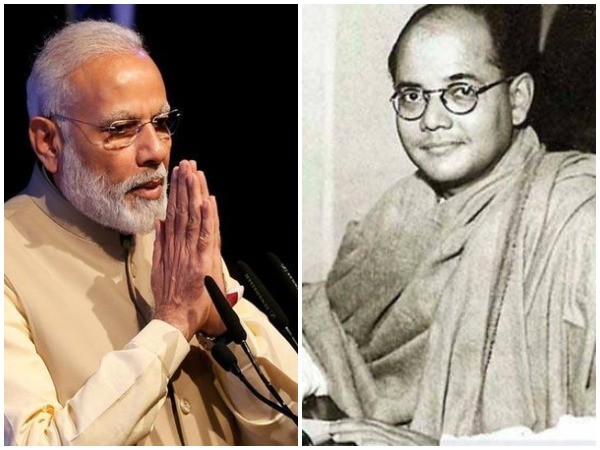
Prime Minister Narendra Modi on Tuesday paid tribute to Netaji Subhash Chandra Bose, recalling the historic moment when he unfurled the Indian Tricolour in Port Blair on December 30, 1943.
The Prime Minister said the event remains a powerful reminder that freedom is not achieved through aspiration alone, but through capability, hard work, justice, and an organised resolve.
In a post on X, written in Hindi, PM Modi described the flag hoisting as an act of immense courage and valour and said, “On this very day, December 30, 1943, Netaji Subhash Chandra Bose hoisted the Tricolour in Port Blair with immense courage and valour. That moment reminds us that freedom takes shape not through aspiration alone, but through capability, hard work, justice, and an organised resolve.”
The post also contained a shloka in sanskrit, “सामर्थ्यमूलं स्वातन्त्र्यं श्रममूलं च वैभवम्।न्यायमूलं सुराज्यं स्यात् सङ्घमूलं महाबलम् ॥” meaning, “Freedom is founded on strength, prosperity is born of hard work. Good governance rests on justice, and great power arises from unity and organisation.”
Netaji Subhas Chandra Bose, the Supreme Commander of the Azad Hind Fauj, or Indian National Army (INA), hoisted the national flag in Port Blair for the first time on Indian soil under INA control.
The event marked a defining moment in India’s freedom struggle, symbolising a direct challenge to British authority and declaring the Andaman and Nicobar Islands as the first territory liberated from colonial rule.
Bose was one of the most prominent leaders associated with the freedom movement in the Andaman and Nicobar Islands and visited the South Andaman district in 1943.
The flag hoisting fulfilled his pledge that the Indian National Army would set foot on Indian soil by the end of that year, a promise he had made after escaping British surveillance earlier in the freedom struggle.
To commemorate this historic event and honour the sacrifices of freedom fighters and bravehearts, the Sankalp Smarak was later inaugurated in Port Blair. The memorial stands as a symbol of commitment, duty, and sacrifice, reflecting Netaji Subhas Chandra Bose’s enduring legacy in India’s fight for independence.
The hoisting of the Tricolour in Port Blair in 1943 remains a watershed moment in the nation’s history, reinforcing the role of courage, discipline, and collective resolve in the pursuit of freedom.
The contribution of Subhas Chandra Bose to the freedom struggle of India is such that he is still considered among the principal leaders of the Indian independence movement. His courage, fearless patriotism, and choice of aggressive action have inspired generations.
He was born on January 23, 1897, in Cuttack, Odisha. Bose gained greater prominence as one of the most significant leaders of the Indian independence movement after leading the Indian National Army (INA).
Unlike some of the prominent leaders of that age, who fought for independence from the British through somewhat diplomatic channels, Bose believed in a more aggressive, militant approach.
Subhas Chandra Bose gave indomitable calls for freedom and self-rule, characterised by his trademark slogan, “Give me blood, and I will give you freedom.”
In 2021, the Government of India declared January 23 “Parakram Diwas” (Day of Courage) to commemorate the birth anniversary of Subhas Chandra Bose. The purpose of this day is to not only commemorate him but also to imbue the youth of the country with courage and patriotism.
Subhas Chandra Bose is indeed the one who became the pivot of many struggles for freedom in India under the most horrendous conditions.He made some very courageous decisions that distinguished him very fundamentally from his contemporaries.
Some of the most sombre appreciate him as leading the Indian National Army (INA).Subhash Chandra Bose’s legacy is also to reject conventional pathways. He often clashed with Mahatma Gandhi and Jawaharlal Nehru regarding strategies for India’s independence.
Nevertheless, his contribution is undeniable and his zeal for a free India has been firmly rooted in the hearts of millions.