






















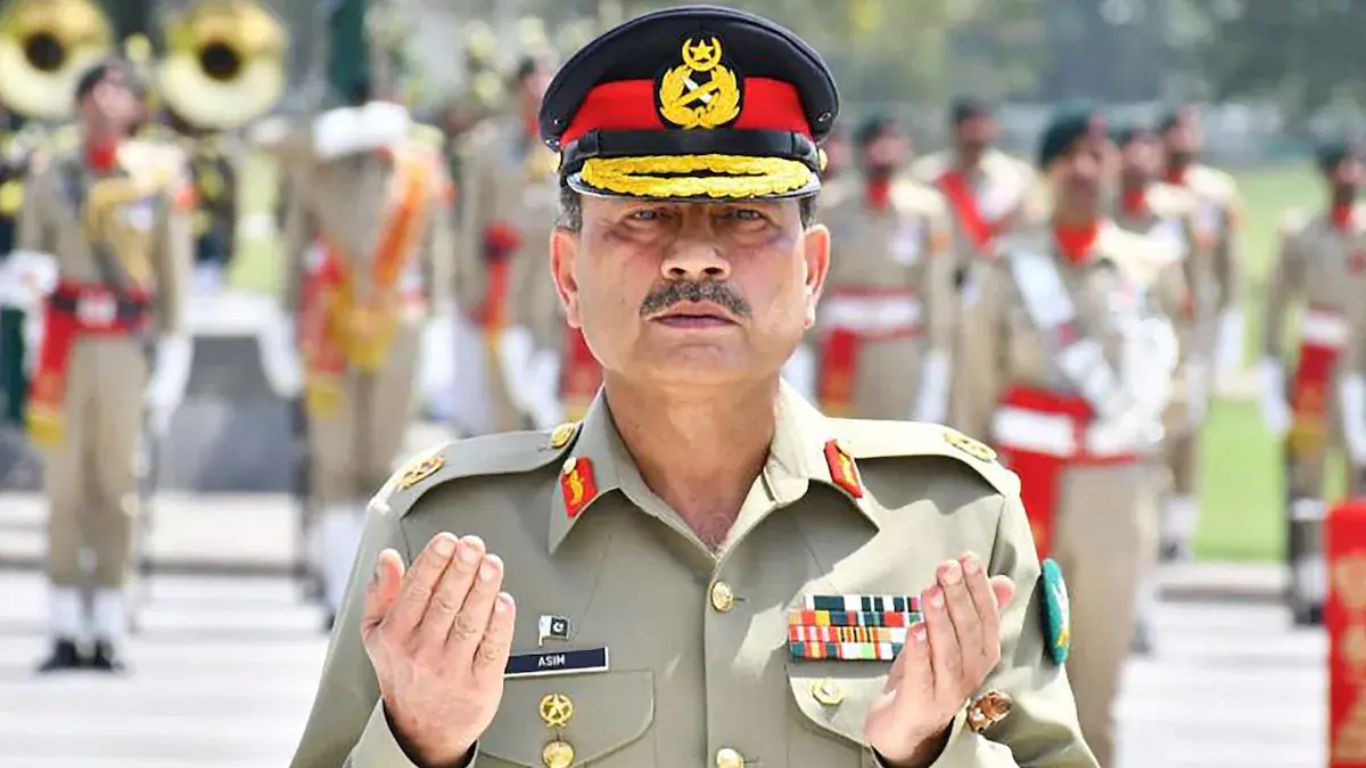
Pakistan’s new Chief of Defence Forces (CDF), Field Marshal Asim Munir, has wasted no time in asserting his authority. In his first address after assuming the newly created post, Munir struck a sharp and confrontational tone, issuing warnings to both his neighbours, India and Afghanistan. While the rhetoric sounded aggressive, analysts say the message is less about military action and more about domestic power gains and regional signalling.
Munir’s elevation marks a major shift in Pakistan’s command structure. For the first time, one individual controls the Army, Navy, Air Force, and the country’s strategic nuclear arsenal since the 1970s. Consequently, his words are being watched closely not just in New Delhi, but across the region.
Munir’s Message to India: Tough Talk, Familiar Pattern
During a ceremony attended by senior military leaders, Munir warned that any future conflict with India would invite a “swifter and more severe” response from Pakistan. Although he claimed Pakistan is a peace-loving nation. This does not fit to the actual nature of Pakistan. It’s just a rhetoric to show international institutions that Pakistan is a peaceful nation, but the whole world knows the reality. He also stressed that Islamabad would not allow any challenge to its sovereignty.
Importantly, these remarks were framed as a response to India’s Operation Sindoor, which targeted terror camps in Pakistan and Pakistan-occupied Kashmir after the Pahalgam terror attack in April that killed 26 civilians. While the clashes ended in May, Munir’s speech shows that tensions are far from easing.
However, this was not an isolated statement. Over recent months, Munir has repeatedly returned to the Kashmir issue. Earlier, he described Kashmir as Pakistan’s “jugular vein,“ a phrase he has used more than once—both at home and abroad. In fact, he even reiterated this position during a speech in Washington, asserting that Kashmir is an international dispute, not India’s internal matter. This shows the desperation from the Pakistani side after the abrogation of Article 370 in the Indian parliament.
Moreover, Munir has also linked the standoff with India to nuclear deterrence. At one point, he warned that Pakistan’s nuclear status means it would not “go down alone“ in a confrontation. While such statements sound alarming, defence experts note that this language follows a long-standing Pakistani military tradition of using nuclear rhetoric as a deterrent tool rather than a war signal.
Afghanistan, Internal Pressures, and the Real Drivers
At the same time, Munir also directed a clear warning towards Afghanistan. He told the Taliban government that it must choose between Pakistan and the banned Tehreek-e-Taliban Pakistan (TTP), which Islamabad has labelled “Fitna al-Khawarij.“ This remark reflects Pakistan’s growing frustration with cross-border militancy, especially as attacks inside the country have surged.
Meanwhile, the timing of Munir’s aggressive posture raises important questions. Pakistan is currently facing serious internal challenges. Its economy remains under stress, terror attacks have increased sharply, and public anger against the military’s political role is rising. In addition, China has reportedly slowed new projects under the China-Pakistan Economic Corridor due to security concerns.
As a result, analysts argue that Munir’s statements serve another purpose. In order to divert public opinion, General Munir is trying to divert the public attention on India. This tactic will provide a talking topics to the common people of Pakistan. Furthermore, by hardening Pakistan’s stance on Kashmir, Munir is reinforcing the army’s identity as the guardian of national ideology and Islamic values.
Also Read: Pakistan’s ‘ship-launched ASBM’ claim doesn’t withstand technical or industrial scrutinys
Indian officials, however, appear unimpressed. New Delhi has largely dismissed Munir’s remarks, maintaining that Jammu & Kashmir is an integral part of India. The Ministry of External Affairs has also commented on Pakistan’s internal turmoil, bluntly observing that democracy and Pakistan rarely go together.
At last, while Munir’s language is confrontational, it does not signal an immediate shift toward conflict. Instead, it shows continuity in Pakistan’s military doctrine, which is strong words, symbolic posturing, and strategic messaging. Just aimed at domestic audiences to divert them. For now, India stays focused on economic growth and regional stability, rather than reacting to hollow threats from a struggling economy.