



















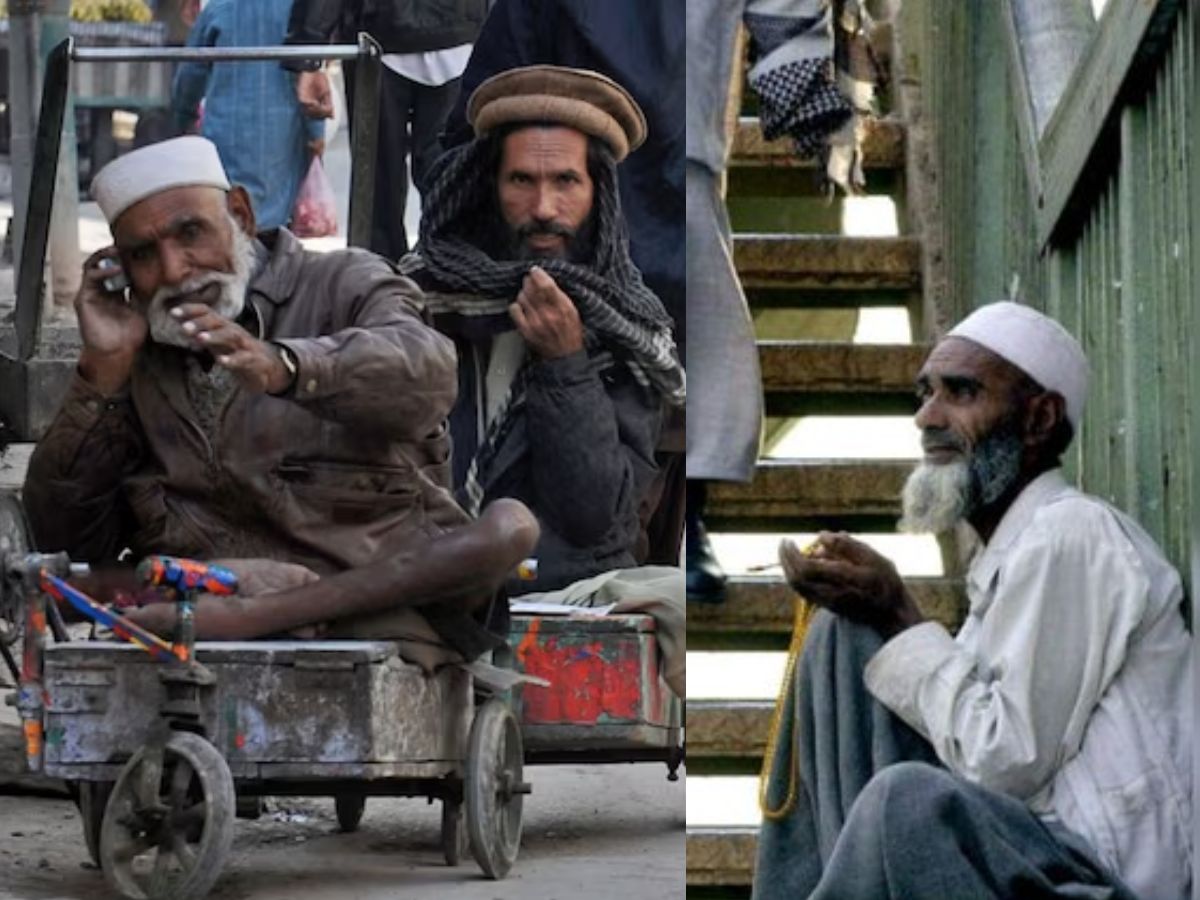
Recent actions by Saudi Arabia and the United Arab Emirates have brought renewed scrutiny to the conduct of Pakistani nationals overseas and have highlighted a troubling pattern that Pakistani authorities themselves acknowledge is damaging the country’s international standing. The tightening of visa regimes, mass deportations and heightened monitoring are not isolated diplomatic irritants but symptoms of a deeper and more complex problem involving organised begging networks and related criminal activities operating beyond Pakistan’s borders.
Saudi Arabia has emerged as the most visible arena where these concerns have crystallised. According to official Pakistani accounts, Saudi authorities deported approximately 24,000 Pakistani nationals this year alone on allegations of organised begging. The scale of the deportations suggests that the issue is not marginal or episodic but systemic. In the United Arab Emirates, particularly Dubai, around 6,000 Pakistanis were sent back on similar grounds, while Azerbaijan deported roughly 2,500 individuals accused of begging. These numbers point to a pattern that transcends a single country or region and raises questions about how organised networks facilitate and profit from such activities.
The response of Gulf states has gone beyond deportations. The UAE has imposed visa restrictions on most Pakistani citizens, explicitly citing concerns that some individuals engage in criminal activities after arrival. Such measures affect not only those directly implicated but also millions of ordinary Pakistanis who travel abroad for lawful work, business, religious pilgrimage or family reasons. When host countries adopt broad restrictions, the cost is borne collectively, reinforcing negative stereotypes and making legitimate mobility more difficult.
Pakistan’s own Federal Investigation Agency has acknowledged the severity of the problem. Data from the agency shows that in 2025 authorities offloaded 66,154 passengers at airports in an effort to disrupt organised begging syndicates and prevent illegal migration. This figure underscores the extent to which airport departures have become a frontline in addressing the issue. Rather than being confined to distant destinations, the problem is intercepted at home, suggesting that recruitment, coordination and financing occur well before individuals ever reach foreign soil.
FIA Director General Riffat Mukhtar has been explicit about the reputational consequences. He has warned that these organised begging networks are inflicting lasting damage on Pakistan’s image abroad. Importantly, he has also emphasised that the phenomenon is not limited to the Gulf. Similar cases have been detected involving travel to Africa and Europe, as well as the misuse of tourist visas to destinations such as Cambodia and Thailand. This geographic spread indicates that organised begging has adapted to shifting visa policies and enforcement regimes, moving opportunistically wherever oversight is weaker.
The issue has a particularly sensitive dimension in Saudi Arabia because of the religious significance of the country for Muslims worldwide. In 2024, Saudi authorities formally urged Pakistan to prevent beggars from exploiting Umrah visas to solicit alms in Mecca and Medina. The Saudi Ministry of Religious Affairs warned that failure to curb the practice could have adverse consequences for Pakistani Umrah and Hajj pilgrims more broadly. Such warnings carry considerable weight, as access to these pilgrimages is both spiritually central and politically sensitive in Pakistan.
Legal scholars and commentators within Pakistan have also examined the phenomenon with a critical eye. Writing in ‘Dawn’, attorney Rafia Zakaria described organised begging not as an act of individual desperation but as a highly structured enterprise. She argued that the begging industry in Pakistan is organised, profitable and capable of expanding beyond national borders. Her observation that beggars operate outside holy sites in Makkah and Madinah in much the same way they do in Pakistani markets challenges romanticised notions of poverty driven charity and instead points to deliberate exploitation of religious sentiment and crowded public spaces.
Government officials have echoed this assessment. In 2024, Secretary of Overseas Pakistanis Zeeshan Khanzada stated that an overwhelming majority of beggars detained in West Asian countries were Pakistani nationals, estimating the proportion at 90 percent. While such figures may be contested, they nonetheless reflect the seriousness with which Pakistani authorities view the issue and the urgency they attach to addressing it.
The broader implications are significant. Organised begging abroad intersects with concerns about human trafficking, visa fraud and transnational crime. Individuals are often recruited under false pretences, transported using legal visas and then compelled or incentivised to beg, with proceeds flowing back to handlers. This not only violates the laws of host countries but also undermines Pakistan’s claims to responsible citizenship in the international system.
At a societal level, the phenomenon exposes deep inequalities and governance failures at home. The persistence of organised begging networks suggests gaps in law enforcement, social welfare and economic opportunity. While poverty alone does not explain the export of beggars, economic vulnerability makes individuals more susceptible to exploitation by criminal organisers. Addressing the problem therefore requires more than airport offloading and deportation management. It demands sustained domestic reforms, including stricter action against organisers, better data sharing between agencies and meaningful rehabilitation options for those rescued from such networks.
Ultimately, the tightening scrutiny by Saudi Arabia, the UAE and other countries should be seen as a warning rather than merely an affront. Pakistan’s international reputation is shaped not only by its diplomacy but by the conduct of its citizens abroad and the state’s capacity to regulate and protect them. Without decisive and coordinated action, organised begging will continue to cast a long shadow over Pakistan’s global image, with consequences that extend far beyond those directly involved.





