
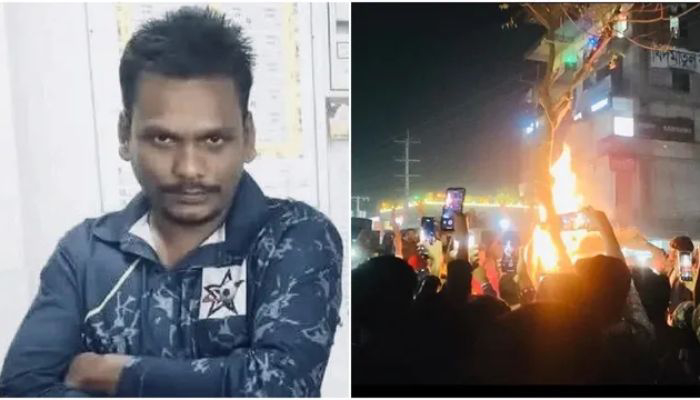
The brutal killing of Dipu Chandra Das in Bangladesh is a chilling reminder of how Islamic radicalism and mob violence continue to threaten minorities and the rule of law. The incident, which unfolded in the industrial area of Bhaluka in Mymensingh, was not merely a spontaneous act of rage. It reflected a deeper crisis where extremist attitudes, communal hatred, and institutional failure converge with deadly consequences.
On Thursday, 18th December, Dipu Chandra Das, a Hindu garment worker aged twenty eight, was beaten to death by an enraged Muslim mob. His body was later hung from a tree branch and set on fire, an act that underscored the sheer brutality of the crime. Dipu had been working for two years at Pioneer Knitwears BD Ltd, a readymade garment factory in Bhaluka, and had come from his ancestral home in Tarakanda to earn a living. His murder shocked the local community but also raised grave questions about the spread of radical intolerance or Islamic radicalism in everyday workplaces.
What makes the case especially disturbing is the role allegedly played by factory management. On Friday, 19th December, the Rapid Action Battalion, commonly known as RAB, revealed that the floor manager of the factory handed Dipu over to the mob instead of protecting him or alerting the police. This decision transformed a volatile situation into a fatal one. Rather than acting as a barrier against violence, a person in authority reportedly facilitated it, reflecting how fear of radical mobs or ideological sympathy can override basic human decency.
The following day, Saturday, 20th December, RAB held a press conference announcing the arrest of ten individuals linked to the killing. RAB 14 Director Naimul Hassan stated that among those arrested were floor manager Alamgir Hossain, aged thirty eight, and quality manager Miraz Hossain Akon, aged forty six, both employees of the same factory. Seven suspects were detained by RAB while police arrested three others. The list of those in custody includes Tarek Hossain, Limon Sarker, Manik Miah, Ershad Ali, Nijhum Uddin, Azmal Hasan Sagir, Shahin Miah, and Md Nazmul.
Investigators are now trying to determine why Dipu was handed over to the mob. According to Naimul Hassan, it could have been due to old enmity or pressure from the crowd. However, such explanations cannot mask the broader issue or Islamic radicalism. When mobs feel empowered to demand a human life, and when managers comply instead of resisting, it points to a social environment where extremist attitudes have become normalized.
Islamic radicalism in Bangladesh has often been discussed in the context of militant groups and political extremism. Yet incidents like this show how radicalization also manifests at the grassroots level. It appears in the willingness to dehumanize a minority individual, to accuse without evidence, and to mete out instant punishment in the name of religious or moral outrage. Mob justice becomes a substitute for law, and violence is justified through distorted religious sentiment.
For minorities such as Hindus, this creates a climate of constant insecurity. Bangladesh was founded on principles of secularism and coexistence, but repeated attacks on minority communities erode those ideals. When a Hindu worker can be lynched at his workplace and burned publicly, it sends a message of fear far beyond one factory or one district. It tells minorities that their safety is fragile and conditional.
The responsibility does not lie only with the mob. Institutions must be held accountable when they fail to protect vulnerable individuals. Factories, local leaders, and law enforcement agencies have a duty to intervene decisively against violence. Handing someone over to a mob is not a lapse in judgment but a betrayal of legal and moral obligations.
The arrest of the suspects is a necessary step, but justice will depend on transparent investigation and fair prosecution. More importantly, preventing future tragedies requires confronting the ideological roots of such violence. Time to investigate and stub out Islamic radicalism. Religious leaders, educators, and policymakers must actively counter narratives that promote hatred and vigilantism. Silence or ambiguity in the face of radicalism only allows it to spread.
The killing of Dipu Chandra Das should serve as a wake up call. It is not an isolated crime but a symptom of a deeper disease that threatens social harmony and human rights. Combating Islamic radicalism and mob justice is essential not only to protect minorities but also to uphold the dignity of the nation itself. Without firm action and moral clarity, the cycle of fear and violence will continue, claiming more innocent lives.