

















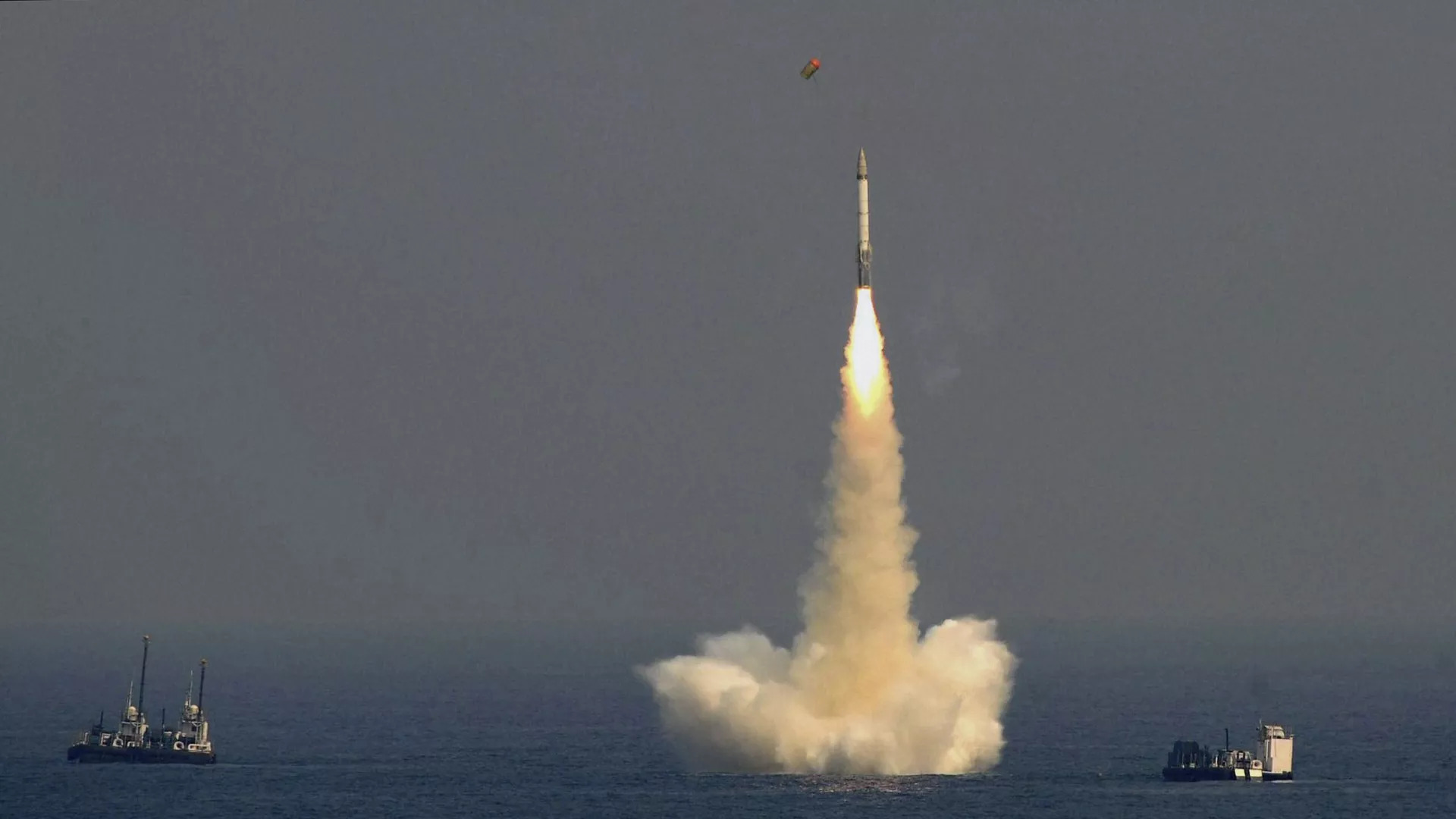
India’s successful test of the Submarine Launched Ballistic Missile K 4 variant on December 23, 2025 represents a watershed moment in the nation’s long journey toward credible and survivable nuclear deterrence. Launched from the nuclear powered ballistic missile submarine INS Arihant in the Bay of Bengal, the test was not merely a technological milestone but a powerful strategic signal. With an estimated range of around three thousand five hundred kilometers, the K 4 Missile strengthens the most elusive and vital leg of India’s nuclear triad and reinforces the country’s posture of responsible but resolute defense.
The significance of a submarine launched ballistic missile lies in its invisibility and survivability. Unlike land based missiles that can be tracked and targeted, or aircraft that can be intercepted, a ballistic missile submarine operates silently beneath the ocean surface. It remains hidden, mobile, and extremely difficult to detect. This ensures that even in the worst case scenario of a first strike by an adversary, India retains the assured capability to respond. The successful K 4 Missile test therefore underscores India’s commitment to maintaining a credible second strike capability, which is the cornerstone of effective nuclear deterrence.
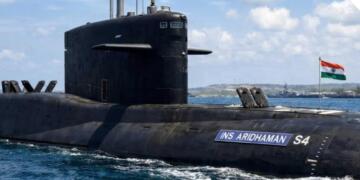
INS Arihant, from which the missile was launched, symbolizes decades of indigenous effort in nuclear submarine development. Conceived under the Advanced Technology Vessel program, Arihant represents India’s entry into an exclusive group of nations capable of designing, building, and operating nuclear powered ballistic missile submarines. The integration of the K 4 missile with this platform reflects the maturation of India’s defense ecosystem, where naval engineering, missile technology, command and control systems, and strategic doctrine converge seamlessly.
The K 4 missile itself is a product of sustained research and development by Indian scientists and engineers. With its extended range compared to earlier submarine launched systems, it allows Indian SSBNs to operate from safer patrol areas while still holding strategic targets at risk. This reduces operational vulnerability and enhances strategic stability. The missile’s design emphasizes reliability, accuracy, and survivability, qualities essential for a deterrent system that may never be used but must always be ready.
From a doctrinal perspective, the test reinforces India’s declared policy of credible minimum deterrence and no first use. India does not seek parity in numbers or aggressive posturing. Instead, it aims to maintain sufficient capability to deter coercion and aggression. The strengthening of the sea based leg of the nuclear triad aligns with this philosophy. It is defensive in intent but firm in execution, signaling that any threat to India’s sovereignty will be met with certainty rather than bravado.
The regional and global implications of the test are also significant. In an environment marked by evolving security dynamics in the Indo Pacific and Asia, the demonstration of a robust and survivable deterrent like K 4 Missile contributes to strategic balance. It communicates to adversaries that escalation will not yield advantage and to partners that India is a stable and responsible nuclear power. Unlike provocative displays, this test was conducted with restraint and professionalism, reflecting India’s emphasis on stability rather than intimidation.
Technologically, the success of the K 4 Missile test highlights the depth of India’s indigenous capabilities. From propulsion and guidance systems to underwater launch mechanics and command integration, the achievement reflects years of iterative testing and refinement. It also reduces dependence on external sources and strengthens national autonomy in critical defense technologies. Such self reliance is not merely a matter of pride but a strategic necessity in an uncertain world.
The human dimension behind this achievement must not be overlooked. Thousands of scientists, engineers, naval personnel, and support staff contribute silently to such milestones. Their work often remains unseen, much like the submarines they serve, yet it forms the backbone of national security. The successful test stands as a testament to their dedication and expertise, nurtured over generations through institutions committed to excellence.
As India continues to modernize its armed forces, the emphasis on balanced capability development remains crucial. The nuclear triad comprising land based missiles, air delivered weapons, and sea based systems ensures redundancy and resilience. With the K 4 Missile test, the sea based leg has gained renewed strength, closing gaps and enhancing confidence in the overall deterrent architecture.
In conclusion, the successful test of the K 4 Missile submarine launched ballistic missile from INS Arihant is far more than a technical achievement. It is a strategic affirmation of India’s resolve to safeguard its future through credible deterrence, technological self reliance, and doctrinal restraint. Beneath the calm waters of the Bay of Bengal, a silent sentinel has spoken, not in aggression, but in assurance.