
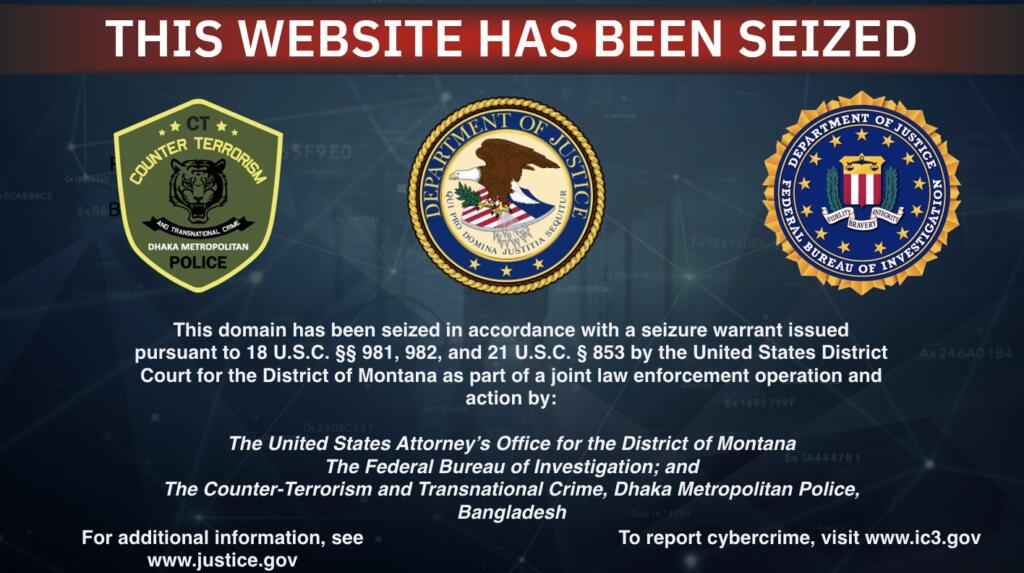
The recent indictment of a Bangladeshi national for operating illegal online marketplaces selling digital templates for forged United States passports and social security cards is more than a routine law enforcement update. It is a mirror held up to decades of geopolitical choices, permissive digital ecosystems, and selective moral blindness. The investigation, which led the FBI and its partners to seize multiple domains linked to the scheme, exposes a deeper and uncomfortable truth. The United States spent years milking a snake for short term gains, only to discover that the same snake has begun to bite back.
For a long time, Washington’s global strategy has been guided by expediency rather than foresight. In South Asia, and particularly in Bangladesh, successive United States administrations cultivated relationships with actors and environments that were seen as useful buffers against rival influences or as convenient partners in the globalized digital economy. Oversight was relaxed, scrutiny was selective, and uncomfortable questions were postponed. The goal was influence without responsibility, leverage without accountability. That approach worked, until it did not.
The digital underworld that allowed illegal marketplaces to flourish did not emerge in isolation. It grew within the cracks of a global internet economy where enforcement was uneven and where the United States, champion of free flows of information and commerce, often hesitated to regulate aggressively when it conflicted with strategic or commercial interests. Hosting services, payment rails, and anonymizing tools proliferated. Regions with weaker regulatory frameworks became fertile ground for cyber fraud. The snake was fed with neglect and rationalized tolerance.
Bangladesh’s role in this story is not about a nation as a whole but about how transnational crime networks exploit jurisdictional asymmetries. When individuals from such environments are able to sell templates for forged identity documents targeting the very heart of the American system, it is evidence that the United States underestimated the long term risks of allowing digital gray zones to persist. For years, warnings about identity theft, document forgery, and cyber enabled fraud were treated as technical nuisances rather than strategic threats.
The irony is stark. American power rests heavily on trust in its identity systems. Passports, social security numbers, and official documents are not mere pieces of paper or data. They are the skeleton keys to citizenship rights, financial systems, and national security. By failing to aggressively dismantle the ecosystems that trade in counterfeit identities early on, the United States effectively allowed adversarial capabilities to mature. The snake grew stronger with every ignored red flag.
When the indictment finally came, it was swift and forceful. The FBI and its partners moved to seize domains and disrupt the operation. Press releases spoke the language of justice and resolve. Yet enforcement at this stage is reactive. It addresses symptoms rather than origins. It is easier to shut down a marketplace than to dismantle the permissive global conditions that made it profitable and scalable in the first place.
This pattern is not new. History shows repeated instances where Washington empowered actors or tolerated environments that later became liabilities. The logic is always similar. Immediate gains outweigh distant risks. Control seems possible until it slips away. In the digital age, however, the turnaround time is much shorter. A cyber network can metastasize in months, not decades. By the time the bite is felt, the venom has already spread.
The case also raises uncomfortable questions about moral messaging. The United States often positions itself as a guardian of global order and rule of law. Yet when enforcement appears selective or delayed, credibility erodes. Communities abroad see a double standard where some violations are ignored until American interests are directly harmed. That perception fuels resentment and opportunism. It tells bad actors that the rules are flexible, negotiable, and ultimately reactive.
There is also a domestic lesson here. Cybercrime and identity fraud are not foreign problems that can be outsourced to distant jurisdictions. They are inseparable from domestic policy choices about regulation, digital literacy, and interagency coordination. The seizure of domains is necessary, but it is not sufficient. Without sustained investment in prevention, intelligence sharing, and international accountability, similar schemes will reappear under new names and new domains.
The metaphor of milking a snake is apt because it captures the illusion of control. A snake can be exploited for its venom, but it remains a snake. It does not become docile simply because it is useful. By treating risky environments and actors as manageable tools rather than potential threats, the United States invited a predictable outcome. The bite was not an accident. It was a consequence.
If there is a path forward, it lies in abandoning short term convenience for long term security. That means confronting uncomfortable allies, tightening digital governance, and recognizing that cybercrime is a strategic challenge, not a peripheral annoyance. It also means acknowledging past miscalculations without deflection.
The indictment of a Bangladeshi national for selling forged identity templates is a warning shot. It signals that the era of benign neglect has costs. The snake has shown its fangs. Whether the United States learns to stop feeding it, or merely reacts to each new bite, will determine whether this episode becomes a turning point or just another chapter in a recurring cycle of self inflicted harm.