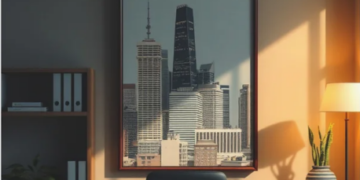





















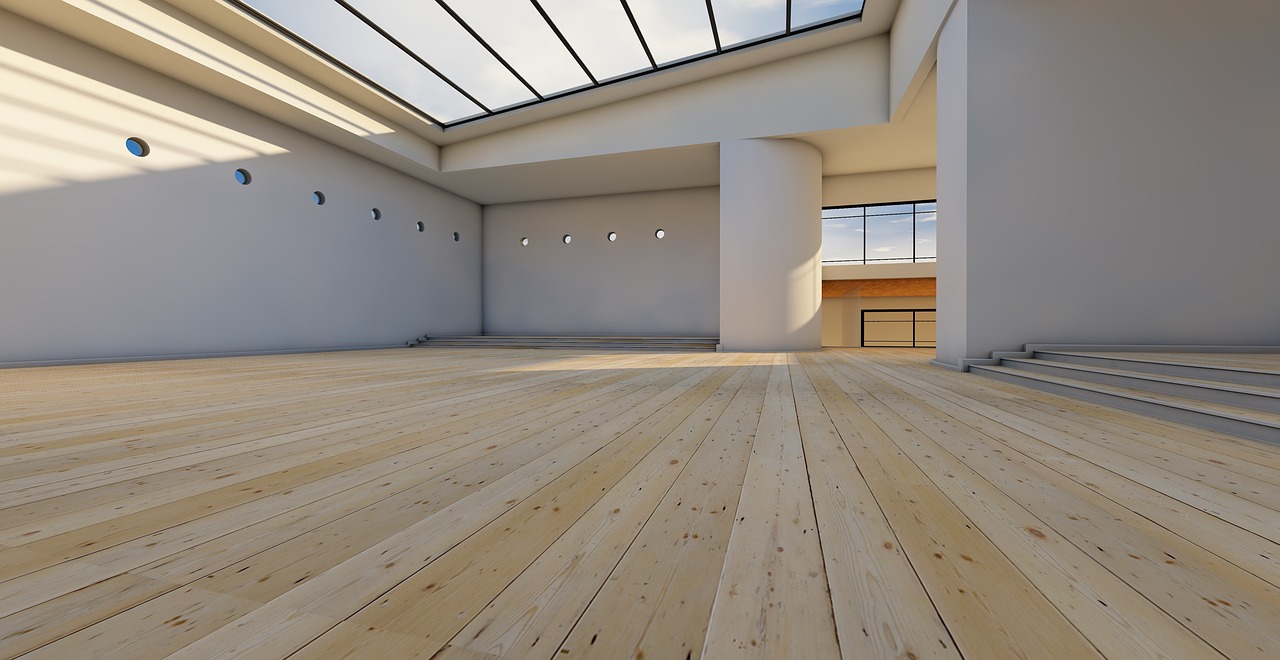
Ten years ago, retail design was static: build the walls and leave them. That model is obsolete. In 2025, we will operate in “Liquid Retail.” A store exists simultaneously on the street and the screen. The digital twin must be as compelling as the physical location.
This shift demands speed, not weeks of rendering. We require generative tools that understand architecture and lighting immediately. X-Design replaces slow renders with instant visualization, allowing brands to construct fluid environments that adapt to trends instantly rather than every five years. The distinction between physical infrastructure and digital assets has evaporated.
1. Speed is the New Aesthetic
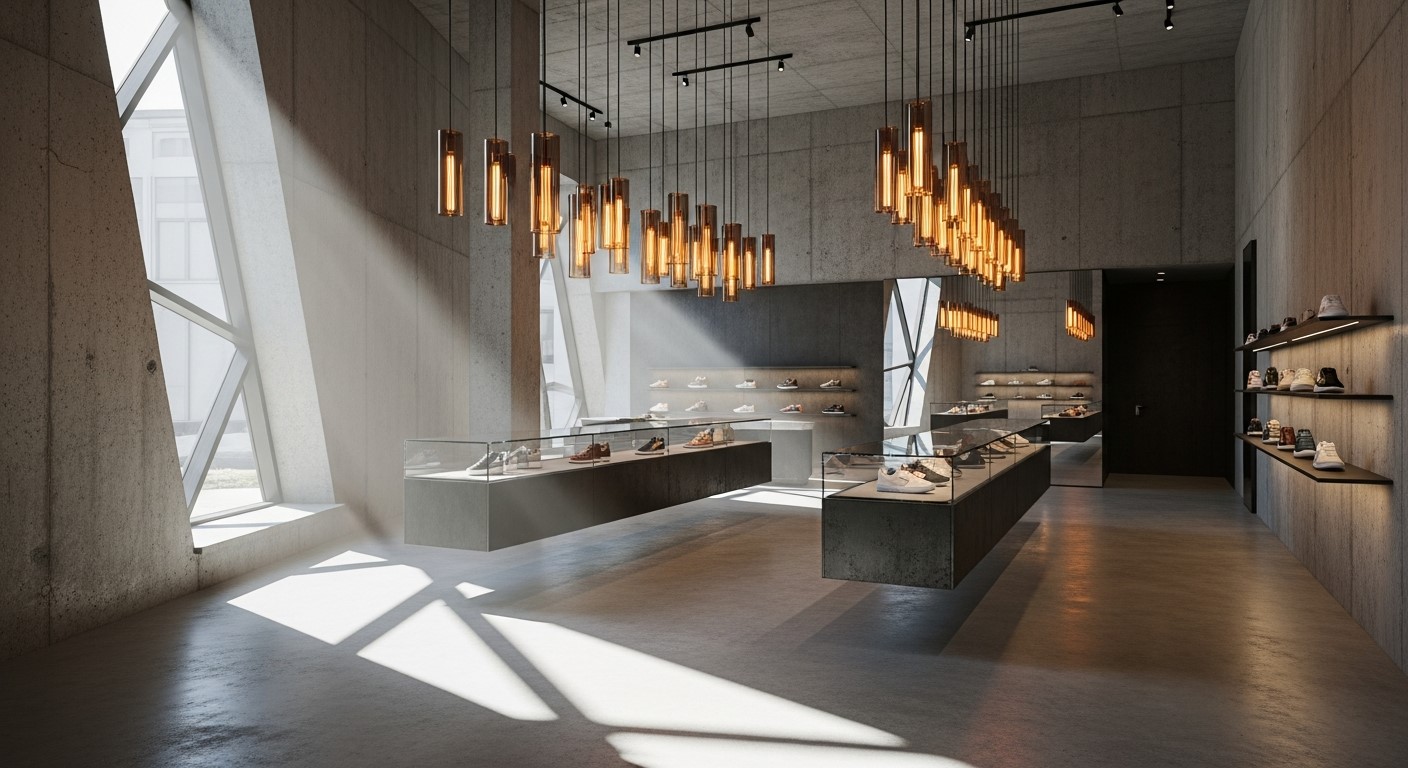
Designing a store concept used to be agonizingly slow. New tools have enabled “Rapid Retail Prototyping.” Designers now visualize hundreds of store concepts in a single afternoon. Instead of waiting days for a 3D artist, they input specific criteria: “Minimalist sneaker boutique, concrete textures, suspended amber lighting, brutalist architecture.” The system produces photorealistic options immediately.
2. The “Phygital” Texture Revolution
Online retail long felt “flat.” You couldn’t touch the fabric or feel the cold weight of a marble counter. The digital store resembled a catalog, not an experience.
This has shifted with high-fidelity texture generation. New models produce materials so hyper-realistic they convince the eye of their tactility. This is vital for virtual storefronts.
Achieving this previously required expensive location photography. Now, using Nano Banana (Gemini 2.5 Flash) or the pro-tier Nano Banana Pro (Gemini 3.0 Pro), designers generate 4K textures that simulate complex lighting physics. The software distinguishes how light interacts with a velvet curve versus a steel edge.
3. The Identity Crisis (And How to Solve It)
The objective of retail design in 2025 is total personalization. Imagine a digital storefront that physically rearranges itself based on who is watching. For a Gen Z shopper, the layout loads as chaotic, colorful, and video-heavy. For a luxury client, the same site appears minimalist, quiet, and sophisticated.
Executing this requires a deep library of assets. A static logo fails here; you need dynamic branding. This is where AI logo generators function as critical infrastructure. They allow for flexible identity systems—marks that shift texture or color based on context while preserving the brand’s core geometry. A campaign might demand a neon variant for a “Night Mode” sale and a matte black iteration for a VIP portal. Manually creating these variants burns days of design time. The software finishes them in minutes.
What is X-Design AI Agent?
Navigating digital retail requires more than a standard Photoshop license. It demands a dedicated operational partner. X-Design operates as a specific Agent for Business Design. It is not merely a loose collection of editing filters; it is the infrastructure built to construct visual identities from the ground up.
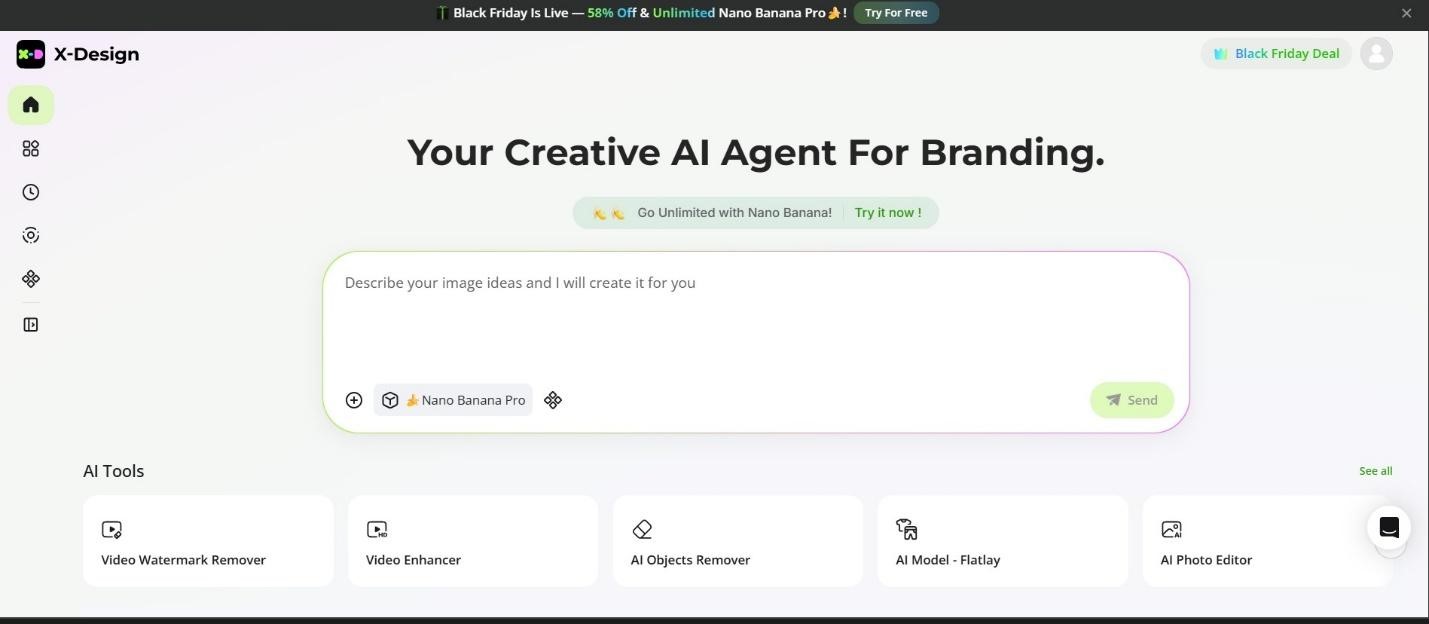
The dashboard reflects the logistics of modern commerce. It embeds the industry’s highest-fidelity models directly into the production line, converting raw generative power into a viable, structured workflow.
How to Design a 2025 Retail Concept Using X-Design
Let’s say you are launching a new coffee brand called “Midnight Roast.” You want a store concept that feels dark, moody, and premium. You don’t have a million dollars for an architect. Here is how you use the X-Design agent to build it.
Step 1: The Identity Foundation
First, you need a brand mark that sets the tone. You aren’t just looking for a static icon; you are looking for a system.
You start by using the platform’s AI logo generators. You input your brand values: Dark, Premium, Industrial, Smoke. The agent generates concepts. You pick a rough gem—perhaps a stylized flame icon.
But a rough generation isn’t a final asset. You take that concept into the logo editor. In 2025, the details matter. A generic logo looks cheap. A refined logo looks like heritage. You use the editor to refine the kerning (spacing between letters) and alignment. The AI Agent helps ensure your spacing is mathematically perfect, giving you that professional polish instantly.
Step 2: Virtual Merchandising (The Mockup)
Now you need to see your product in the environment. You don’t need to rent a cafe to shoot photos.
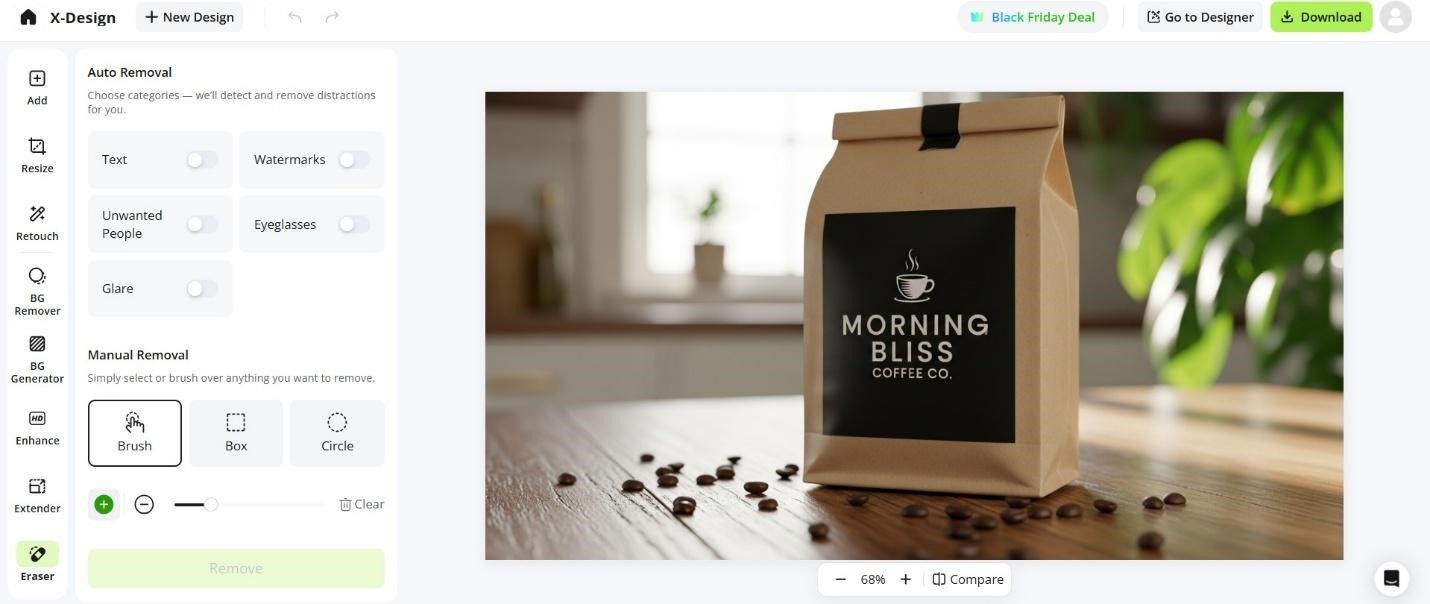
- Upload your product: Take a photo of your coffee bag on your kitchen table.
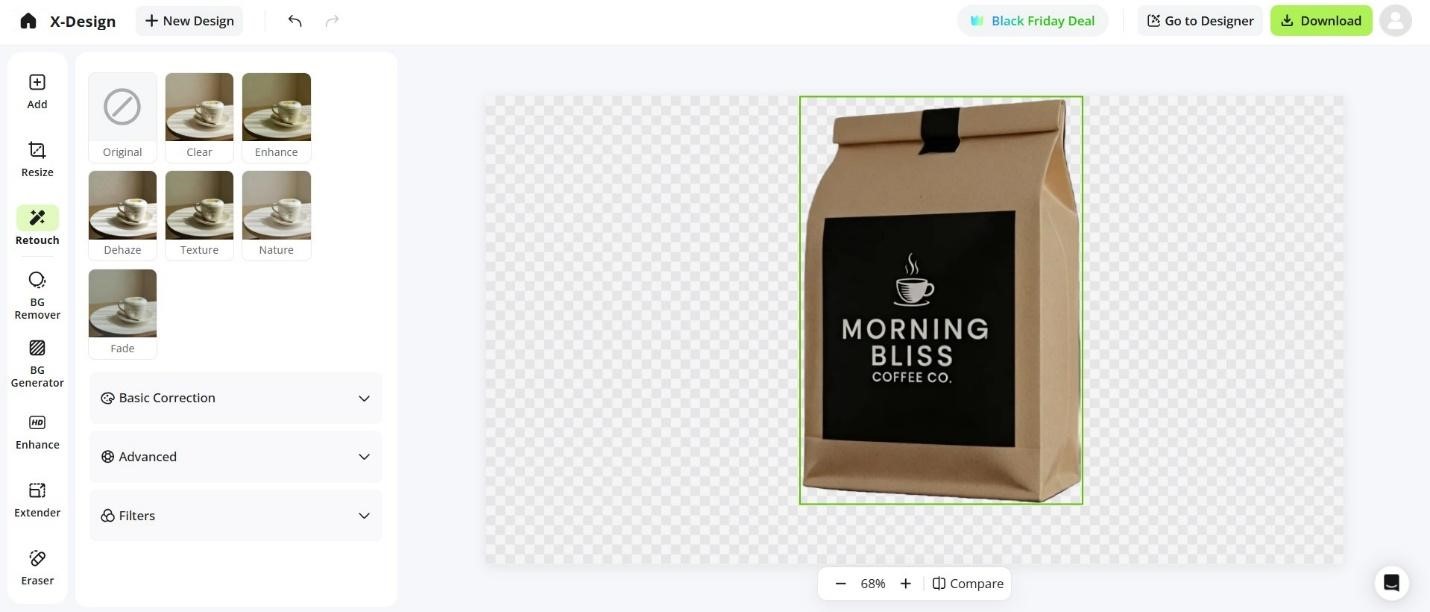
- Object Remover: Use this tool to strip the messy background so you have a clean asset.
- AI Mockup Generator: This is where the magic happens. You type a prompt: “Dark oak cafe counter, moody ambient lighting, steam rising, noir atmosphere, 85mm lens.”
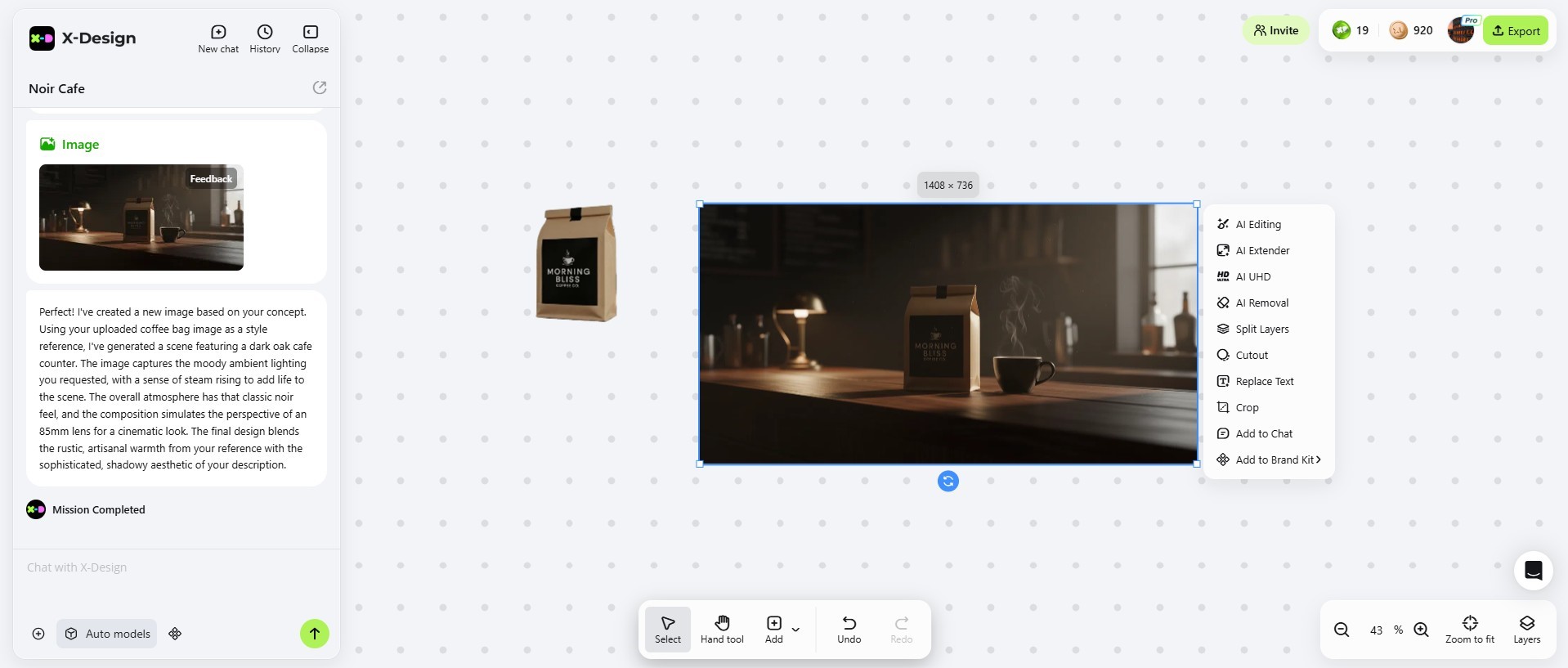
The model calculates how the shadows should fall on your coffee bag based on the virtual lights. The result is a photo that looks like it cost a fortune to shoot.
Step 3: The Digital Window Display (Motion)
Static images suffice for print, but digital channels require motion. The human eye glosses over stillness; it instinctively tracks movement.
Animate subtle details like rising steam or shifting shadows. This movement snags peripheral vision.
Step 4: Consistency Across Channels
The final step in retail design is cohesion. Your physical menu must match your Instagram Story, which must match your website banner. If the vibe breaks, the trust breaks.
X-Design’s Banner Maker and Image Resizer ensure that your high-fidelity “Midnight Roast” aesthetic is perfectly scaled for every touchpoint. You aren’t stretching images or losing quality. The AI upscales and reformats your master assets so that your brand looks just as sharp on a 60-inch in-store monitor as it does on a 6-inch phone screen.
The Future is Hybrid
Coordinates do not define the retail store of 2025; it is defined by consistency. Basically, it’s a visual system that engages customers across every channel. Whether designing a physical showroom or a digital landing page, the mandates are identical: establish atmosphere, command attention, and enforce absolute quality.
Platforms like X-Design have dismantled the barrier to entry. You no longer require an architectural firm to construct a high-end retail environment. You simply need a clear objective and the computational agent required to execute it.