
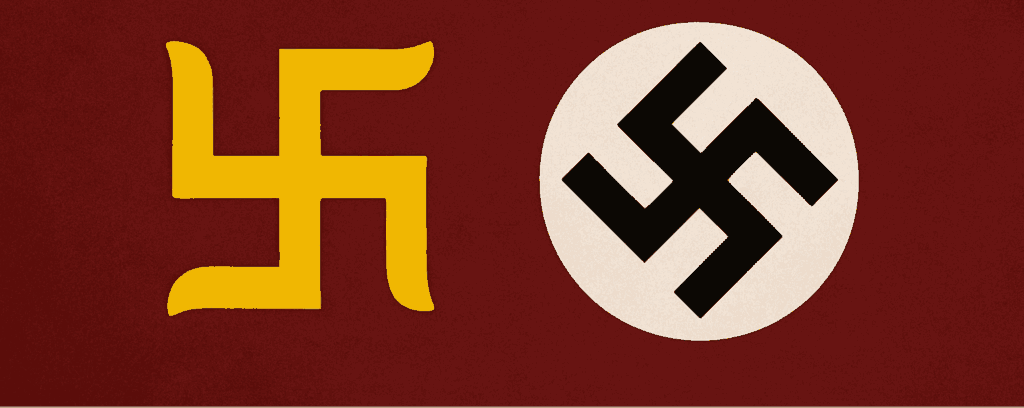
Canada has taken a landmark step that has been widely celebrated by Hindu, Buddhist, and Jain communities across the world. By amending its proposed federal anti hate legislation, Canada has formally clarified the distinction between the ancient Hindu Swastika and the Nazi Hakenkreuz. This move not only corrects a long standing misunderstanding but also sets a global example in respecting cultural and religious symbols while fighting hate more effectively.
Before we proceed anymore let’s ascertain the real difference, Swastika is an ancient Hindu symbol of auspiciousness, prosperity, well being, and cosmic harmony. It has no connection to the Nazi Hakenkreuz, which was a distorted political emblem created in the twentieth century. The sacred Swastika represents peace, while the Hakenkreuz represents hatred and violence.
Community organisations immediately pointed out that using the word Swastika to describe the Nazi emblem not only risked further cultural misunderstanding but also, more troublingly, could stigmatise legitimate religious use of the sacred symbol. This concern was echoed strongly by more than a hundred groups representing Hindu, Buddhist, and Jain Canadians. They formed a unified coalition to reach out to lawmakers and educate the public about the vast difference between the two symbols despite their superficial resemblance.
A striking and heartening element of this movement was the support extended by Jewish advocacy groups. They emphasised that accurately naming the Nazi symbol strengthens the fight against antisemitism and ensures that laws are focused on genuine hate symbols rather than on misidentified cultural icons. Many Jewish leaders stated that conflating the two symbols was historically inaccurate and risked weakening the legal and moral clarity required for combating hatred. Their solidarity added moral weight and contributed significantly to the momentum behind the amendment.
Responding to this wide based advocacy, the House of Commons Standing Committee on Justice and Human Rights unanimously agreed to modify the bill. All references to the word Swastika were removed, and the correct term Nazi Hakenkreuz was added instead. This change accurately reflects both historical fact and cultural sensitivity. It acknowledges that the Nazis never used the Sanskrit term Swastika, and that the sacred Hindu symbol predates the Nazi era by thousands of years.
For Hindu communities in Canada and globally, this amendment represents an important recognition of their cultural identity and heritage. Many Hindu groups described the decision as a powerful message that multicultural societies can and must respect ancient traditions while condemning modern hate. They also viewed it as a significant step towards preventing future misrepresentations of the Swastika in educational materials, media, and public discourse.
Importantly, the amendment also strengthens the purpose of Bill C 9 itself. By clearly identifying the Hakenkreuz as a hate symbol, the law avoids ambiguity and ensures that legal action targets the correct emblem associated with Nazism and extremist ideologies. Lawmakers across party lines stated that legislative clarity is essential to effective enforcement and to avoiding unintended consequences, such as the harassment or vilification of peaceful religious practitioners.
Civil liberties groups have raised broader questions about the bill, including how hate symbols should be defined and how free expression can be protected alongside public safety. These discussions are ongoing, but the removal of the Swastika from the bill has been almost universally welcomed. It demonstrates how the legislative process can be improved through dialogue, education, and collaboration with community groups. The Canadian experience shows that listening to cultural minorities and experts strengthens democracy rather than complicating it.
Moreover, this development carries global significance. Several Western nations continue to use the term Swastika when referring to Nazi imagery, which often results in unintentional cultural harm. Canada’s decision sets a respectful example by showing that it is possible to combat hate while honouring ancient traditions. It also encourages other countries to re examine their legal language and educational frameworks to avoid perpetuating historical inaccuracies.
The episode also highlights the power of collective advocacy. Hindu, Buddhist, and Jain organisations worked hand in hand with Jewish groups and other civil society bodies to present a united voice. Their educational campaigns, petitions, and discussions with lawmakers were crucial in achieving this result. This spirit of solidarity sends a strong message that protecting cultural symbols and fighting hatred can go together.
As Bill C 9 moves through the next stages of the legislative process, Canada’s decision to differentiate the sacred Swastika from the Nazi Hakenkreuz will remain a defining moment. It reflects a thoughtful, inclusive approach to governance and reaffirms the nation’s commitment to multiculturalism. By combining historical accuracy with cultural respect, Canada has shown that combating hate does not require erasing heritage. Instead, it requires understanding it.