
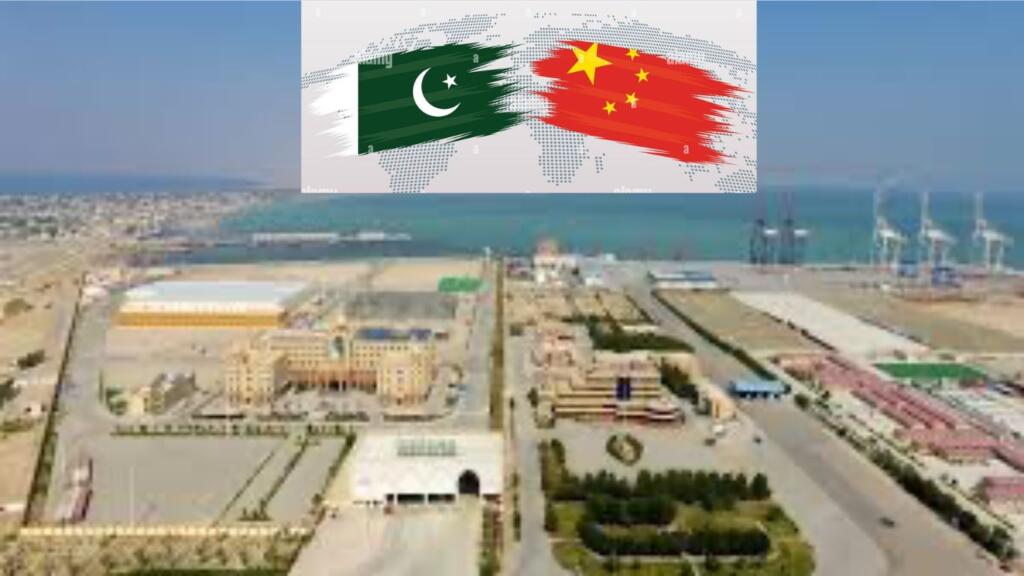
Gwadar was promised as a turning point for Pakistan’s economy. The port and its Free Zone were sold as engines of local growth, job creation, and national integration. Years later, that promise looks hollow. Instead of becoming a Pakistani commercial hub, the Gwadar Free Zone is drifting toward something very different–a Chinese-controlled enclave that operates largely for external interests, with Pakistan reduced to a host rather than a beneficiary.
On paper, a free zone is meant to attract investment, encourage exports, and help local businesses grow. In Gwadar, the design and operation of the Free Zone tell another story. Most plots, facilities, and incentives are geared toward Chinese companies. Decision-making power rests with Chinese operators. Pakistani small and medium enterprises are left with little space, little support, and little influence. This imbalance did not happen by accident. From the beginning, the Free Zone was structured around Chinese priorities. Leasing terms, tax incentives and infrastructure planning favour large foreign firms that arrive with state backing and guaranteed financing. Local Pakistani entrepreneurs, especially those from Balochistan, cannot compete on these terms. They lack access to cheap capital, fast approvals and political protection.
As a result, the Free Zone looks busy on paper but hollow in reality. Warehouses, offices and industrial units exist but they function as extensions of Chinese supply chains. Inputs come from China. Management is Chinese. Profits are booked abroad. Pakistani participation is limited to low-level services, security, and casual labour.
Job creation was one of the biggest promises made to Gwadar’s residents. That promise has largely failed. Most jobs generated inside the Free Zone are low-skilled and temporary. Skilled positions, technical roles, and management posts are dominated by Chinese nationals. There is little meaningful skills transfer. Training programmes are minimal. Local workers remain stuck at the bottom, with no clear path upward.
This exclusion feeds resentment. Gwadar’s local population sees land taken, access restricted and high-security fences erected, while their own economic situation barely improves. The Free Zone operates like a sealed bubble, physically and economically separated from the city around it. Instead of integrating Gwadar into national growth, it reinforces the sense that development is happening over the heads of local people.
The failure is not only Chinese. It is fundamentally Pakistani. Pakistan’s leadership has repeatedly chosen speed and symbolism over substance. Projects are announced to show progress, not to build resilience. Questions about local participation, long-term viability, and economic spillover are brushed aside in the rush to please foreign partners.
Gwadar Port itself reflects this weakness. Despite its strategic location, it remains underused. Commercial traffic is limited. Supporting infrastructure is thin. Yet instead of fixing these basics, authorities continue to expand zones and announce new phases. The Free Zone becomes a showpiece rather than a functioning ecosystem.
Economic dependency deepens as a result. When a zone is dominated by one foreign country’s companies, capital, and management, the host country loses leverage. Decisions about expansion, slowdown, or relocation are taken elsewhere. Pakistan bears the political and security costs but has little say over outcomes.
This dependency is dangerous. If Chinese firms decide to scale back, shift routes, or delay projects, Gwadar has no strong domestic base to fall back on. Local businesses are too weak, too excluded, and too disconnected to fill the gap. What remains is empty infrastructure and unmet expectations.
Supporters argue that Pakistan must accept this model because it lacks alternatives. This argument is misleading. Other countries have built free zones that actively support local firms, require joint ventures, and enforce skills transfer. Pakistan chose not to. It chose convenience over capacity-building.
The security-heavy model around Gwadar makes things worse. Layers of checkpoints, restricted zones, and controlled access may protect foreign assets, but they suffocate local commerce. Small traders, fishermen, and service providers struggle to operate in an environment designed for exclusion. A port city cannot thrive if its own residents feel like outsiders.
Gwadar’s Free Zone also fails as a national integration project. It does not link meaningfully with Pakistan’s wider industrial base. Raw materials do not flow from inland Pakistan into Gwadar for processing. Finished goods do not move back into domestic markets. The zone looks outward, not inward. Pakistan is a corridor, not a partner.
This is the core problem with Gwadar as it stands. It is built to serve external strategies, not domestic needs. The Free Zone is not nurturing Pakistani entrepreneurship. It is crowding it out. It is not spreading opportunity. It is concentrating control.
Blame cannot be shifted entirely onto China. China is pursuing its interests clearly and efficiently. Pakistan’s failure lies in its inability, or unwillingness, to protect its own. Weak institutions, poor negotiation, and a habit of treating foreign investment as an end in itself have produced this outcome.
If nothing changes, Gwadar Free Zone will harden into a permanent enclave. A place on Pakistani soil where Pakistanis have little say, little stake, and little gain. Infrastructure will age. Promises will fade. Dependency will deepen.
Gwadar was meant to connect Pakistan to opportunity. Instead, it risks becoming a symbol of how not to develop: impressive on maps, disappointing on the ground, and disconnected from the people it was supposed to uplift.