
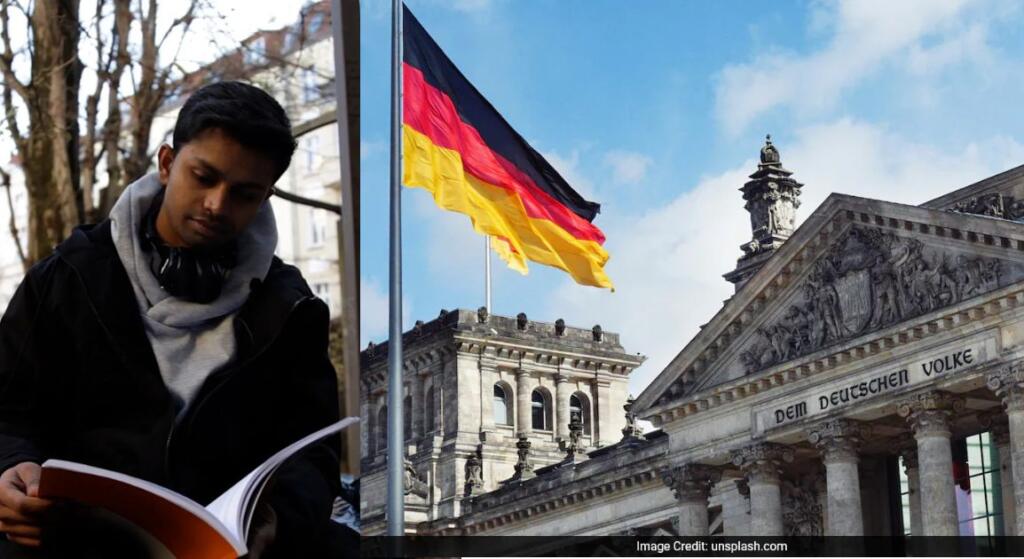
For many Indian students, studying in Germany was supposed to mark a decisive shift in their lives — access to a globally recognised degree, affordable education, and long-term opportunities in Europe. However, for hundreds enrolled at Berlin-based International University (IU), that aspiration is now giving way to uncertainty, legal anxiety, and the looming threat of forced return.
According to a recent Euronews report, several Indian students who invested heavily in tuition fees and education loans are now facing visa complications. Notably, this is not due to any violation on their part, but because immigration authorities have begun reinterpreting the nature of their academic programmes.
As a result, instead of focusing on examinations and dissertations, many students are now preoccupied with legal notices, appeals, and urgent meetings with immigration offices.
Also Read: Germany Backs India’s Expanding Maritime Vision At IPRD 2025
How the Visa Confusion Began
At the centre of the issue is a disconnect between how certain degree programmes were presented to students and how they are currently being evaluated by German authorities.
While students entered Germany legally under the assumption that they were enrolled in on-campus, in-person courses, officials have raised questions over whether these programmes — many of which follow hybrid or flexible learning models — meet mandatory face-to-face study requirements.
“Cases like these underline how complex international education pathways have become,” said Mayank Maheshwari, Co-Founder and COO of University Living.
According to him, students often make irreversible life decisions based on the programme structure and guidance provided during admission. However, over time, regulatory interpretations may change or be enforced differently.
“When such changes happen without proper communication or transition safeguards, students who acted in good faith are left exposed,” he added.
Students Trapped Between Universities and Authorities
Meanwhile, the impact on Indian students has been severe. Many have spent over €20,000 on tuition and living costs, largely funded through loans taken in India.
Now, some have been informed that while their degrees remain valid, they may only complete them remotely from India — directly contradicting earlier assurances of a campus-based education in Germany.
Consequently, students find themselves stuck between academic commitments and immigration decisions beyond their control.
A Warning Sign for Indian Families
This episode has also raised concerns among Indian families planning to send their children abroad. Germany, until now, was considered a transparent and cost-effective alternative to traditional destinations like the US or the UK.
However, incidents like this threaten to erode that confidence.
“Families must look beyond admissions and fee receipts,” Maheshwari said. “Programme recognition, mode of delivery, attendance rules, and visa eligibility must be verified through official and updated sources.”
Although this increases the burden on students and parents, he noted that it reflects the increasingly regulated nature of global education mobility.
When Education Models Move Faster Than Visa Rules
More broadly, the situation highlights a growing mismatch between evolving education formats and immigration frameworks that have not kept pace.
Hybrid, online, and flexible learning models are becoming common worldwide. Nevertheless, visa systems in many countries continue to rely on rigid definitions of in-person education.
Therefore, clear communication and early disclosure regarding how such programmes align with visa regulations is becoming critical.
“Transparent guidelines can significantly reduce uncertainty later,” Maheshwari emphasised.
Why the Berlin Case Matters Globally
At present, many affected Indian students in Berlin remain in a state of limbo — legally enrolled but unsure if they will be allowed to stay long enough to complete their degrees.
“International education depends on trust and predictability,” Maheshwari said. “Students invest years, money, and personal aspirations when they choose to study abroad.”
Ultimately, preserving confidence in global education pathways will require better coordination between universities, regulators, and immigration authorities.
As international student mobility continues to rise, the Berlin university episode may serve as a cautionary tale — not just for Germany, but for education systems worldwide — about what happens when institutional systems fail the very students they are meant to protect.