







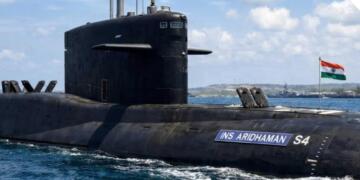
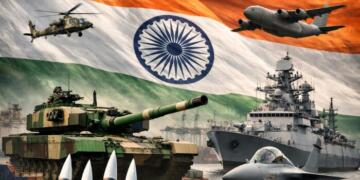









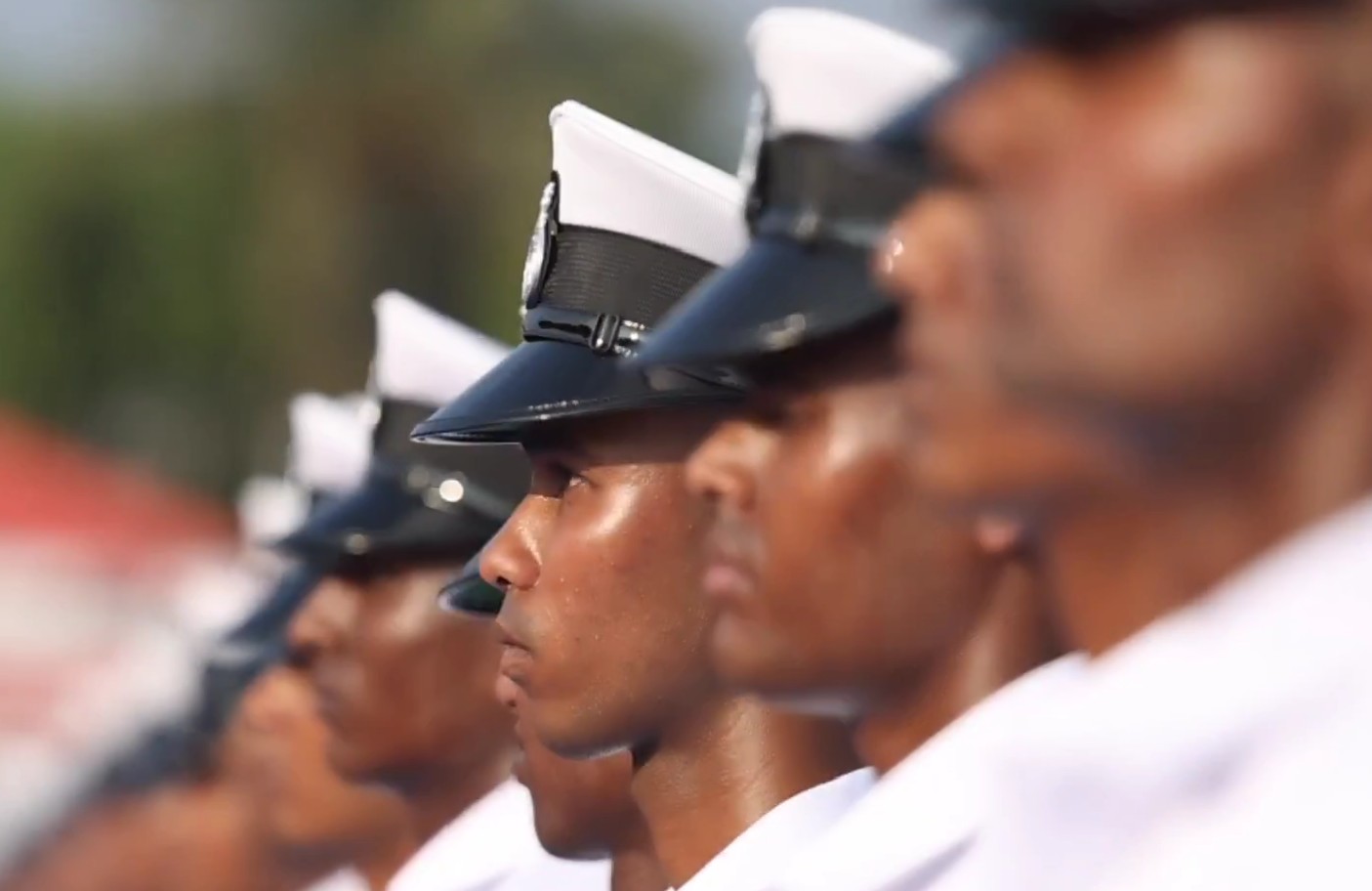
A day after the Indian Navy celebrated the ‘Navy Day,’ the force reiterated it’s commitment to the nation and hailed itself as a ‘combat ready, credible, cohesive’ and self reliant force.
Spokesperson of the Indian Navy posted on X, “#CombatReady #Credible #Cohesive and #FutureReady #Aatmanirbhar Force committed to protecting and promoting India’s National Maritime Interests, Anytime, Anywhere, Anyhow.”
President Droupadi Murmu, who is also the Supreme Commander of the Indian Armed Forces, on Thursday had hailed the Indian Navy as a symbol of discipline, compassion and duty and said the nation salutes the men and women who safeguard maritime borders and national interests.
“Warm greetings to Indian Navy personnel, veterans and their families on Navy Day! The nation salutes the brave men and women who safeguard our maritime borders and national interests with courage, vigilance and unwavering commitment. From securing trade routes and strengthening the blue economy to leading humanitarian missions, the Indian Navy embodies discipline, compassion and responsibility,” posted Murmu on X yesterday.
President Droupadi Murmu on Thursday graced the Navy Day-2025 celebrations and witnessed the operational demonstration by the Indian Navy at Thiruvananthapuram in Kerala.
Speaking on the occasion, the President said that the Navy Day is a celebration of selfless service and supreme sacrifice made by naval personnel in defence of our motherland and that the people of India are grateful to the men and women of the Indian Navy for their service to the nation.
She also commended them for their professionalism, passion and patriotism and said that the Indian Ocean Region is a highly strategic and critical maritime space.
“It is a conduit for global energy supplies and trade. As India is positioned at its centre, we bear a special responsibility. We are committed to the idea of the oceans remaining open, stable and rules-based. As per our vision of ‘Vasudhaiva Kutumbakam’, India’s approach is collaborative rather than competitive. Our country is promoting shared awareness, capacity building, and the peaceful use of the seas,” said President Murmu.
The President said that the Indian Navy stands as the principal actor for the security of our seas.
“From deterring threats to combating piracy, from securing our Exclusive Economic Zone to ensuring freedom of navigation, the Navy’s role extends well beyond traditional defence. The Navy also exemplifies India’s humanitarian aspect. In crises across the Indian Ocean Region, it has acted as the first responder: evacuating citizens, providing succour, and delivering humanitarian assistance,” she said.
She expressed confidence that new initiatives undertaken under the SAGAR vision will enhance maritime domain awareness, provide humanitarian aid, and ensure security for the international maritime community.
The President said that India is focusing on harnessing the potential of Blue Economy as a driver of sustainable development and the Navy plays an important role in these efforts.
“By securing sea routes, protecting marine resources, preventing illegal activities, and supporting maritime research, the Navy strengthens our vision of safe, prosperous, and sustainable oceans,” she added.
India celebrates December 4 as Navy Day every year to acknowledge the role of the Indian Navy and commemorate its achievements in ‘Operation Trident’ during the 1971 Indo-Pak War.
The date for commemorating Navy Day has shifted over the years. The Royal Indian Navy first observed it on October 21, 1944. By 1945, the day was marked in Bombay (now Mumbai) and Karachi on December 1. After Independence and until 1972, Navy Day was celebrated on December 15 before ultimately being celebrated on December 4.
Operation Trident during the 1971 India-Pakistan War
December 4 marks Operation Trident, the daring naval assault in which the Indian Navy dealt heavy blows to Pakistani vessels in Karachi harbour during the 1971 Bangladesh Liberation War.
The conflict began a day earlier, when the Pakistan Air Force launched pre-emptive strikes on Indian airfields. India formally entered the war in the early hours of December 4.
Later that day, under Operation Trident, the Navy deployed its newly inducted Soviet Osa-class missile boats armed with SS-N-2 Styx missiles, sinking three Pakistani vessels near Karachi.
INS Kiltan, Katchall, Nipat, Nighat and Veer destroyed PNS Khaibar—killing 222 Pakistani sailors—and PNS Muhafiz, which lost 33 sailors, along with the merchant vessel MV Venus Challenger. The Indian Air Force also struck Karachi’s Kemari oil tanks independently on the same day, though it did not claim the operation.
On December 5, the Navy’s Western Command chief, Vice Admiral S. N. Kohli, received the code word “Angaar”, signalling the operation’s success. The war concluded on December 16 with Pakistan’s formal surrender in Dhaka—a defining image of the 1971 conflict.
A mission of many firsts
As previously reported by The Indian Express, Operation Trident introduced several innovations, the first use of missiles in the region, the towing of smaller vessels by larger ones to extend endurance, strict radio silence, clever communication tactics to evade detection, and the deployment of coastal defence boats in an offensive role.
Missile boat crews, trained in Russia, communicated in Russian over open channels, confusing Pakistani signals intelligence. Captain Vijai Jerath of INS Vinash received the Vir Chakra for exemplary leadership. A follow-up missile strike, Operation Triumph, planned for December 10, was later cancelled owing to India’s effective naval dominance.
As naval officer Ankush Banerjee has written in The Indian Express, the success of Trident also stemmed from years of planning and modernisation. Between 1965 and 1971, the Navy strengthened infrastructure, acquired new platforms, and developed knowledge frameworks. Between 1969 and 1970 alone, India inducted a range of vessels—from Petya-class anti-submarine ships and submarines to landing ships and patrol craft. By 1970-71, eight Soviet missile boats were in various stages of delivery.
The result–India suffered no casualties during the campaign. On December 8, the Navy followed up with Operation Python, inflicting further damage. The blows were so significant that by December 9, Pakistani ships were ordered to reduce onboard ammunition to limit potential explosion damage.
This historic operation—and the naval supremacy it demonstrated—ultimately cemented December 4 as Navy Day.





