




















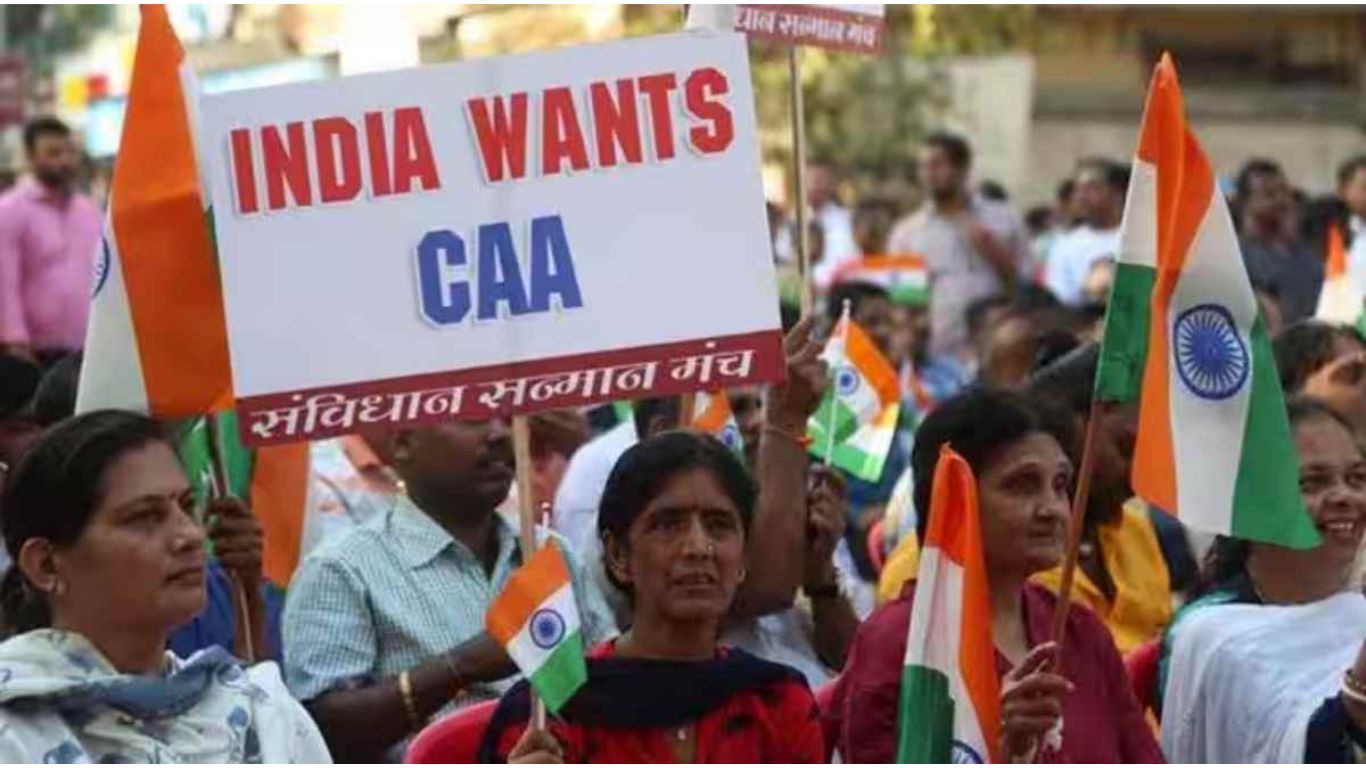
On this day in 2019, Parliament passed the Citizenship Amendment Act (CAA), one of the most debated legislations in recent Indian history. Six years later, the law continues to shape political, social, and policy conversations across the country. Initially marked by large-scale protests and political polarisation, the issue has gradually moved into an administrative and legal phase as the government has begun implementing the Act in a structured manner.
Implementation Finally Begins After Years of Delay
For the first several years after its passage, the CAA remained a law without rules. However, the Union Government notified its rules earlier this year, making it operational. Once the rules came into effect, the process of granting fast-track citizenship to non-Muslim refugees from Afghanistan, Pakistan, and Bangladesh formally began.
These groups include Hindus, Sikhs, Christians, Buddhists, Jains, and Parsis who entered India before 31 December 2014 due to religious persecution or fear of such persecution. The government has brought an online portal for applications, and early indications suggest an attempt to process long-pending refugee cases with speed and clarity.
Also Read: CAA: Safeguarding Minorities and Strengthening India’s Legacy of Compassion
Officials involved in the rollout say that the emphasis is on transparency and documentation, aiming to bring legal stability to thousands of families who have lived in India for years without a clear citizenship status.
How the Political Debate Has Shifted
While the passage of the CAA in 2019 triggered intense protests in several parts of the country, the nature of public debate has visibly changed. Many political parties that earlier led the resistance have since shifted to legal and administrative critiques rather than street mobilisation.
Internationally, India has faced questions from some organisations and foreign governments, but the Centre has consistently maintained that the CAA is a humanitarian measure that does not take away anyone’s citizenship and is meant only to give citizenship to persecuted minorities.
The government’s position has remained firm: CAA is not targeted at any Indian citizen and does not affect the rights of Indian Muslims.
What Has Changed Since 2019?
Several developments mark the six years since the law was passed:
- Operational Rules have been notified, bringing the law into force.
- Refugee Documentation has increased, with clearer procedures for long-term visa holders.
- Political Temperatures around the issue have cooled, even though disagreements persist.
- Legal Scrutiny continues in the Supreme Court, where multiple petitions challenging the law remain pending.
NRC: What Will Happen Now?
One of the biggest questions since 2019 has been the future of the National Register of Citizens (NRC). While initially expected to follow the CAA, a nationwide NRC has not been announced.
The central government has not provided any timeline or roadmap for a national NRC exercise. Assam’s NRC—conducted under a separate Supreme Court-monitored process—remains the only completed register.
A nationwide NRC now appears unlikely in the near term, with officials indicating that any future work on verifying citizenship records would depend on digital databases such as Aadhaar, population registers, and upcoming census data.
Five Years Later: A Turning Point Still Unfolding
As the CAA marks its 6th anniversary, its implementation has made it easy for thousands of refugees seeking legal recognition in India. But the broader citizenship debate, especially around NRC, remains unresolved. How these processes evolve will continue to shape India’s political and social discourse in the coming years.





