
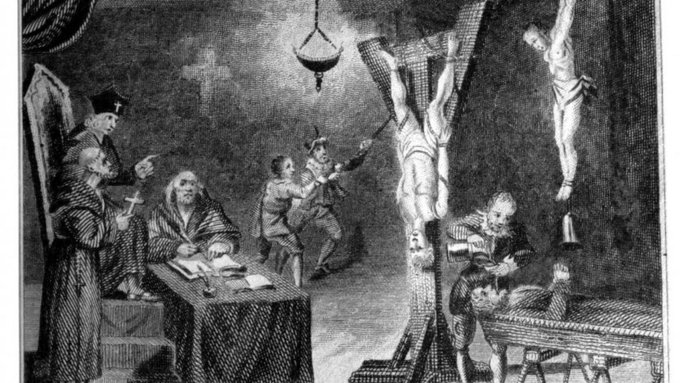
The Goa Inquisition stands as one of the most savage episodes in colonial history, where Portuguese authorities systematically targeted Hindus for extermination and forced conversion over two and a half centuries. From 1560 to 1812, this religious purge unleashed unimaginable brutality, erasing Hindu culture from Goa through torture, mass executions, and cultural annihilation. Thousands perished in this dark chapter, yet it remains obscured in mainstream narratives.
Established in 1560 by King Sebastian of Portugal, the Inquisition transformed the Viceroy’s palace in Old Goa into a fortress of horror known as the Palácio do Inquisição. This institution held authority surpassing even the Viceroy, wielding ecclesiastical power to enforce Catholic orthodoxy. Its primary targets were Hindus, alongside Muslims, Jews, and even lapsed Christians suspected of reverting to native faiths. Jesuit priests, led by figures like Francis Xavier, spearheaded the campaign, viewing Hindu practices as diabolical heresy that demanded eradication.
The Inquisition’s machinery operated through anonymous denunciations, secret trials, and relentless persecution. Hindus faced arrest for possessing idols, performing rituals, or even cremating the dead—acts punishable by death. Brahmins, as cultural custodians, suffered expulsion first; by April 1560, Viceroy Dom Constantine de Bragança banished them from Portuguese territories. Temples numbering in the thousands were demolished, their sites repurposed for churches, while Hindu festivals, weddings, and scriptures were outlawed. Owning a sacred tulsi plant or threading a sacred thread invited flogging or burning.
Torture chambers within the Inquisition palace employed methods that horrified even European contemporaries. Victims endured the pulley torture, where arms tied behind the back were hoisted and dropped, dislocating joints amid screams. Water torture forced endless ingestion while straddled on iron bars that crushed vertebrae, inducing asphyxiation. Feet smeared with sulfur burned slowly over flames until confessions emerged. Women faced breast mutilation for refusing conversion, and men had hands severed at the infamous “Hatkatro Khamb” pillar, left to bleed out as warnings.
Public spectacles amplified the terror through “Autos-da-Fé,” ritual executions borrowed from Spain. Crowds gathered outside Sé Cathedral as batches of Hindus burned alive—strangled first if they confessed. On April 1, 1650, four burned; December 14, 1653, saw eighteen more. Between 1666 and 1679, eight such events sentenced 1,208 souls. Children ripped from parents underwent forced baptism, raised as Christians to sever generational ties. Estimates suggest up to 80,000 Hindus killed, with countless fleeing to neighboring regions.
This genocide extended beyond physical violence to cultural obliteration. Portuguese decrees banned Hindus from public office by 1625, restricted land ownership, and forbade physician roles—targeting societal pillars. Even moderate Catholics bridging faiths faced probes; Goa’s governor from 1588-1591 was investigated for consulting Hindu astrologers. In 1736, an entire Salcete Hindu family burned alive, their home razed and salted to symbolize eternal desolation.
The Inquisition paused briefly from 1774 to 1778 but resumed until 1812, when Portuguese regent Dom João VI abolished it amid liberal pressures. By then, Goa’s Hindu population plummeted, its vibrant traditions reduced to whispers among exiles. Historians like Alfredo de Mello document the barbarity in “Memoirs of Goa,” yet Indian textbooks often gloss over it, unlike Europe’s acknowledged Inquisitions.
Why does this Hindu holocaust fade from memory? Portuguese records suppressed evidence, destroying archives upon abolition. Surviving accounts from escapees and travelers paint the fullest picture, branding Goa’s version the most fanatical Portuguese Inquisition. Today, Goa’s beaches mask these scars, but monuments like the Hatkatro Khamb endure as silent indictments.
This forgotten genocide underscores colonial fanaticism’s depths, where faith justified atrocities rivaling the worst tyrannies. Recognizing it honors victims and guards against historical amnesia. Goa’s resilient Hindu revival post-liberation in 1961 testifies to unyielding spirit amid engineered oblivion.