
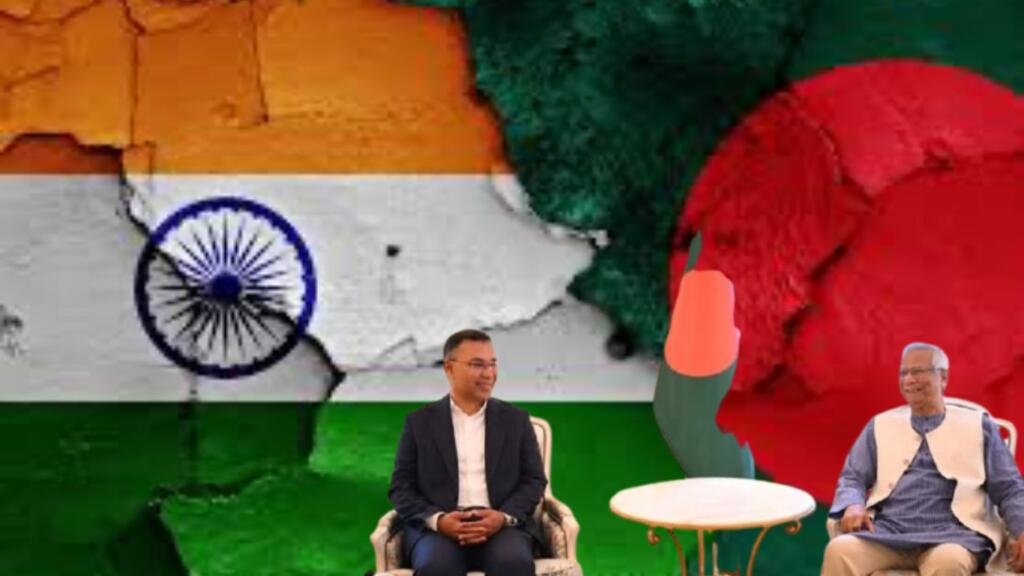
Bangladesh once stood out as one of India’s most stable and productive regional partners for nearly two decades. Today, that relationship is under severe strain. As events in Bangladesh once again spiral out of control—driven largely by student protests increasingly influenced by Jamaat-e-Islami fundamentalism—India faces the unenviable task of protecting its interests while waiting for political clarity in Dhaka.
The current unrest has unfolded against the backdrop of a sharply declining economy. Job losses, rising poverty, and growing public anger have created volatile conditions. These pressures have only deepened under the interim leadership of Muhammad Yunus, a former microfinance banker who appears to lack both the political authority and the ideological clarity required to manage a nation in crisis.
Rising Extremism and Minority Insecurity
Since Sheikh Hasina Wazed fled to India in August 2024, Bangladesh has witnessed a disturbing surge in attacks on Hindus, creating insecurity among minorities at levels not seen in years. At the same time, student leaders who spearheaded the so-called “revolution” are now being targeted, raising serious questions about who truly controls the streets.
Mr Yunus, acting as chief adviser, has done little to reassure either minorities or moderates. Instead, he appears increasingly dependent on Jamaat-e-Islami and its radical student wing, Islami Chhatra Shibir. His overtures toward Pakistan—ironically the very state that oppressed East Pakistan—have only further alienated large sections of Bangladeshi society while complicating relations with India.
Blaming India for Bangladesh’s internal problems has become a convenient political tool. This narrative has gained such traction that even the family of slain student leader Hadi has publicly pointed fingers at Mr Yunus, suspecting political manipulation aimed at prolonging his grip on power. Fears are growing that the general elections scheduled for February 12 may yet be postponed, further eroding the legitimacy of the interim regime.
India Left Without a Credible Partner
With the legitimacy of the current government in grave doubt and anti-India sentiment being actively exploited, New Delhi finds itself with no credible interlocutor in Dhaka. Embassies are shut, visa services suspended, and official engagement has effectively frozen. Under these circumstances, dealing with the Yunus administration is neither practical nor productive.
India’s only viable option is to wait—for elections to be held on time and for a legitimate, elected government to emerge with a clear mandate.
A Shifting Political Landscape
Meanwhile, Bangladesh’s political scene has seen a major development. Tarique Rahman, son of former prime minister Khaleda Zia, returned this week from a self-imposed 17-year exile in the UK. With Sheikh Hasina’s Awami League likely excluded from the polls, Mr Rahman could emerge as a key figure in Bangladesh’s uncertain future.
Adding to the complexity is the striking irony in international responses. The same US voices that condemned Sheikh Hasina’s democratic excesses and supported the Bangladesh Nationalist Party’s boycott of the January 2024 elections are now protesting the possible exclusion of the Awami League. It was, after all, Western liberal intervention that helped dislodge Ms Hasina—only to see Bangladesh move from relative stability into deeper turmoil under Mr Yunus.
Why Elections Matter for Stability
Bangladesh may never fully replicate India’s model of open, competitive democracy. Even so, an elected government is urgently needed to restore order, rein in extremists, and rebuild economic confidence. Continued political limbo will only embolden radical forces and worsen instability.
For India, the stakes are high. Bangladesh benefits enormously from trade, energy cooperation, and water-sharing arrangements with India. In return, India gains vital land access to its northeastern states. This mutually beneficial relationship cannot survive prolonged chaos.
With elections barely a month away, more turbulence is likely. But restoring law and order, stabilising the economy, and repairing bilateral ties all hinge on one essential step: the swift installation of a legitimate, elected government in Dhaka. Only then can Bangladesh hope to regain stability—and only then can India realistically begin the difficult task of resetting ties with its eastern neighbour.