














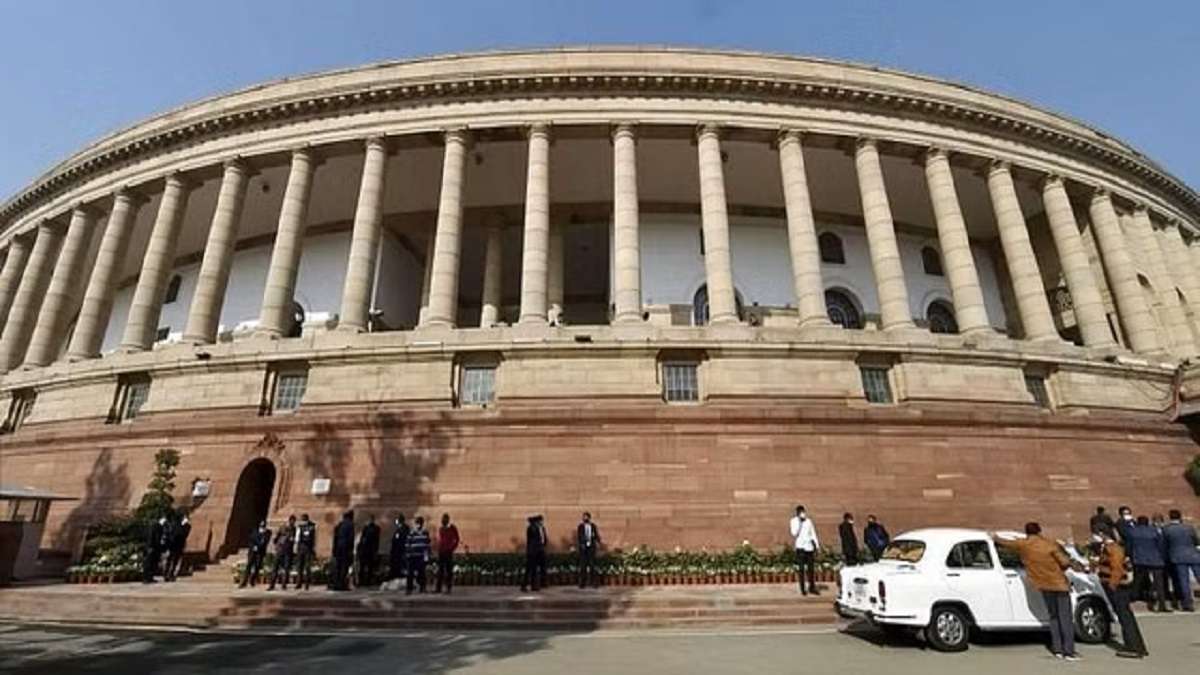
December 13, 2001 remains one of the darkest and most defining days in independent India’s history. On that winter morning, terrorists attempted to strike at the very heart of Indian democracy, the Parliament of India.
Twenty-four years later, in 2025, the memory of that audacious attack and the bravery that stopped it continue to resonate across the nation. What was meant to be a catastrophic blow to India’s sovereignty was thwarted by the courage, alertness, and supreme sacrifice of security personnel who stood between terror and democracy.
The Calm Before the Storm
The attack unfolded at around 11:20 a.m., shortly after both the Lok Sabha and Rajya Sabha were adjourned amid protests over the coffin scam. While some Members of Parliament had exited the complex, many MPs, ministers, officials, journalists, and staff members—nearly 100 MPs—were still inside the Parliament premises. Unbeknownst to them, a deadly plan was already in motion.
A Forged Pass and a Deadly Deception
The terrorists entered the Parliament complex in a white Ambassador car, using a forged Home Ministry pass and fake identification stickers. Disguised in military fatigues and armed to the teeth, they exploited the moment when vehicles linked to Vice President Krishan Kant’s convoy were positioned near Gate No. 11.
As the car sped suspiciously toward Gate No. 12, security personnel attempted to stop it. Instead of complying, the vehicle accelerated—triggering the first alarm.
The First Stand: Alertness That Saved a Nation
ASI Jitram, sensing imminent danger, chased the vehicle. In a desperate maneuver, the driver reversed the car, colliding with a vehicle from the President’s convoy. When Jitram apprehended the driver, the men inside appeared to be wearing army uniforms—but their threatening behavior revealed the truth.
As the vehicle fled toward Gate No. 9, security guard JP Yadav issued an urgent wireless alert, ordering all gates of Parliament to be sealed. Moments later, the car crashed. Five terrorists emerged and began laying wires—confirming fears of a suicide bombing attempt.
ASI Jitram opened fire, injuring one attacker before being fatally shot. He became one of the first fallen soldier of the day.
Thirty Minutes of Fire and Fury
The terrorists attempted to detonate the car bomb, but the blast failed. Undeterred, they launched an all-out assault—firing AK-47 rifles, hurling grenades, and attempting to breach the Parliament building.
Explosions and gunfire echoed through the complex as security forces formed defensive perimeters. MPs, ministers, and media personnel were swiftly evacuated to secure locations. Senior leaders, including then Home Minister LK Advani, were moved to undisclosed safe areas. A fierce gun battle ensued, lasting over 30 minutes.
The attackers were methodically neutralized before they could enter the Parliament building. Three terrorists were killed near Gate No. 9 and one was shot dead near Gate No. 5. The fifth terrorist, wearing explosives, reached Gate No. 1—where a bullet triggered a massive blast, killing him instantly All five terrorists were eliminated outside the Parliament building.
No Room for Error
Even after the terrorists were killed, security agencies exercised extreme caution. Delayed grenade explosions led to fears of additional attackers. The entire Parliament complex was combed thoroughly before people were allowed to leave, following strict identity verification.
A search of the Ambassador car revealed approximately 30 kilograms of RDX, along with food supplies—clear evidence that the terrorists intended to take MPs hostage and cause mass casualties. Had the explosives detonated, the scale of destruction would have been unimaginable.
The Human Cost of the Attack
In total, ten people lost their lives in the attack including five Delhi Police personnel, one woman CRPF trooper, two Parliament Watch staff members, one ward staff member, one gardener and one photojournalist. Their sacrifice ensured the survival of India’s democratic institutions.
The Hand Behind the Attack
Investigations revealed that the attack was orchestrated by Pakistan-based terror outfits Jaish-e-Mohammed (JeM) and Lashkar-e-Taiba (LeT). The five terrorists—identified as Hamza, Haider alias Tufail, Rana, Ranvijay, and Mohammed—had been trained across the border.
Indian associates were later identified and arrested, including Mohammad Afzal Guru, Shaukat Hussain Guru, Afsan Guru, and S.A.R. Geelani. After trial, Afzal Guru was sentenced to death and was executed on February 9, 2013.
A Sacrifice That Changed India’s Security Doctrine
The Parliament attack reshaped India’s counter-terrorism and security framework. It led to heightened security protocols, strengthened intelligence coordination, and marked a turning point in India’s approach to national security.
In 2025, as the nation looks back 24 years after the attack, the memory of December 13 serves as both a warning and a reminder—of the ever-present threat of terrorism and the extraordinary courage of those who stand guard.
The men and women who fought that day did more than protect a building. They protected the soul of Indian democracy and their sacrifice will never be forgotten.
Tibute to Fallen Soldiers
Meanwhile, Vice President CP Radhakrishnan on Saturday (December 13, 2025) led Parliamentarians in paying floral tributes to those who died fending off terrorists who attacked the Parliament House in 2001.
On the 24th anniversary of the attack, Prime Minister Narendra Modi and Radhakrishnan, who is also the Rajya Sabha Chair, were among the first to offer tributes.
A brief function was held outside the now old Parliament building (Samvidhan Sadan) every December 13 to mark the day.
CISF personnel presented a salute or “samman guard” at the venue, after which a moment of silence was observed to mark the anniversary. Till 2023, the CRPF used to offer ‘salami shastra’ (present arms).