























For years, India’s military helicopter crews have flown missions that most armed forces would consider too dangerous to attempt.
From landing in blinding whiteouts in Siachen to threading narrow valleys in the Northeast, to night insertions in counter-terror zones, Indian pilots have often been forced to rely on skill, instinct and sheer courage rather than the onboard systems their platforms should rightfully have had.
The most pressing concern has been Controlled Flight into Terrain (CFIT) one of the deadliest and most common causes of helicopter accidents worldwide. India’s geography, climate, and operational profile make CFIT a persistent threat, not just a possibility.
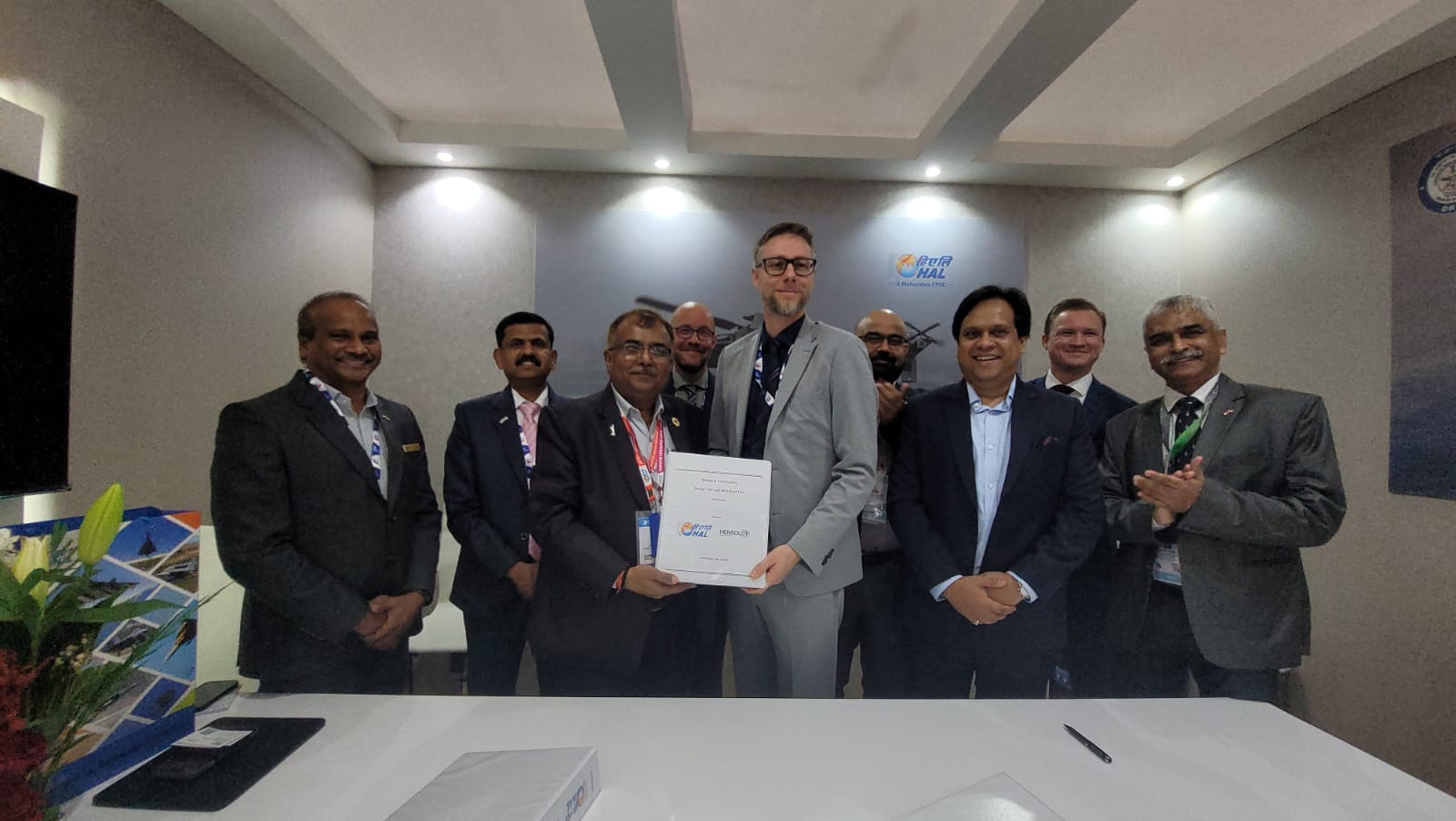
Now, that equation is changing. And dramatically so. At the Dubai Airshow 2025, India’s Hindustan Aeronautics Limited (HAL) and Germany’s defence electronics giant HENSOLDT signed a landmark agreement that finally puts India in the league of nations capable of fielding a sovereign LiDAR-based Obstacle Avoidance System (OAS) for military helicopters.
This is not a routine upgrade. This is a generational leap in aviation safety that Pakistan and China do not match in fidelity.
A Technology That Changes Helicopter Warfare
The heart of this breakthrough is a high-end LiDAR system (Light Detection and Ranging, which uses laser pulses to precisely map and detect obstacles) specifically, HENSOLDT’s SferiSense fused with a Degraded Visual Environment (DVE) computer, synthetic vision, and 3D conformal symbology (which overlays 3D information onto a pilot’s view, enhancing navigation in poor visibility).
What does that mean in real terms?
This means detection of wires, cables, pylons, ridgelines, and micro-obstacles even at oblique angles. The system offers more than 1,000 metres of detection range and a detection probability of at least 99.5% within the first second. It provides real-time obstacle warning in brownouts, whiteouts, fog, dust, and at night. CFIT avoidance cues are delivered faster than human reflexes.
This can mean the difference between a safe landing and a catastrophic crash in zero-visibility conditions. For Indian pilots flying at Himalayan altitudes or in hostile zones, this is not a luxury. It is a lifesaving capability.
India Gains What Beijing and Rawalpindi Cannot Buy: True Sovereign Tech
The most consequential element of this pact is often overlooked, even by defence watchers. This is not a simple buyer–seller arrangement. It involves Transfer of Technology (ToT) and Transfer of IPR (Intellectual Property Rights, which grant HAL legal control and use over the technology).
Under the agreement, HAL will receive design and manufacturing IPR from HENSOLDT, enabling domestic production, integration, sustained support, and global export rights for the OAS with ongoing upgrade capability.
This is not the kind of concession Germany or any NATO country casually hands out. It signals strategic trust and acknowledges India’s rising status as a defence industrial power.
Pakistan, dependent on Chinese hand-me-downs and half-finished assembly lines, cannot replicate this. China, despite its industrial might, still struggles with LiDAR fidelity for dynamic low-altitude flight—something Western militaries mastered decades ago.
With this deal, India now leapfrogs both.
Why This Matters for LCH and ALH
The system will be integrated first on the Light Combat Helicopter (LCH), the spearhead of India’s high-altitude warfare capability. It would then be extended to the Advanced Light Helicopter (ALH) fleet, including Dhruv, Rudra, and naval variants.
With this, India’s frontline helicopter ecosystem gains much more. There will be far safer low-level ingress profiles during conflict, sharper landing accuracy for Special Forces missions, greater operational tempo in mountains and deserts, and the ability to execute missions previously deemed too risky.
In battlefield terms, this widens India’s tactical options while constricting those of adversaries.
An Industrial Breakthrough Hiding in Plain Sight
India’s helicopter fleet has long required advanced CFIT-avoidance systems, but the solutions on offer were limited and often restricted by export controls. The HAL–HENSOLDT agreement marks:
The first time a European OEM (Original Equipment Manufacturer, a company that produces equipment which may be marketed by another company) is sharing full-spectrum OAS technology with India.
This marks a shift from HAL’s traditional “build-to-print” model to a “build-to-spec” ecosystem. It also provides a major boost to India’s ambition of becoming a helicopter exporter.
The fact that HAL now has the right to export a fully indigenousised OAS package further enhances the global pitch for Indian platforms in Latin America, Africa, Southeast Asia and the Middle East.
A National Security Win: India Reduces a Silent Killer
CFIT has been an under-acknowledged threat, overshadowed by flashier programmes and high-profile acquisitions. Yet, every Indian pilot knows the real danger is not always enemy fire. Often, it is the terrain hiding behind a snowstorm or dust cloud.
This Indo–German breakthrough finally addresses that longstanding vulnerability.
India receives world-class technology as a co-owner.
In a region where rivals often rely on borrowed platforms and imported expertise, India’s ability to internalise, master, and export such technology is the ultimate strategic statement.
Ashu Mann is an Associate Fellow at the Centre for Land Warfare Studies. He was awarded the Vice Chief of the Army Staff Commendation card on Army Day 2025. He is pursuing a PhD from Amity University, Noida, in Defence and Strategic Studies. His research focuses include the India-China territorial dispute, great power rivalry, and Chinese foreign policy.





