
For nearly two decades, India’s military posture towards Pakistan rested on the Cold Start doctrine an integrated battle concept designed to enable swift, punitive, and limited strikes in response to major terror attacks. But the strategic landscape around India has changed dramatically since the early 2000s. With Pakistan’s deeper collusion with China, the rapid modernisation of the People’s Liberation Army (PLA), the arrival of multi-domain warfare, and India’s own expanding technological capabilities, the Indian Army is now preparing to transition to a more aggressive, precision-driven model known as the ‘Cold Strike’ doctrine. The recent formation and operational validation of the Rudra all-arms brigades marks a significant turning point in India’s conventional warfighting philosophy. This shift is not merely about speed, but about integrated, multi-domain dominance designed to neutralise threats before escalation pressures or diplomatic interventions can freeze battlefield options.
Cold Start was conceptualised after the 2001 Parliament attack when India mobilised under Operation Parakram. It took nearly a month for strike corps to reach the frontlines, giving Pakistan ample time to position defences and mobilise international pressure particularly from the United States to dissuade India from launching retaliatory strikes. The strategic delay exposed a crippling gap in India’s ability to respond swiftly to high-impact terror attacks sponsored from across the border.
The doctrine therefore aimed to reorganise India’s large strike corps into smaller, faster, self-contained battle groups capable of crossing the border within 48–72 hours. The goal was simple: swift, shallow penetrations into enemy territory to inflict costs, seize limited objectives, and deactivate terror infrastructure all while staying below Pakistan’s nuclear threshold.
Cold Start remained unofficial for years until former Army Chief Bipin Rawat publicly confirmed its existence in 2017. Following the Uri and Pulwama attacks, the doctrine gained further public prominence as India demonstrated calibrated military responses like the Balakot airstrike. However, military experts increasingly pointed out that Cold Start designed for the early 2000s was becoming mismatched to today’s complex threats. Cyber warfare, drones, long-range precision strikes, satellite intelligence, and multi-domain operations demanded something more adaptive and technologically integrated.
The key argument in favour of evolving beyond Cold Start lies in India’s changing threat environment. Pakistan is no longer India’s only military adversary; China has emerged as an immediate, heavily militarised threat along the northern borders. The PLA’s capabilities hypersonic assets, electronic warfare, satellite-enabled targeting, long-range rocket systems require an Indian counter-strategy that is faster, more flexible, and far more integrated.
This gap is where Cold Strike enters the picture.
Cold Strike is described by Lt Gen A.B. Shivane as a “pre-emptive, multi-domain deterrence philosophy” built on real-time intelligence, information dominance, and strategic deception. Unlike Cold Start, which emphasised rapid mobilisation and shallow land thrusts, Cold Strike focuses on precision degradation of enemy assets, cognitive and informational warfare, and integrated operations involving ground forces, drones, cyber units, and supporting air power.
In simple terms, Cold Strike is not about punching harder; it is about neutralising the enemy before they fully understand the punch. It is warfare designed for an era of surveillance saturation, AI-driven targeting, and simultaneous engagement across land, air, cyber, space, and information domains.
The most visible structural shift signalling India’s move toward Cold Strike is the creation of Rudra all-arms brigades. Earlier this year, Army Chief General Upendra Dwivedi announced that over 250 single-arm brigades are gradually being reorganised into integrated Rudra formations. Unlike traditional brigades composed purely of infantry, armour, or artillery the Rudra units merge all combat arms and support systems into a single, cohesive fighting entity.
Each Rudra brigade includes:
-
Infantry
-
Mechanised infantry
-
Armoured elements (tanks)
-
Artillery and rocket units
-
Special Forces teams
-
UAVs and counter-drone systems
-
Integrated logistics and engineering support
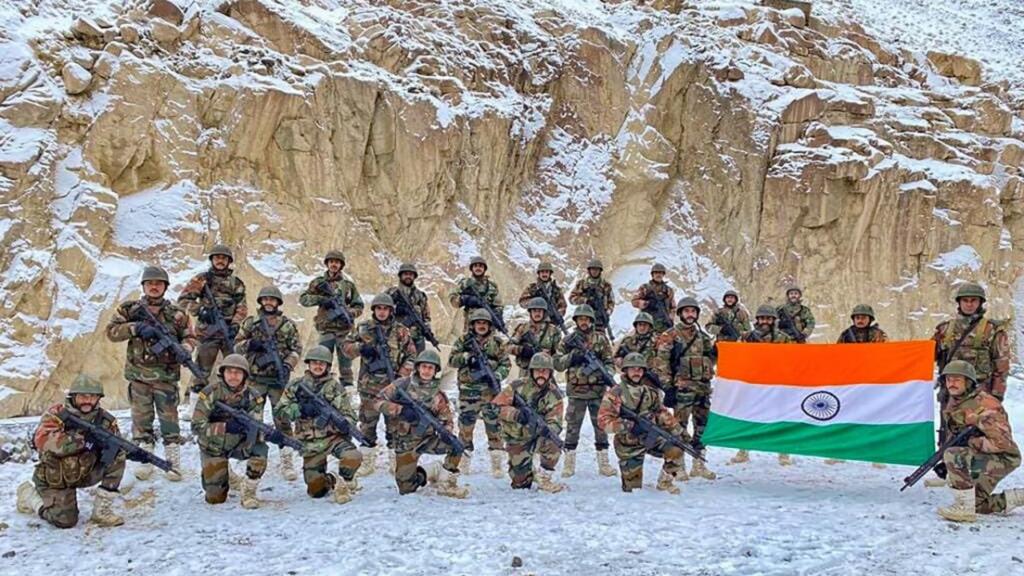
This reorganisation gives India what Cold Start intended but never fully achieved permanent, ready-to-strike formations with minimal mobilisation lag. Two Rudra brigades have already been deployed along sensitive stretches of the China border: in eastern Ladakh and Sikkim.
During the recent ‘Akhand Prahar’ military exercise in the Thar desert, the Rudra brigades underwent operational validation. Lt Gen Dhruv Seth praised their performance and stressed that the Army is now ready to shift from Cold Start to Cold Strike, highlighting that the new brigades demonstrated rapid land manoeuvres and integrated assault capabilities that align perfectly with the objectives of the Cold Strike doctrine.
While defence experts widely agree that Cold Strike offers India a more modern and agile warfighting framework, some caution that implementation must be carefully phased. For the doctrine to work effectively across both Pakistan and China fronts, several conditions must be met:
-
More Rudra brigades must be raised, including formations tested for high-altitude warfare, jungle terrain, desert operations, and urban combat.
-
Supply chains and logistics networks must be modernised to ensure all-arms units operate without delays, especially under fast-moving combat conditions.
-
Tri-service integration must deepen, especially between the Army, Air Force, and Navy, to enable joint command, precision targeting, and unified communication networks.
-
Cyber and space assets must be integrated with frontline units, making battlefield decisions faster and data-driven.
Without these elements, Cold Strike risks becoming only a conceptual upgrade rather than an operational transformation.
India’s shift from Cold Start to Cold Strike reflects a broader evolution in the nature of warfare and the geopolitical realities surrounding the country. Cold Start solved the mobilisation problem of the early 2000s, but Cold Strike is designed for a world where wars are fought simultaneously across multiple domains, where information dominance matters as much as battlefield movements, and where precision, coordination, and speed determine success.
With Rudra brigades becoming the backbone of India’s future offensive posture, the Army is signalling its readiness to respond swiftly and decisively against threats on either front. The transformation is still underway, and many structural and technological challenges remain, but the direction is clear: India is preparing for the wars of tomorrow, not the wars of yesterday.