


















For a party that never tires of lecturing India and the world about “saving democracy”, the Congress itself has repeatedly failed the most basic test of internal democratic values. Over the years, Congress leaders who dared to think independently Kapil Sibal, Ghulam Nabi Azad and others have walked out after being suffocated by a culture where one family’s word is the only law. From questioning the Army’s cross-border operations to undermining national achievements just because they happened under Modi, the party has cultivated an unwritten rule: Oppose Modi even when he is right. Oppose BJP policies even when they benefit India. Oppose the national interest if it doesn’t serve the Parivar interest.
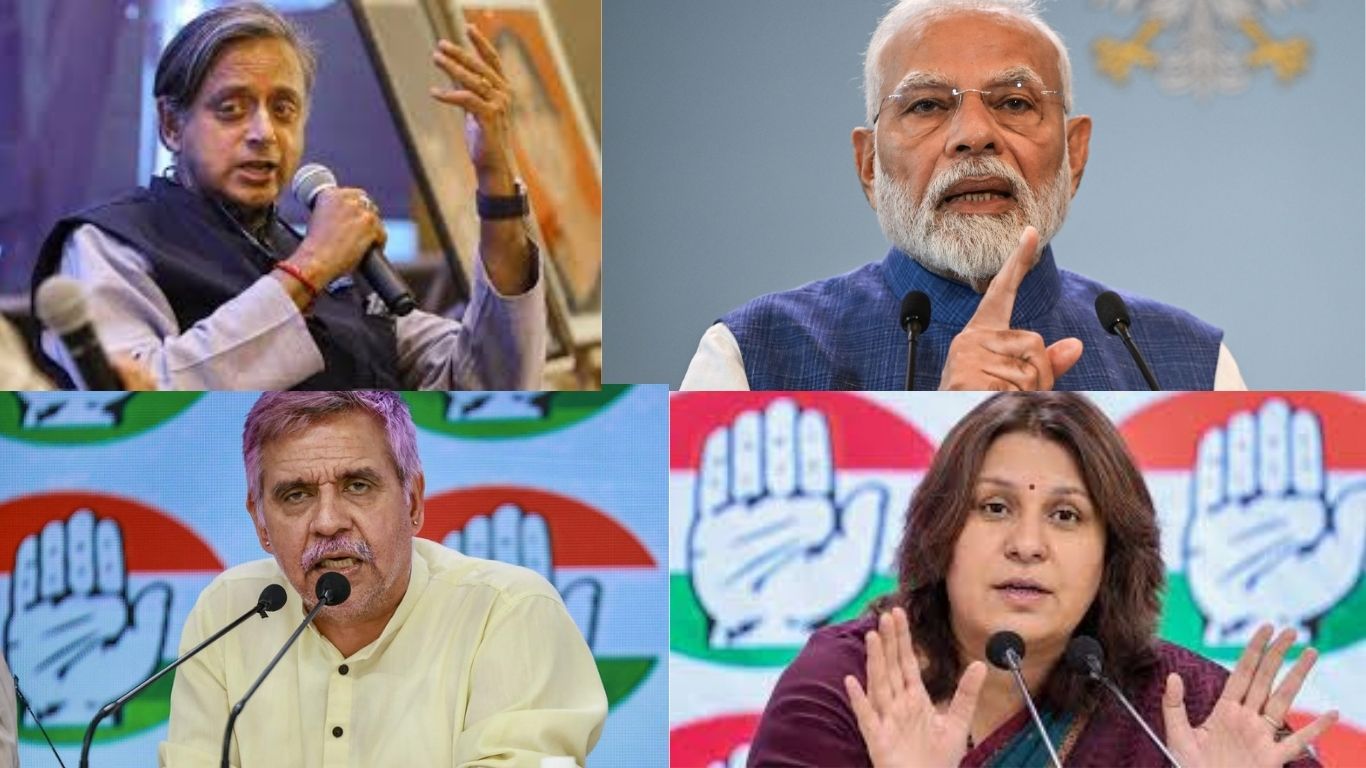
This suffocating environment is visible yet again as senior Congress MP Shashi Tharoor is targeted for merely appreciating a speech by the Prime Minister the latest in a string of humiliations he has faced. The same happened when he led an international delegation for “Operation Sindoor”. It happened again last week when he wished L.K. Advani on his birthday. And now it is happening again Congress’s intolerance towards independent thinking is on full display.
The Congress loves to present itself as the guardian of democracy, pluralism and discussion. But every time one scratches the surface, a darker truth emerges: the party has become a space where independent opinion is treated as rebellion, and open debate is treated as treachery.
Why can’t any Congress leader praise Prime Minister Modi? Why can’t they acknowledge any good policy by the present government? Is there a by-law that every Congress MP must oppose every single thing that the BJP does, even if it is good for the nation? The way Tharoor is being hounded makes that question hard to ignore.
This is not new. Congress has a long history of attacking its own whenever they step outside the boundaries drawn by the Gandhi family. Those who speak their minds are targeted, isolated, or publicly humiliated. Those loyal to the Gandhi siblings are deployed to attack dissenters, spread rumours, and poison the atmosphere. The departure of senior leaders like Kapil Sibal, Ghulam Nabi Azad, Jyotiraditya Scindia, Himanta Biswa Sarma and others should have been a wake-up call. But Congress has learnt nothing.
The immediate storm began when Shashi Tharoor praised Prime Minister Narendra Modi’s Ramnath Goenka Lecture, calling it an important economic and cultural call to action. Tharoor noted the PM’s assertion that India is “not just an emerging market but an emerging model” and appreciated the emphasis on cultural revival and national confidence.
He even highlighted the PM’s emotional tone and the call for a 10-year mission to restore pride in India’s heritage, languages, and knowledge systems.
This was enough for Congress loyalists to erupt in fury.
Congress leader Sandeep Dikshit declared that Tharoor “does not know much about India” and questioned why he remains in the party. He suggested Tharoor should quit if he believes Modi is doing good. Another leader, Supriya Shrinate, dismissed the PM’s address entirely and questioned Tharoor’s judgement for finding merit in it.
While Sandeep Dikshit himself in May 2024 a day before Delhi was set to vote during the Parliament elections, expressed gratitude to Prime Minister Narendra Modi for his comments about his mother and former Delhi CM Sheila Dikshit
Instead of allowing healthy debate, the Congress narrative was simple: Tharoor must not praise Modi. Tharoor must not acknowledge anything good outside the Congress. Tharoor must learn his place.
This is not the first time Tharoor has been attacked by his own party.
When he led a delegation to multiple countries to explain and uphold India’s Operation Sindoor, several Congress insiders accused him of “going soft” on the government. Instead of celebrating India’s successful strike deep inside Pakistan, the Congress ecosystem questioned his patriotism.
Just last week, when Tharoor wished senior BJP leader L.K. Advani on his birthday something any civil, mature politician would do the Congress pack attacked him again.
And now, merely appreciating a well-delivered speech by the Prime Minister has triggered yet another internal rebellion.
This pattern clearly shows: Congress does not tolerate any leader who displays political independence, intellectual honesty or national-first thinking.
While Congress leaders preach about democratic freedoms, their internal behaviour mirrors the very authoritarianism they accuse others of. BJP spokesperson Shehzad Poonawalla described the party as the “Indira Nazi Congress” a sharp criticism of its emergency-era legacy and present-day intolerance.
His description may be harsh, but it reflects the frustration many feel: Congress wants democracy for India but absolutism inside Congress.
The party issues a “fatwa” against anyone who praises the Prime Minister or the government on national issues. National interest is secondary; pariwarik (family) interest comes first.
How long can a political party survive with such an outdated, high-command-only culture? How long can the Congress claim moral authority on democracy while silencing or attacking every independent voice within?
The latest Shashi Tharoor episode is not just another internal dispute it is a mirror reflecting the deeper democratic deficit within the Congress. A party that hounds its own leaders for expressing honest views cannot claim to protect democracy nationally. If Congress truly believes in democratic debate, it must first allow that debate within its own walls.
Otherwise, the message remains clear: In Congress, loyalty to the Gandhi family matters more than loyalty to the nation and any leader who dares to think differently will be targeted, isolated and silenced.