




















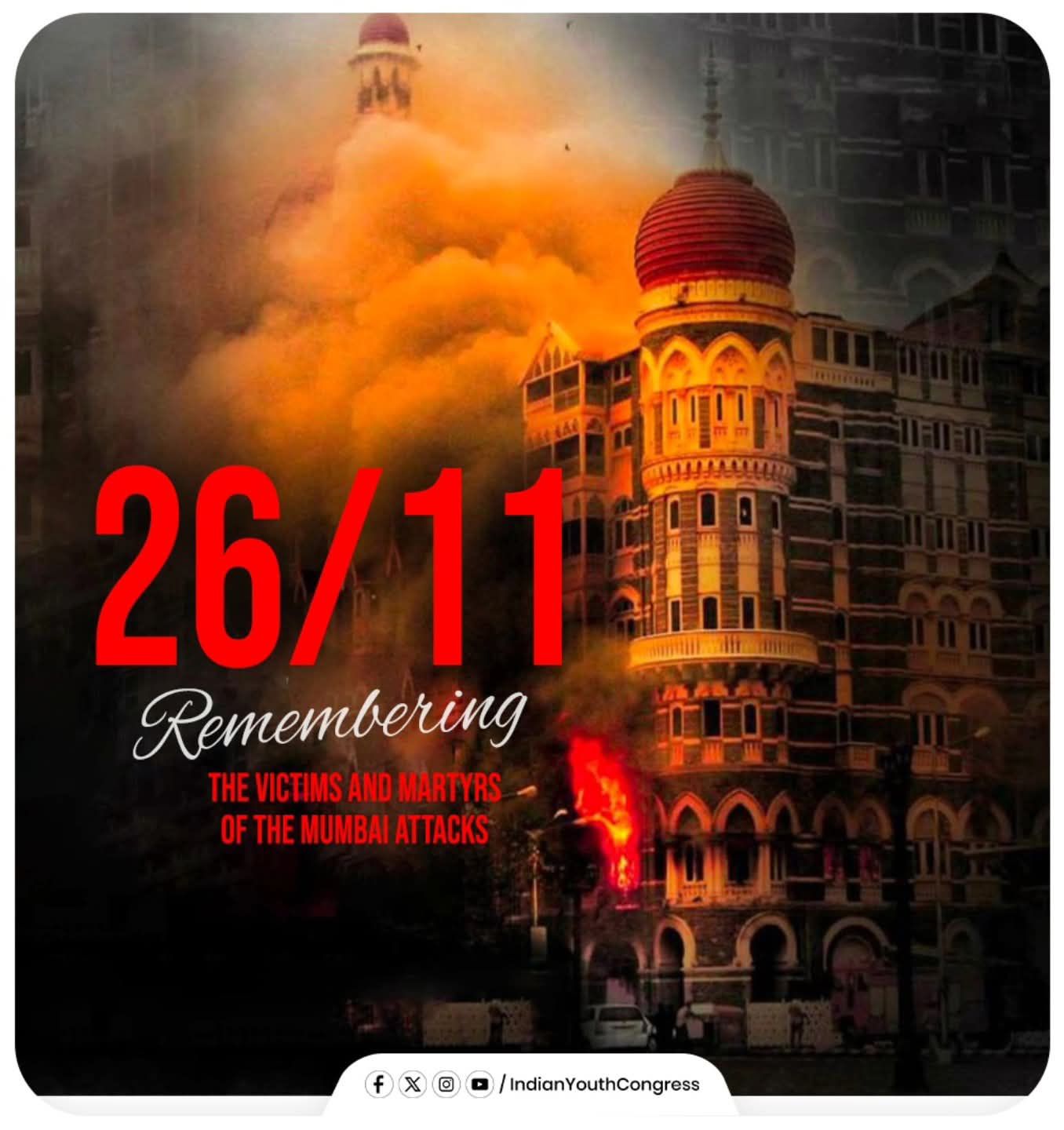
There are moments in history that do more than shock a nation — they reveal its deepest vulnerabilities. The 26/11 Mumbai attacks were one such moment. For 60 terrifying hours, ten terrorists held India’s financial capital hostage, killing 166 people and injuring hundreds more. Beyond the immediate horror, the attack exposed systemic weaknesses that had accumulated over decades — gaps in intelligence, paralysis in coordination, outdated security infrastructure, and a worrying lack of preparedness.
This is the crux of the story: When the entire nation seemed helpless before ten terrorists — what were the loopholes, intelligence gaps, and systemic failures that the 26/11 attack brutally exposed?
What follows is an examination of those failures — not to dwell in the past, but to understand how a modern nation-state was nearly brought to its knees by ten men with guns, grenades, and a clear plan.
1. Intelligence Warnings Were There — But the System Failed to Act
In the aftermath of 26/11, one of the most disturbing revelations was that there were warnings — credible, specific, actionable warnings.
India’s intelligence agencies had multiple inputs about a possible seaborne attack by Lashkar-e-Taiba. American intelligence agencies reportedly warned of threats to the Taj Hotel. Intercepts were available indicating a Pakistan-based group was training for an operation targeting Mumbai.
Yet nothing concrete was done.
Why?
Intelligence was scattered across agencies with no unified command structure.
There was no mechanism to translate raw intelligence into operational action.
Agencies often worked in silos, sharing information selectively or too late.
The threat was underestimated due to the “it won’t happen” mindset plaguing the system.
The result was catastrophic. Ten terrorists slipped through the cracks created by bureaucratic disunity.
2. Coastal Security Was Practically Nonexistent
The terrorists entered Mumbai by sea — a vulnerability Indian agencies had long acknowledged but never adequately addressed.
The fishing vessel Kuber, hijacked by the terrorists, was never intercepted, even though:
The Coast Guard had limited patrols.
Marine police lacked equipment, training, and patrol vessels.
Radar coverage across the coastline was patchy or absent.
No real-time coordination existed between Navy, Coast Guard, and state coastal police.
A 7,500 km coastline was defended with shocking laxity.
When the attackers reached Mumbai’s shores undetected, the assault was already halfway successful.
3. A Slow, Disoriented Response Revealed Deep Operational Weaknesses
When the terrorists struck around 9:30 p.m., Mumbai Police responded first — but they were neither trained nor equipped for urban warfare.
This exposed several failures:
Outdated Equipment
Most police officers had:
Vintage .303 rifles
Poor-quality bulletproof vests
No modern assault weapons
No night-vision gear
The terrorists, meanwhile, carried:
AK-47s
Grenades
GPS devices
Satellite phones
It was an unequal battle from the start.
Lack of Coordination
The control rooms were overwhelmed, communication networks broke down, and command decisions were slow.
Absence of a Quick Response Force
The NSG — India’s counter-terror force — was in Delhi, with no regional hubs. It took them nearly nine hours to reach Mumbai and begin operations to dismantle 26/11 terrorism.
Those hours cost lives.
4. Faulty Crisis Management Allowed the Attack to Escalate
Modern crisis management requires:
Real-time intelligence
Centralised command
Control over media broadcasts
Trained negotiators and tactical units
None of these were properly in place.
Live TV became a tool for terrorists
News channels broadcast movements of security forces. Pakistani handlers, watching these feeds, directed the terrorists accordingly.
Lack of command hierarchy
There was confusion about who was in charge — Mumbai Police, Maharashtra Government, NSG, or central agencies.
Civilians were not evacuated swiftly
The hotels became war zones, yet evacuation protocols were almost nonexistent.
5. Political Apathy and Institutional Decay Were Laid Bare
The 26/11 attacks didn’t just expose technical failures — they exposed deep-rooted institutional neglect.
Counter-terror infrastructure had been starved of funds.
Police modernisation had been repeatedly delayed.
Intelligence reforms recommended after previous attacks were never implemented.
Coastal security proposals had been stuck in bureaucratic red tape for years.
It took a tragedy of this scale for the system to awaken.
6. The Terrorists Exploited the Very Weaknesses India Ignored
Lashkar-e-Taiba trained the attackers meticulously. They studied:
Mumbai’s geography
Hotel layouts
Indian response times
Police vulnerabilities
Media behavior
They exploited everything India had failed to secure.
This made the attack not merely an act of terror — but a mirror showing the consequences of complacency.
7. Lessons Learned — But Never to Be Forgotten
In the years after 26/11, India implemented major reforms:
Creation of the NIA
NSG regional hubs
Modernisation of police forces
A Coastal Surveillance Network
Strengthened intelligence coordination
Stricter maritime regulations
These were necessary steps — but they emerged from the ashes of a tragedy that should have been prevented.
Last but not least, when the entire nation seemed helpless before ten terrorists, it was not just an attack on Mumbai — it was an attack on the very systems meant to protect India.
26/11 brutally exposed intelligence gaps, coastal vulnerabilities, equipment shortages, coordination failures, and years of administrative neglect.
Remembering these failures is not a matter of reliving trauma — it is a matter of ensuring that such gaps never reappear.
Because nations do not fall only when attacked from outside.
They fall when they fail to learn from within.





