
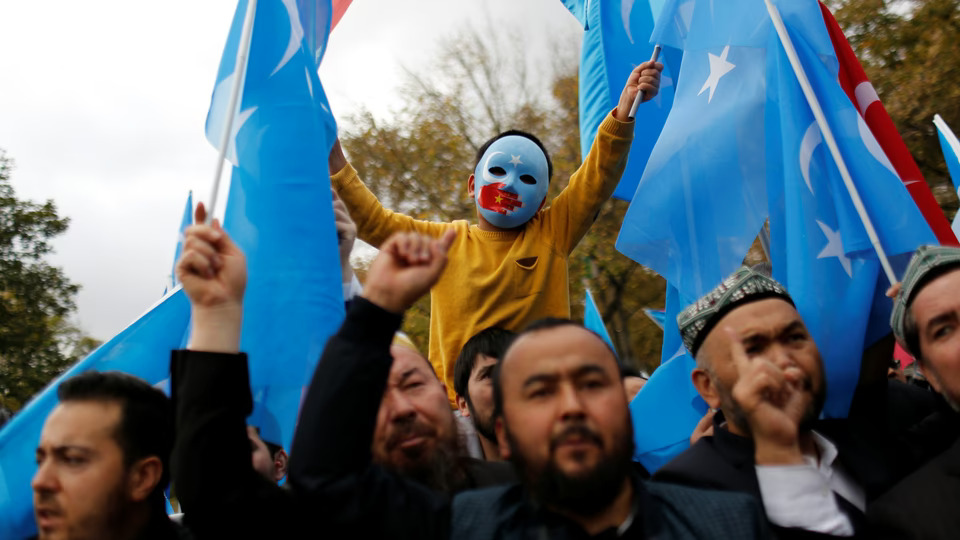
For more than a decade, China’s policies in Xinjiang have raised alarm across human-rights circles. But the situation is no longer only about the Uyghurs. It has become a mirror reflecting how authoritarian systems treat entire populations — and what may await other vulnerable communities across the world if this model spreads.
The repression of Uyghurs is not an isolated tragedy. It is a warning about the future of political control, digital policing, cultural dissolution, and unchecked state power. The degree to which the world stands with Uyghurs now will determine the protections — or lack of protections — available to countless other groups facing coercive governance elsewhere.
The Uyghur Crisis Is No Longer Only a Minority Issue
Global discussions often frame the Uyghur question as a niche human-rights topic. The reality is much wider. The principles at stake — due process, cultural continuity, freedom of belief, freedom from arbitrary detention — form the foundation of any stable society.
What happens to Uyghurs today can happen to anyone tomorrow if authoritarian systems go unchallenged.
China’s methods in Xinjiang — political indoctrination, digital tracking, suppression of local languages, demolition of sacred spaces, and tight control of community leaders are not confined to one region.
They are tools of governance that can be applied to any group seen as inconvenient or ideologically incompatible with the ruling order.
A Governance Model Built on Fear, Not Consent
The treatment of Uyghurs represents a model of governance that relies on compliance through pressure rather than participation. Entire communities have been subjected to a system where the state determines: where they go, what they believe, whom they contact, which languages they may speak, which customs they may practice, and even whether their cultural identity is allowed to exist.
This level of intrusion is not meant to secure public safety. It is meant to reshape society to the state’s preferences, leaving no room for alternative identities or narratives.
Such a model, once normalised, does not remain confined to its original target.
The Uyghur Struggle Echoes in Other Repressed Communities
Look across the world: groups facing pressure under authoritarian regimes share strikingly similar experiences. Tibetans confront linguistic restrictions and forced relocation. Hong Kong activists face shrinking civil liberties. Southern Mongolians report the dilution of local language in schools. Dissidents within China are targeted by the same digital tools used in Xinjiang. Minorities in other regions observe how technology can be repurposed to limit freedoms. Uyghur freedom is linked to these struggles precisely because the underlying challenge is identical — unchecked state power.
Why This Should Concern Democracies Everywhere
Democracies sometimes assume they are immune. But surveillance technology knows no ideology, and global supply chains give authoritarian tools a pathway into open societies.
China has already exported elements of its Xinjiang surveillance architecture — facial recognition systems, data-fusion platforms, policing software — to countries across Asia, Africa, and the Middle East. Once installed, these systems can be used not just against Uyghurs but against local journalists, dissidents, ethnic minorities, political opponents, even migrants.
The principles being violated in Xinjiang — autonomy, dignity, belief, cultural expression — are the same principles democratic societies depend on. When the world does not defend those principles for Uyghurs, it weakens them for everyone else.
Standing With Uyghurs Is Standing With All Oppressed People
Solidarity with Uyghurs is not only symbolic. It reinforces global norms that protect communities everywhere from state overreach.
Uyghur activists frequently emphasise that their struggle is intertwined with those of: Tibetans seeking cultural continuity, Hong Kongers demanding political freedoms, southern Mongolians resisting assimilation, dissidents across mainland China facing censorship, Rohingya, Syrians, Afghans and other displaced groups whose human rights depend on international oversight.
When the world takes a stand for Uyghur rights, it strengthens the global expectation that no government can rewrite the identity of any community.
The Stakes Are Global, Not Regional
China’s approach in Xinjiang also shapes international diplomacy. Governments hesitant to challenge Beijing risk normalising silence in the face of coercion. Meanwhile, authoritarian movements worldwide study the Xinjiang model as a blueprint for suppressing inconvenient populations.
Uyghur freedom, therefore, is not a fringe cause. It is a defining pressure point in the global human-rights landscape.
Accountability for Uyghurs Is a Step Toward Accountability Everywhere
Ending forced disappearances, restoring cultural spaces, ensuring due process, providing access to independent observers, and protecting families — these are not demands only for Uyghurs. They are universal standards.
If the world successfully pushes back in Xinjiang, it sends a powerful message to every state seeking to impose identity control: there are limits, and they will be enforced.
If the world fails, the message is equally clear — repression pays, and others will follow.
A Turning Point for Global Human Rights
The Uyghur struggle has reached the point where silence is complicity. Standing with Uyghurs today is not an act of charity; it is an act of self-preservation for democratic norms everywhere.
At its core, this is not a regional conflict but a global referendum on human dignity. A world that secures freedom for Uyghurs strengthens freedom for all. A world that ignores them weakens the defences every society relies on.
Their liberation is not only their own future — it is a crucial part of ours.
Ashu Mann is an Associate Fellow at the Centre for Land Warfare Studies. He was awarded the Vice Chief of the Army Staff Commendation card on Army Day 2025. He is pursuing a PhD from Amity University, Noida, in Defence and Strategic Studies. His research focuses include the India-China territorial dispute, great power rivalry, and Chinese foreign policy.