

















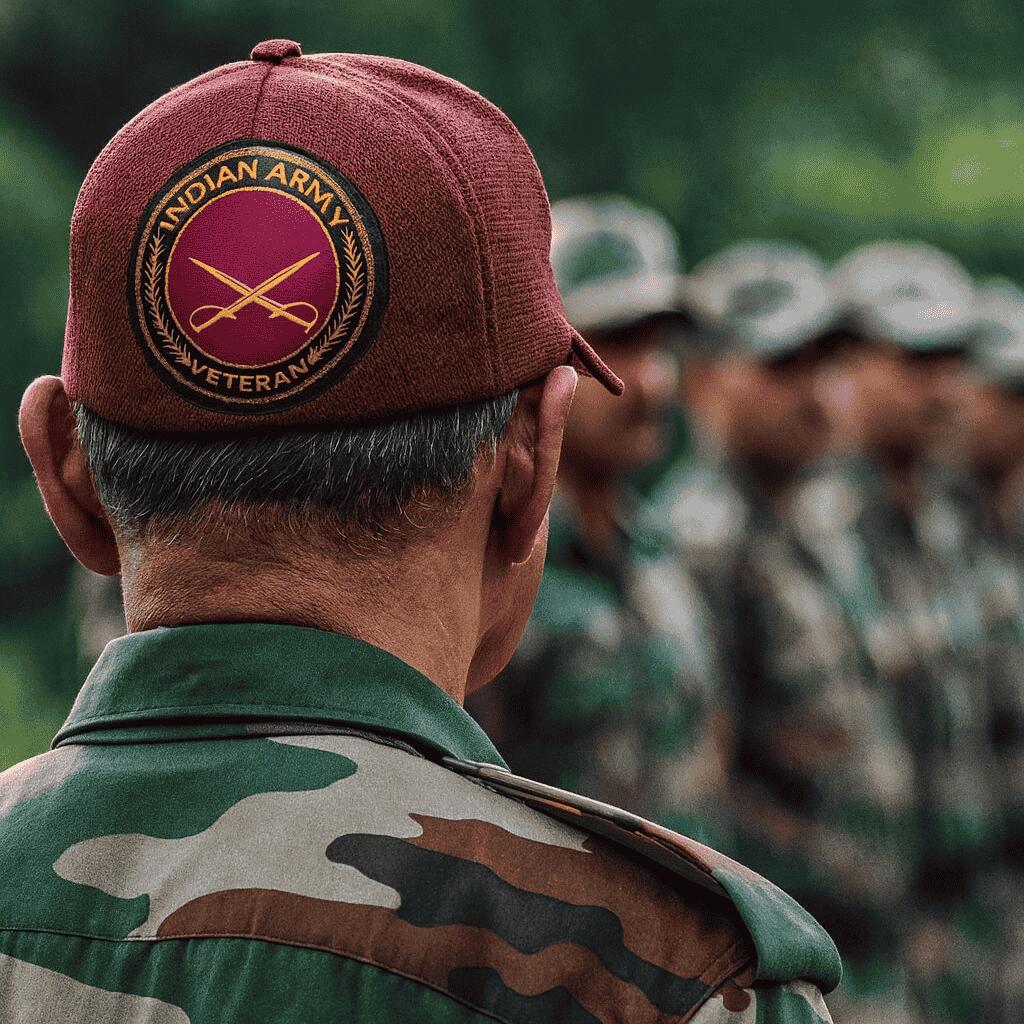
For a country that rightly celebrates its armed forces, the lived experience of its veterans often sits uneasily beside public rhetoric. Every major event, every national crisis, every border flare-up is met with an outpouring of gratitude for the men and women in uniform. But once the spotlight fades, many veterans find themselves navigating a system that does not always reflect the dignity their service demands. Nowhere is this gap more visible than in the healthcare and pension frameworks that govern the transition from active duty to retired life.
The Hidden Cost of a Soldier’s Life
A veteran’s journey is rarely a quiet one. Most spend their prime years posted in punishing environments — frozen heights, counter-insurgency belts, deserts, jungles, and now increasingly, high-tension borders where operational pressure never truly recedes. The physical toll accumulates quietly. Injury, wear and tear, mental fatigue and long-term health complications are not anomalies; they are part of the profession. When a soldier retires, he carries a lifetime of service in his bones. The system entrusted with supporting him should be built around that reality.
Yet, the concerns raised by veterans in recent years tell a different story. Many continue to struggle with the administrative complexities of the pension framework, particularly digital systems that were meant to simplify their lives. Errors in records, delays in verification, and difficulties in accessing digital platforms have become recurring issues for an older generation that cannot always navigate online processes with ease. What should have been seamless has at times become an obstacle course, especially for those with limited mobility or declining health.
Healthcare Systems and the Challenges Veterans Still Face
Healthcare, a pillar of post-retirement welfare, has emerged as an equally pressing concern. The Ex-Servicemen Contributory Health Scheme (ECHS) was designed with noble intent — a cashless, dependable network that allowed veterans to access treatment without financial uncertainty. But the ground reality is uneven. In several cities, private hospitals have either withdrawn from the scheme or insist on advance payments due to delayed reimbursements. For a veteran managing chronic illness or sudden medical emergencies, this uncertainty strikes at the very heart of the covenant between soldier and state.
The impact is personal and immediate. A retired havaldar undergoing cardiac evaluations cannot be expected to debate procedural delays. A veteran’s widow seeking reimbursement for urgent treatment should not have to chase paperwork across departments. Soldiers who once walked into fire without hesitation should not find themselves waiting for weeks to get approval for basic tests. These are not administrative problems — they are questions of dignity.
It is equally important to recognise that veterans seldom articulate these issues from a place of entitlement. The military community has always prided itself on self-reliance and resilience. What they seek is not special treatment but a system that functions with the efficiency and purpose they lived by in uniform. Their complaints, when voiced, come from necessity, not grievance.
The Army, for its part, remains deeply invested in the welfare of its retired fraternity. Serving officers frequently take up veterans’ issues with administrative bodies, understanding that morale is shaped not just by immediate operational conditions but also by how the institution treats its own after service. A soldier’s faith in the uniform extends far beyond his years in active duty. When a retiring jawan sees older veterans struggling with paperwork, delayed treatments or pension glitches, it affects the confidence of those still serving.
Reform Is Visible, but Not Enough
Reforms are underway, and the intent is visible. Infrastructure upgrades, empanelment expansions, procedural simplifications and new grievance mechanisms are steps in the right direction. But incremental change may not be enough. The challenges facing veterans today stem from the intersection of old systems and new demands — a bureaucracy not fully aligned with the urgency of military life, and a digital migration that moved faster than the support structures needed to sustain it.
A modernising India must rethink veterans’ issues not as welfare but as a strategic priority. When a nation cares properly for its retired soldiers, it strengthens the morale of its serving ones. When it ensures that a veteran’s healthcare is immediate and dignified, it signals to every young captain and soldier in the field that their future will not be an afterthought. And when it builds systems that acknowledge the rigours of military life, it reinforces the trust that binds the armed forces to the nation.
India owes its veterans more than ceremonial gratitude. It owes them a system that works as hard for them in peace as they worked for the country in war.