
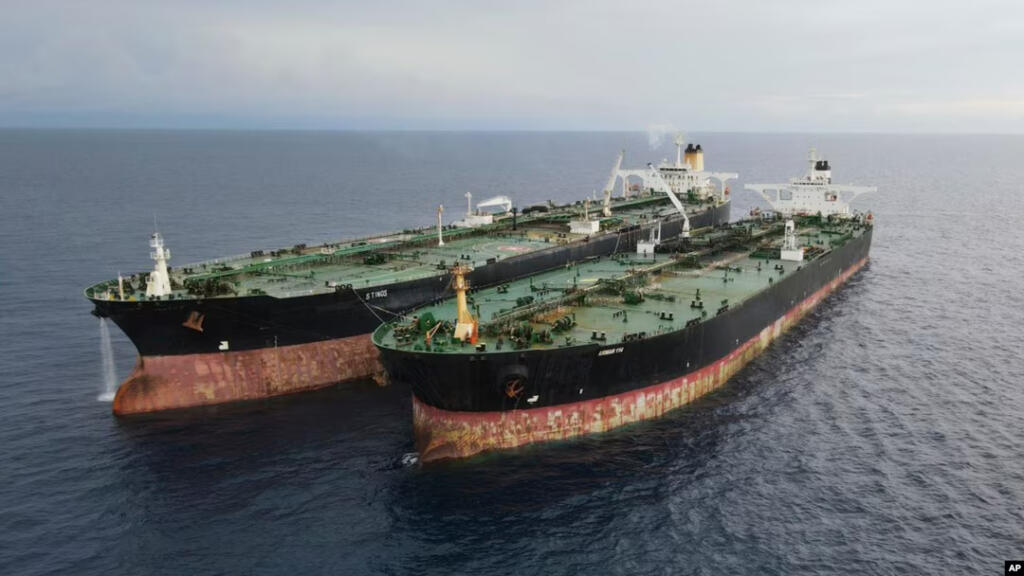
The United States has launched yet another sweeping round of sanctions targeting Iran’s covert oil trade, but this latest action reveals more than just an enforcement of economic pressure—it exposes the intensifying global political polarisation redefining alliances, energy markets, and strategic competition. As Washington expands its clampdown on Iran’s so-called “shadow fleet”, a network of discreet shipping operations spanning multiple continents, the geopolitical divide between the US-led order and the emerging alternative blocs has come sharply into focus.
At the centre of the unfolding confrontation is RN Ship Management Private Limited, a Mumbai-based shipping operator led by Indian nationals Zair Husain Iqbal Husain Sayed and Zulfikar Hussain Rizvi Sayed. According to the US Treasury Department, the company has been facilitating shipments of crude oil for Sepehr Energy Jahan Nama Pars, an oil-sales arm directly linked to the Armed Forces General Staff of Iran. The tanker SOBAR, among others, was used to transport this oil, circumventing sanctions and enabling Iran or its shadow fleet to generate vital revenue for its military infrastructure.
The United States’ Office of Foreign Assets Control (OFAC) announced that RN Ship Management is part of a far wider, globally entangled shadow-fleet network designed to sustain Iran’s sanctioned oil exports. This network spans the UAE, Panama, Greece, Germany, and India, reflecting how deeply embedded Iran’s covert trade has become within legitimate global commerce. From ship-to-ship transfer operators to companies specialising in logistics, documentation, and vessel masking, the mechanisms of Iran’s oil escape routes are undeniably international.
Polarised Global Politics and the Rise of the “Shadow Fleet”
Washington’s actions cannot be viewed in isolation—they represent a strategic maneuver within a fractured geopolitical landscape. As the world drifts into increasingly polarised blocs, Iran has found new space and opportunity to expand its “shadow fleet,” capitalising on:
-
Rivalries in the Middle East, as US-Iran tensions deepen.
-
A growing multipolar world order in which non-Western countries are more willing to defy US pressure.
-
Energy realignment, with Asian buyers—particularly China—seeking discounted Iranian oil.
The “shadow fleet” is more than an economic workaround; it is a manifestation of how global politics is rapidly shifting. Many countries and private entities have become willing participants in sanctions-busting activities because global power centres no longer revolve solely around Washington.
The use of front companies, layered ownership structures, and falsified documentation—such as falsely declaring Iranian crude as “Malaysian heavy”—reflects how deeply entrenched these networks have become in regions that are increasingly aligning outside the Western financial and regulatory structure.
A Network Spanning Continents
Among the entities sanctioned in the latest round are companies such as:
-
Luan Bird Shipping (UAE)
-
Mars Investment (Panama)
-
Loire Shipping (Greece)
-
Altomare SA (Germany)
-
Alsafeenah Althahabya Ship and Boats Spare Parts Trading (UAE)
-
Moon Line Plastics (India)
These companies have assisted in a multitude of tasks essential for sanctions evasion—chartering vessels, coordinating ship-to-ship transfers in international waters, conducting cargo blending, and manipulating AIS tracking systems. Such services make the shadow-fleet resilient, decentralized, and extremely difficult to enforce against.
The US Treasury notes that more than 170 vessels linked to Iran’s shadow fleet have already been sanctioned. Yet the fleet continues to expand, indicating how global energy dependency and geopolitical divides create new avenues for Tehran to finance its regional ambitions.
Strategic Stakes: Nuclear Program, Proxies, and Regional Power
Treasury Secretary Scott Bessent emphasised that disrupting these oil revenues is essential for reducing the funds Iran channels into:
-
Its nuclear program, which continues to advance despite international pressure
-
The IRGC-Qods Force, responsible for operations beyond Iran’s borders
-
Militant proxies, including Hezbollah, the Houthis, and other armed groups shaping conflicts in Lebanon, Yemen, Syria, and Iraq
The sanctions also extended to Mahan Air, a carrier long associated with IRGC-Qods logistics, troop movements, and arms transport. By targeting both maritime and aviation sectors, Washington aims to choke Iran’s operational capabilities across multiple fronts.
India’s Uncomfortable Position in a Divided World
The involvement of an Indian company highlights the uncomfortable reality for many nations attempting to navigate between competing global powers. India maintains strong strategic ties with the US but also engages with Iran for energy security and regional connectivity—particularly through the Chabahar port project.
The sanctioning of an India-based operator brings attention to the complex balancing act countries like India must perform as geopolitical polarisation intensifies. It also suggests that US expectations of compliance will increasingly clash with the economic and strategic interests of countries that refuse to be confined to one bloc.
The Larger Picture: Sanctions as a Tool in a Fragmenting World
The latest crackdown is part of a broader American strategy to reassert control over global energy flows and maintain dominance in international finance. However, the very need to sanction such an expansive global network underlines how significantly the world has changed.
A decade ago, unilateral US sanctions could isolate a country. Today, the rise of alternative financial channels, increased energy demand in Asia, and geopolitical realignments have created parallel systems where sanctioned states can survive, adapt, and even thrive.
Would Global Politics get more Polarized?
The sanctions on RN Ship Management and Iran’s shadow fleet or the wider network supporting Iran’s military oil sales highlight a deeper transformation in world politics. This is not merely an attempt to block Iranian revenue streams; it is a reflection of a world increasingly divided between competing power blocs, where energy, shipping, and finance become battlegrounds for influence.
As the US intensifies its “maximum-pressure” campaign and Iran expands its shadow economy, the confrontation is emblematic of a global order where the lines between legality, geopolitics, and economic survival are becoming more blurred than ever.