







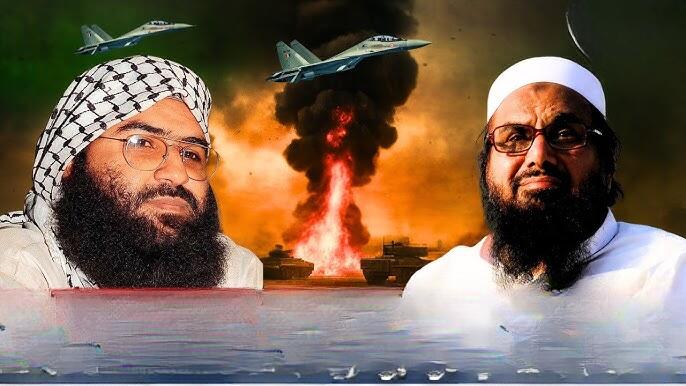
The ongoing investigation into the Faridabad terror module and the deadly November 10 Red Fort blast has uncovered a chilling, long-running plot orchestrated by a Jaish-linked network that had been preparing coordinated explosions across multiple Indian cities since 2023. What initially appeared to be an isolated car blast near one of Delhi’s most iconic landmarks has now been revealed as only one part of a larger, meticulously planned conspiracy of an extensive terror plot spanning two years, involving extensive funding, international handlers, and high-grade explosives.
At the centre of this operation is Dr. Muzammil Shakeel, one of the key accused, whose interrogation has given investigators a detailed picture of how the network spent nearly 24 months gathering chemicals, weapons, detonators and remote-control devices to unleash a wave of terror. Muzammil admitted that preparations began in early 2023, with the group working quietly and steadily to build an arsenal capable of mass destruction.
A Terror Plot Brewing Since 2023
According to investigators, the terror cell envisioned simultaneous blasts across multiple Indian cities, following the classic strategy of coordinated attacks used by Pakistan-backed terror groups. The Red Fort blast, which claimed 13 lives, was reportedly not part of the intended timeline. It was described by investigators as a “panic explosion” that occurred prematurely, potentially foiling what could have been a far deadlier sequence of attacks across urban centres.
For two years, Muzammil systematically collected explosive materials. Reports indicate that he purchased key chemicals such as urea, ammonium nitrate, and other bomb-making substances, storing them using specialised equipment. A collection of remote-control devices and detonators also formed part of the terror plot.
One of the most alarming revelations is the purchase of 26 quintals of NPK fertiliser, acquired from markets in Gurugram and Nuh for ₹3 lakh. These are compounds commonly used in manufacturing powerful improvised explosive devices (IEDs) when mixed with specific oxidisers. The group also bought a deep freezer to safely store the heat-sensitive chemicals and even set up a flour mill for grinding urea, discovered during police raids.
A Self-Funded, White-Collar Terror Terror Plot
What sets this module apart is the white-collar nature of its members, who used their professional lives as a cover to avoid suspicion. The funding of the operation was entirely internal, with the group pooling ₹26 lakh in cash to sustain their procurement activities.
The breakdown of their financial contributions paints a picture of a committed and highly motivated cell:
Umar contributed ₹2 lakh
Muzammil provided ₹5 lakh
Adil Rather added ₹8 lakh
Muzaffar Rather put in ₹6 lakh
Shaeen Saeed from Lucknow contributed ₹5 lakh
The group even purchased an AK-47 rifle for ₹6.5 lakh, later recovered from Adil Rather’s locker. This mixture of high-end weapons and large quantities of explosive materials suggests the module was preparing for a sustained and high-impact terror campaign.
The investigators also uncovered personal disputes linked to the operation. A disagreement over money between Umar and Muzammil at their shared workplace—Al Falah University in Faridabad—led Umar to transfer his Red EcoSport car to Muzammil. That car was later seized by authorities, revealing its connection to the logistics of the terror plot.
Cross-Border Links: Turkey, TTP, and Abandoned Plans
Beyond the domestic angle, the investigation has revealed an international terror plot involving handlers connected to Jaish-e-Mohammed and the Tehrik-e-Taliban Pakistan (TTP). The accused named their handlers as Mansoor and Hashim, who acted under instructions from a figure known as Ibrahim.
In a particularly troubling development, Muzammil, Adil, and Muzaffar reportedly travelled to Turkey on instructions from a handler called Okasa, believed to be linked to TTP. The trio intended to infiltrate Afghanistan, but were abandoned by their handler, who kept them waiting for nearly a week before disappearing. Okasa communicated with Muzammil largely through the encrypted messaging app Telegram, but severed contact after Muzammil questioned his intentions.
These details indicate not just extremism but deep operational ties within the terror plot hatched with foreign terror organisations seeking to activate Indian recruits for coordinated attacks.
Digital Radicalisation and Technical Training
Before the blasts, Umar watched online bomb-making videos, preparing himself to assemble IEDs using the chemicals and devices collected over two years. Investigators believe the group had reached an advanced stage of preparation and possessed both the material and technical knowledge required to execute simultaneous blasts across cities.
Two Fatal Blasts and a Larger Threat
The accumulated explosives from this module resulted in two deadly explosions:
The Red Fort blast on November 10, carried out using a Hyundai i20 and driven by Umar Nabi, killing 13 civilians in a congested traffic zone.
The Nowgam Police Station accidental explosion on November 14, where nine police and forensic personnel died while examining confiscated materials.
These incidents, investigators believe, represent only a fraction of the destruction the group intended to unleash.
A Terror Plot Hidden in Plain Sight
Perhaps the most unsettling discovery is that this was not a stereotypical terror module operating from remote hideouts. Instead, this was a white-collar, educated, professionally integrated terror ring, functioning under the guise of normalcy. Its members lived, worked, and travelled like ordinary citizens while stockpiling explosives and coordinating with foreign handlers.
Struggle is On
The uncovering of this two-year-long terror plot highlights the evolving nature of extremist networks in India—highly educated, self-funded, ideologically motivated, and internationally connected. As investigators continue to unravel the full scope of the conspiracy, the Red Fort blast serves as a grim reminder of the catastrophic scale of violence that was narrowly averted.