
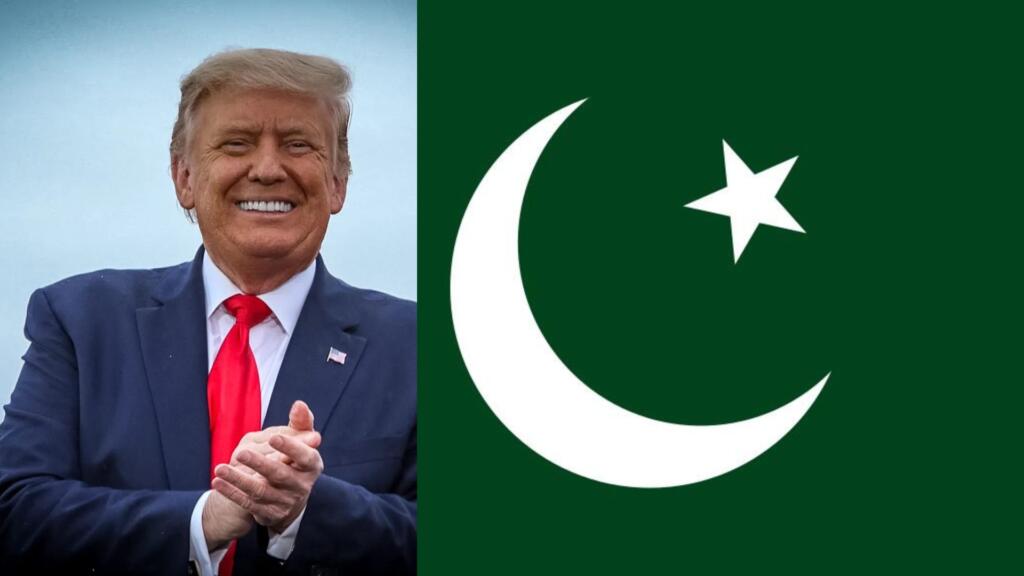
U.S. President Donald Trump has made a bold declaration — asserting that Pakistan is actively conducting nuclear weapons tests, and that this purported activity serves as justification for the United States to resume nuclear‐weapons testing after more than three decades.
In a statement issued on social media and through official channels, Trump claimed that other countries — naming Russia and China, and now implicitly Pakistan — have been pushing ahead with nuclear testing or nuclear‐weapons‐related programs, putting the U.S. at a competitive and deterrence disadvantage. He posted: “Because of other countries testing programs, I have instructed the Department of War to start testing our Nuclear Weapons on an equal basis.”
The claim about Pakistan is significant: By specifically referencing Pakistan’s alleged tests, Trump casts the U.S. move as not only a response to peer powers like Russia and China, but also to regional nuclear actors. While Pakistan has conducted nuclear tests in the past (notably in 1998) and has a well‐developed nuclear infrastructure, there is no independent verification at this time that it is currently carrying out full explosive nuclear tests.
This announcement marks a seismic policy shift for the U.S. It has not conducted a full‐scale nuclear explosive test since 1992 under the voluntary moratorium it observed. Trump’s decision — framed as necessary to preserve U.S. deterrence and parity with global rivals — is likely to revive concerns over nuclear arms‐race dynamics, weaken arms‐control norms, and signal a return to more aggressive nuclear posture.
Critics caution that the rationale is shaky. The factual basis for Pakistan’s current testing is unverified, and experts argue that the U.S. already maintains a massive, sophisticated nuclear arsenal and that conducting new full‐scale tests may not enhance security — but it could undermine longstanding norms of non‐testing and non‐proliferation.
Geopolitically, the timing matters: Trump made his announcement just ahead of key diplomatic engagements, including a summit with Chinese President Xi Jinping. The statement thus serves a dual role — deterrence messaging to rivals and domestic signaling of strength.
For Pakistan and the broader South Asian region, the implications are profound. If indeed Pakistan is testing, this could trigger a regional escalation, putting pressure on other actors to respond, re-igniting nuclear arms competition. Even if the claim is unverified, its invocation helps redefine U.S. policy and may shift diplomatic and strategic calculations around South Asia.
In summary, Trump’s assertion about Pakistan is being used as a strategic lever: it frames the U.S. decision to resume nuclear testing not just as a great-power move, but as a global necessity in the face of multilateral and regional nuclear activity. Whether the underlying claim holds up remains uncertain — but the policy shift it supports is very real and potentially consequential for global nuclear stability.