
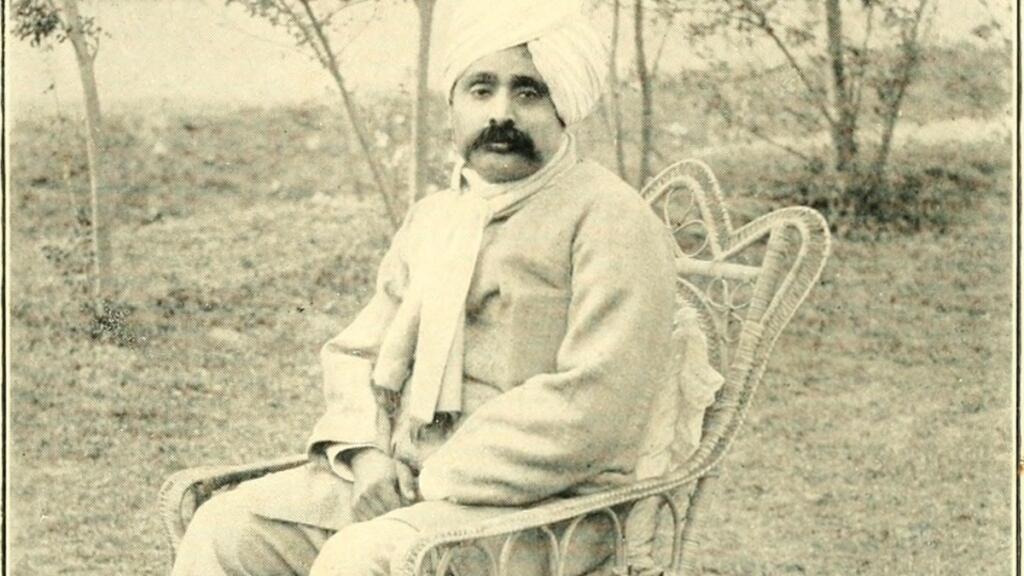
Lala Lajpat Rai, the indomitable ‘Punjab Kesari’, passed away on November 17, 1928 in Lahore, a city that had been his home since 1880, when he arrived as a young law student at a Government College.
A fiery advocate of Swadeshi, a relentless educator, and a fearless campaigner against British colonialism, Rai had spent decades inspiring the youth, mobilising the masses, and shaping a vision of a free India.
A towering figure in India’s struggle for independence, Rai’s life and sacrifice shaped the political and revolutionary landscape of early 20th-century India.
The Rise of a Nationalist Titan
Lajpat Rai made Lahore his home and battlefield. A champion of the Swadeshi movement, he—along with Lokmanya Tilak and Bipin Chandra Pal—formed the iconic Lal–Bal–Pal trio, whose assertive nationalism transformed the Indian National Congress.
Rai first met Tilak at the Lahore Congress Session of 1893, a meeting that forged a lifelong association. The trio mobilised the nation against Lord Curzon’s partition of Bengal, and Rai’s relentless activism led to his imprisonment in Mandalay jail in 1907, though the charges collapsed for lack of evidence.
The Educationist Who Shaped Generations
Lajpat Rai believed that political freedom required intellectual awakening. Under his influence, Lahore, then part of undivided India became a crucible of nationalist education.
He helped establish the DAV College Managing Committee, part of an educational movement initiated in 1886 by Mahatma Hansraj to honour Swami Dayanand Saraswati. These institutions nurtured young minds who would later become architects of India’s freedom including Bhagat Singh.
The Day That Changed India: The Brutal Assault of 1928
On October 30, 1928, he led a peaceful procession in Lahore to protest the all-British Simon Commission, carrying placards that declared– “Go Back, Simon.”
The protest was entirely non-violent, yet the police launched a shocking and indiscriminate lathi-charge.
The 63-year-old Rai was struck hard. Despite his injuries, he proclaimed words that would echo across history, “The blows struck at me today will be the last nails in the coffin of British rule in India.”
He succumbed to his injuries on November 17, 1928. Though doctors cited a heart attack, the nation believed—rightly—that the lathi blows had hastened his death.
How Bhagat Singh and Rajguru Avenge Punjab Kesari
Lajpat Rai’s death shook India. It especially shook a 21-year-old college student at Lahore’s DAV College—Bhagat Singh. A devoted admirer of Rai and already sceptical of non-violent methods, Singh was convinced that the brutality demanded a revolutionary response.
Together with Rajguru and Sukhdev, Bhagat Singh planned to assassinate James A. Scott, the officer believed to have ordered the baton-charge. In a tragic case of mistaken identity, they shot Assistant Superintendent John Saunders, firing eight bullets near the gates of DAV College (now Islamia College, Civil Lines, Lahore).
The fearless Chandrashekhar Azad provided cover, killing Constable Charan Singh, who pursued the revolutionaries as they fled. According to archives cited by The Dawn, the group escaped through the college hostels, disappearing into the labyrinth of Lahore’s lanes.
This act of vengeance electrified the freedom struggle and marked the public rise of Bhagat Singh as a revolutionary icon.
A Death That Reshaped Indian Politics
Rai’s death came at a critical moment. The Jallianwala Bagh massacre (1919) and Gandhiji’s non-cooperation movement (1920–22) had already heightened nationalist sentiment.
Rai, although sceptical of Gandhi’s methods had predicted the movement would falter, and it did after the Chauri Chaura incident—remained one of the most influential leaders in Punjab.
His politics, along with the Lal–Bal–Pal ideology, had already radicalised the Congress long before Gandhi’s arrival.
Their Swadeshi movement, sparked by the 1905 partition of Bengal, democratised nationalism and shook the foundations of British authority.
The Backdrop: A Nation Divided and Awakening
Early 20th-century India was marked by both rising nationalism and intensifying communal identities.
The Arya Samaj, founded by Swami Dayanand Saraswati—whose ideas deeply influenced Rai—promoted a revival of Vedic culture.
While not inherently political, its ideology sometimes fuelled communal tensions in Lahore, then a hotbed of intellectual and political ferment.
Rai himself held views that intertwined Hindu revivalism with national independence, and he was among the first to argue that Hindus and Muslims were fundamentally different political communities—a position that resonated controversially in the decades to come.
The National College and the Birth of Revolutionaries
In the 1920s, Rai founded the National College in Lahore, a nationalist alternative to British-run institutions.
Here Bhagat Singh met Sukhdev, Bhagwati Charan Vohra, Ram Krishna, and Yashpal—together forming the Naujawan Bharat Sabha, a Marxist revolutionary organisation that reshaped the resistance movement.
A Fallen Braveheart Who Altered India’s Destiny
Though Rai and Bhagat Singh differed ideologically—Rai rooted in revivalism, Singh in Marxism—the young revolutionaries saw his death as a stain on national honour.
Their act of vengeance accelerated India’s political awakening and symbolically united two vastly different strands of nationalism.
Bhagat Singh’s rise as a revolutionary hero also contributed to the ascent of a young Jawaharlal Nehru, whose socialist vision began dominating the Congress.
As Marxist ideas travelled through the alleys of India’s towns and villages, the freedom struggle entered a new era—one precipitated by the martyrdom of Lala Lajpat Rai.
The Roar That Never Faded
Lala Lajpat Rai—Punjab Kesari, the Lion of Punjab—did not live to see freedom, but his death reshaped the Indian struggle more profoundly than any speech or protest could.
His final words became a prophecy, his death became a catalyst. And his spirit lived on through the courage of Bhagat Singh, Rajguru, Sukhdev, and millions who followed.
Even today, his legacy echoes in India’s eternal belief in justice, courage, and the unbreakable desire to be free.