





















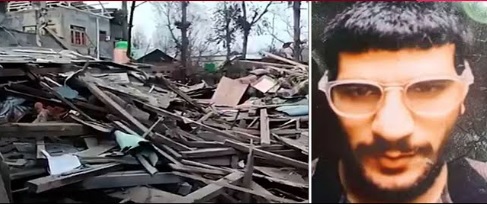
In a decisive move aimed at striking back at terrorism, Indian security forces demolished the house of accused bomber Dr Umar Mohammad (aka Umar un‑Nabi) in Pulwama, Jammu & Kashmir. The tit-for-tat action comes after his alleged role in the car blast near Red Fort in Delhi that took 13 lives and injured many more.
The demolition is not merely symbolic. It represents a tit-for-tat response to terror — an unambiguous statement that those who carry out attacks, or abet them, will see their support networks and safe havens dismantled. Such response is increasingly the need of the hour.
A strong retaliation
Authorities identified Dr Umar as the driver of the explosive-laden Hyundai i20 that detonated near the Red Fort. Forensic DNA analysis of a fragment recovered from the vehicle was matched with his mother’s DNA, confirming his involvement.
In response, overnight operations led to the house in Pulwama being destroyed by security forces. The destruction of the residence is being treated as part of the counter-terror strategy.
Such tit-for-tat actions send multiple signals: to terrorists that their acts will invite direct repercussions; to their networks that vocational and logistical backing will be targeted; and to the public that the state will not passively allow terror to flourish.
Why tit-for-tat is relevant now
Deterrence effect: When homes and assets of accused terrorists are demolished, it raises the cost of terror plotting. The equation for those thinking about engaging in or helping terrorism shifts from “I may get caught” to “If caught, my base of support and property will also be gone.”
Cutting support networks: Terror plots thrive not merely on the operative but on the safe houses, the familial or local backup, and the infrastructure around them. Demolishing the home sends a message to the broader ecosystem: support isn’t “safe”.
Symmetry in response: Terror delivers violence to civilians; the state must respond in a proportional, visible way. Tit-for-tat doesn’t mean revenge, but reciprocity that reflects the seriousness of the act and helps maintain credibility of deterrence.
Reassuring the public: With the attack in Delhi in a high-profile area, public trust in security needs visible action. The demolition reassures that not only is investigation underway, but consequences follow.
Breaking impunity: Terrorism often relies on the perception of being able to act with impunity. By swiftly removing the infrastructure (even domestic home) of the accused, the impression of impunity is challenged.
Risks and caveats
While tit-for-tat demolitions have utility, they also carry risk:
Collateral damage / perception issues: Care must be taken that innocent family members or neighbours are not unjustly swept up. Legitimate concerns arise if non-participants suffer.
Legal safeguards: Even strong action must respect rule of law and due process to remain credible in democratic societies.
Messaging to vulnerable communities: In areas like Kashmir, where sentiment is sensitive, the state must couple force with outreach so that the response does not fuel alienation.
Sustainable strategy: Demolition is one tactic; the broader fight against radicalisation, recruitment, ideology and logistics must continue.
Conclusion
The demolition of Dr Umar’s house is a potent example of tit-for-tat action that the state can deploy: one that is timely, visible and tied directly to a terror act. In an era where terror strikes unpredictably and the support networks behind it are diffuse, such responses help reset the balance.
Yes, force alone won’t end terrorism — but when an attack blindsides a capital and causes civilian deaths, the message back must be clear: “We know you, we will reach you, your structures won’t remain untouched.” In that sense, tit-for-tat is not mere retaliation — it is a calculated strategy of deterrence and disruption, very much the need of the hour.





