









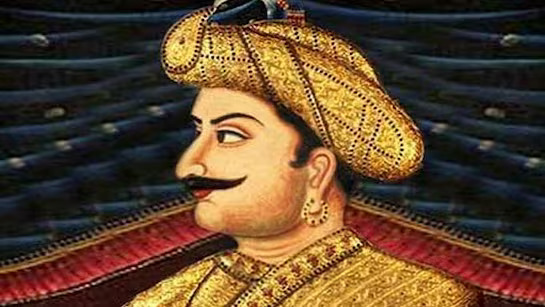
For decades, a politically curated narrative has been pushed in academic circles: that beef consumption among Kerala Hindus is an ancient, organic cultural practice. But this claim collapses the moment primary sources are examined honestly. Archaeological evidence, epigraphic records, temple donations, foreign travellers’ accounts, and Kerala’s own literary tradition together show a consistent pattern cow veneration, not cow slaughter, defined Hindu society in Kerala. What disrupts this long cultural continuity is not antiquity but the late 18th century, when Tipu Sultan’s expansionist and religiously motivated campaigns swept through Malabar.
Author Aabhas Maldahiyar’s recent documentation on X revived a neglected part of Kerala’s history: the forced circumcision and beef consumption imposed by Tipu Sultan as evidence of coerced conversion to Islam, documented in British-era primary sources. This inconvenient truth ruptures the propaganda that modern “beef culture” in Kerala is a historical Hindu practice. Far from it the earliest recorded, systematic introduction of beef-eating among local Hindus traces precisely to Tipu Sultan’s violent rule.
The most direct evidence comes from early colonial documentation. Asiatic Researches, Vol. 5 (1799), p. 33 records explicit testimony that Hindus in Malabar were compelled to consume beef and undergo circumcision to prove their conversion to Islam. This is not an interpretation this is a primary source written at the time these atrocities occurred.
Another contemporaneous record Tipu Sultan’s letter to Budruz Zuman Khan, dated 13 February 1790, preserved in Selected Letters of Tipoo Sultan (ed. Kirkpatrick) praises the officer for forcibly circumcising 135 Nairs. These letters dismantle the modern attempt to portray Tipu as a misunderstood hero. They show a ruler who weaponised religious humiliation especially beef-eating to crush Hindu resistance and enforce Islamic identity on conquered populations.
So when historians claim that “Hindus of Kerala ate beef traditionally,” they must explain why such coercive beef-eating orders needed to be imposed by Tipu Sultan in the late 18th century something unnecessary if the practice had genuinely existed before.
Aabhas Maldahiyar’s argument is strengthened further by material evidence. The Pattanam excavations, Kerala’s largest archaeological project, offer no traces of cattle slaughter among ancient local populations. P. J. Cherian, director of KCHR an institution not driven by right-wing narratives—writes in the official report:
I don’t speak without evidence. The so-called “Hindu cow-meat-eating culture” in Kerala appears only around 1788, when Tipu Sultan enforced circumcision and beef-consumption as proof of coerced conversion to Islam.
Look at Image 1; a direct extract from Asiatic Researches, Vol.… https://t.co/0vy6hAuVpt pic.twitter.com/oibeuP4AIr
— Aabhas Maldahiyar 🇮🇳 (@Aabhas24) November 14, 2025
“The faunal remains indicate goat, buffalo, sheep, pig, marine fish—but no evidence of cattle slaughter for meat consumption.”
This is the closest thing to irrefutable archaeological proof. If beef were central to Kerala’s ancient food culture, cattle bones would have appeared in large quantities. They do not.
Equally important, Sangam literature does not represent Kerala. Tamil Sangam references to cattle slaughter exist but describe Tamilakam, not Chera society. Even within Tamilakam, cow slaughter is rare, usually linked to fringe groups, rituals, or condemned acts. Kerala’s own literature, temple charters, and inscriptions instead show a deeply rooted cow-veneration system.
Chera-era inscriptions repeatedly mention:
Donations of cows to temples
Severe fines for harming cattle
Royal protection for cows and cowherds
Cows gifted for eternal temple lamps
The Thiruvalla copper plates (9th century) record grants of cows for temple deepas.
The Jewish copper plates of Bhaskara Ravi Varman (10th century) belong to a period when harming temple cattle was strictly forbidden.
These epigraphic records prove a clear pattern: cows were sacred economic and religious assets, not food.
Foreign visitors confirm the same.
Duarte Barbosa (1516) writes:
“The people of Malabar revere the cow greatly and do not eat its flesh.”
Al-Biruni (11th century) records:
“They hold the cow sacred; its slaughter is forbidden.”
Such consistency across archaeology, literature, inscriptions, and foreign accounts over a thousand years forms a historic truth: Kerala’s Hindu society venerated cows and did not consume beef traditionally.
Against this backdrop, Tipu Sultan’s actions stand out as deliberate cultural destruction, not merely wartime atrocities. Modern textbooks describing him as a “secular freedom fighter” betray historical truth. Numerous documented letters and eyewitness accounts reveal a ruler driven by Islamic expansionism and hostility toward Hindu communities.
Historians like Kirmani, Panicker, Sita Ram Goel, and Narasingha Sil cite letters where Tipu boasts about converting over 12,000 Hindus, including Namboodiri Brahmins. In a letter sent on March 22, 1788, Tipu orders:
“No Namboodri Brahmin should be spared.”
Another letter to his Calicut commander (14 December 1788) instructs:
“Capture and kill all Hindus… 5000 from the rest should be killed by hanging from tree tops.”
In 1790, Tipu declares his Calicut campaign to be “Jihad”.
Tipu’s brutality is also evident in temple destruction. ASI records show that he demolished at least three major temples including the Harihareswara temple at Harihar and the Varahaswami temple at Srirangapatna.
Historian Roderick Mackenzie (1793) describes Hindu temples being shelled by artillery, their deities desecrated, and Brahmins murdered. Portuguese traveller Fra Bartolomeo documents Hindus tied to elephant legs and torn apart acts of pure terror meant to subjugate Kerala and Coorg.
Tipu’s own sword bore the inscription:
“My victorious sabre is lightning for the destruction of the unbelievers.”
This was not a secular king.
This was a bigot wielding religion as a weapon.
The most politically inconvenient truth is this: the earliest systematic record of beef-eating among Kerala Hindus appears only during Tipu Sultan’s invasion of Malabar.
Primary sources record:
Forced circumcision
Forced beef consumption
Forced conversion of entire families
Punishments for refusing meat
Historian Narasingha Sil notes that in 1788 alone, 200 Brahmins were forced to consume cow meat.
The purpose was clear:
To humiliate Hindus, erase their cultural identity, and replace it with the Islamic markers of Tipu Sultan’s rule.
This is how Kerala’s so-called “beef culture” entered. Not through ancient tradition not through Sangam poetry not through local customs but through coercion by an invading ruler.
Even today, in parts of Tamil Nadu and Kerala, villagers remember Tipu not as a nationalist hero but as:
“Killer of Brahmins and demolisher of temples.”
The modern glorification of Tipu Sultan is not based on historical evidence but on political agendas. Marxist and Islamist historians sanitised his atrocities, while Congress-era textbooks whitewashed his religious bigotry. But the sources are unambiguous: Tipu’s rule in Malabar introduced forced beef-eating, cultural humiliation, mass conversions, temple destruction, and widespread killings.
Kerala’s history shows a civilisation that revered cows, protected them through law, and honoured them through temple tradition. The abrupt appearance of beef consumption during Tipu’s campaigns exposes the lie of “ancient beef culture.”
History becomes dangerous when it is rewritten to suit ideological convenience.
And restoring truth is the first step to honouring the trauma of those who suffered and recognising how deeply Tipu Sultan scarred the cultural fabric of South India.