




















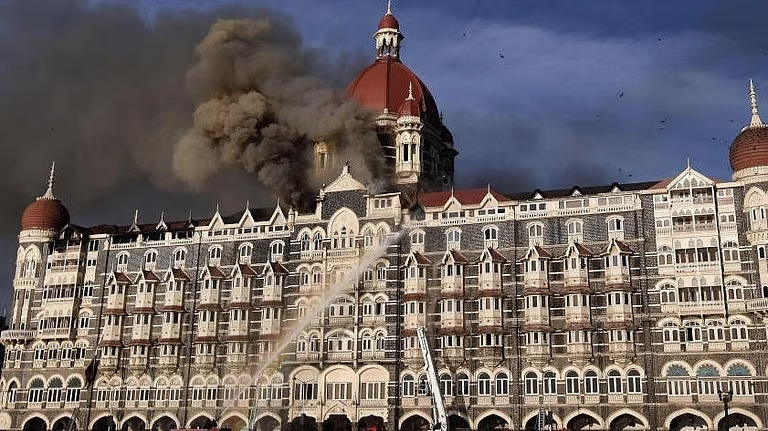
More than a decade after the devastating 26/11 Mumbai terror attacks, India continues to grapple not only with the trauma of the event but also with the unanswered questions that orbit it. The attacks remain one of the most meticulously planned and executed acts of terrorism on Indian soil. Ten armed men from the Lashkar-e-Taiba (LeT) infiltrated Mumbai, struck multiple high-profile locations, held the city hostage for nearly three days, and exposed glaring weaknesses in India’s security apparatus.
But among the many layers of inquiry—operational lapses, communication breakdowns, intelligence misses—one question has persistently surfaced: Was there an insider?
Could such a coordinated, multi-targeted assault unfold so seamlessly without some form of internal support, overlooked systemic weaknesses, or compromised elements?
While official investigations have addressed many dimensions of 26/11, these questions remain suspended in public memory, unresolved and unsettling.
A Meticulously Executed Attack—Too Precise to Ignore
The attackers navigated Mumbai’s coastline, entered the city undetected, split into teams, and struck iconic landmarks almost simultaneously—the Taj Mahal Palace Hotel, Oberoi Trident, Chhatrapati Shivaji Terminus (CST), Nariman House, and Leopold Café. Their movements appeared guided, informed, and unnervingly accurate.
This level of precision raises difficult but necessary questions. Were they coached remotely in real time? Yes—investigations revealed handlers directing them from Pakistan. But was that enough to explain how they maneuvered through Mumbai’s complex urban sprawl, chose high-value choke points, and executed a sustained assault for nearly 60 hours?
Some security analysts argue that the terrorists’ deep familiarity with building layouts and escape routes suggests either extensive pre-attack reconnaissance or access to information that outsiders would struggle to obtain. The idea of an insider does not necessarily imply someone actively collaborating; it may also refer to security gaps, overlooked vulnerabilities, or leaked information that inadvertently enabled the attackers.
The Troubling Intelligence Trail
In the months before 26/11, Indian intelligence agencies had reportedly received several alerts about a potential maritime attack on Mumbai. Warnings referenced hotels, Jewish centres, and crowded public spaces. Yet, despite the frequency and specificity of these alerts, preventive action remained insufficient.
Why were these warnings not acted upon more decisively? Was it bureaucratic inertia, inter-agency communication breakdowns, or something more concerning—compromised channels that diluted the urgency of actionable intelligence?
Even the attackers’ intercepted communications on the night of the assault, transmitted live to their handlers, suggest their real-time decisions were influenced by updated information that may not have been publicly accessible. Whether this information was gathered during reconnaissance or acquired from compromised sources is still a matter of debate.
The Coastline Conundrum
Another major point of speculation revolves around the terrorists’ undetected entry through the sea. They hijacked an Indian fishing trawler, sailed into Mumbai waters, and landed near Badhwar Park—slipping past the Coast Guard and the Mumbai Police’s coastal security network.
Could such a breach occur without negligence—or worse, without someone overlooking protocols? Investigations did highlight systemic lapses: inadequate surveillance mechanisms, outdated patrol boats, and poorly coordinated coastal defenses. But the nagging question persists: Were these simply failures, or were vulnerabilities known and exploited with suspicious accuracy?
While there is no official confirmation of insider facilitation in this phase, the combination of ignored intelligence, porous coastal borders, and timed precision continues to fuel speculation.
Inside the Hotels: Knowledge or Guidance?
The 26/11 attackers displayed a remarkable understanding of hotel layouts—especially the Taj, a vast and intricate structure. They navigated service corridors, upper floors, stairwells, and guest areas with speed that many believe exceeded what a first-time intruder could manage under immense pressure.
Some explanations suggest they obtained architectural plans online or acquired reconnaissance footage from prior visits by operatives posing as guests. Others theorize that their remote handlers had access to leaked building layouts.
Whether this qualifies as “internal support” remains unproven. But it does highlight the vulnerability of critical infrastructure to information leaks—intentional or accidental.
The Crux: Unanswered Questions That Refuse to Fade
The core of the lingering unease around 26/11 can be distilled into three critical questions:
Was there an insider?
Could such a meticulously coordinated assault happen without internal support or compromised elements?
Why do crucial questions surrounding 26/11 still remain unanswered, even today?
These are not accusations—they are reflections of the gaps that still permeate public understanding of the event. The official narrative accounts for the broad strokes: Pakistan-based handlers, LeT training, maritime infiltration, and multi-site attacks. But the intricate details—the intelligence lapses, the operational loopholes, the logistical precision—leave room for doubt and demand thorough scrutiny.
A Call for Transparency and Preparedness
For India, 26/11 was not just a tragedy; it was a turning point. Security reforms followed, coastal surveillance improved, and inter-agency intelligence sharing strengthened.
Yet, the shadow of unanswered questions continues to loom. Democracies thrive on transparency, accountability, and the courage to confront uncomfortable truths. Whether or not insider help played a role, the fact that the question still lingers indicates the need for deeper clarity.
As the years pass, remembering 26/11 is not only about honouring the victims—it is about ensuring that every gap, every failure, every ambiguity is studied with honesty. Only then can the lingering doubts be dispelled, and the nation truly move forward.





