
India witnessed a moment of profound national pride as Prime Minister Narendra Modi led the nation in celebrating 150 years of “Vande Mataram”, the song that once stirred the soul of India’s freedom struggle. The grand event, held at Indira Gandhi Indoor Stadium in New Delhi, brought together thousands of citizens, cultural leaders, students, and freedom fighters’ descendants in a stirring tribute to Bankim Chandra Chattopadhyay’s immortal composition.
The key highlight of the morning was the mass singing of the full version of “Vande Mataram” an act of historic restoration by the Modi government, which accepted and made public the song’s complete original text after nearly eight decades. Earlier, the Congress government, in the years following Independence, had removed certain stanzas due to objections from a section of the political and religious elite. Today the nation sang the entire song in its pure, unabridged Sanskrit form, echoing through stadiums, schools, and public squares across the country.
During the event, Prime Minister Modi released a commemorative stamp and coin honouring 150 years of the national song, marking the beginning of a year-long celebration that will continue till November 7, 2026. The ceremony also featured live linkups with over 500 locations nationwide, where lakhs of citizens joined the synchronized rendition a symbolic reaffirmation of unity, heritage, and pride.
Birth of a Song That Awakened a Nation
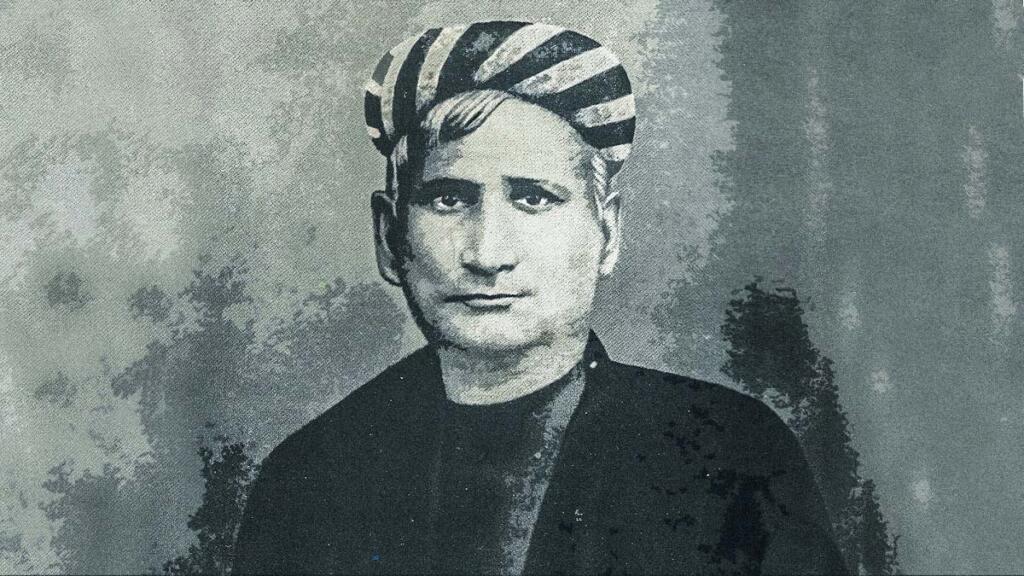
The origins of Vande Mataram trace back to November 7, 1875, when Bankim Chandra Chattopadhyay, a civil servant and novelist, composed the song during Akshaya Navami. It was first published in the journal Bangadarshan and later immortalized in his iconic novel Anandamath in 1882.
At its core, Vande Mataram was more than poetry it was an act of defiance, written at a time when India was under the oppressive British Raj. Through its verses, Bankim portrayed the motherland not merely as territory, but as a divine embodiment of strength, fertility, and spiritual splendour. The words “Sujalam, suphalam, malayaja shitalam” painted an India both blessed and bound, awakening a people’s consciousness against servitude.
The song’s composition was inspired by a moment of colonial humiliation. While serving as Deputy Collector in Murshidabad in 1873, Bankim was publicly insulted by a British officer, Colonel Duffin, after his palanquin briefly obstructed a cricket field. The officer dragged and struck him before onlookers a degrading act that encapsulated the racial arrogance of British rule. When Duffin was later compelled by court to apologise publicly, it became a rare victory for an Indian official. It is said that this moment ignited the fire that later found expression in Vande Mataram a lyrical rebellion wrapped in devotion.
The Sacred Anthem of Freedom
From the 1880s onward, Vande Mataram spread like wildfire across the subcontinent. Its first public rendition was delivered by Rabindranath Tagore at the 1896 Kolkata session of the Indian National Congress. The audience stood in reverence as Tagore’s voice carried the song’s melody through the gathering a moment that transformed it from a poem into a national prayer.
By the early 1900s, during the Swadeshi Movement of 1905, Vande Mataram had become the heartbeat of India’s resistance against the Partition of Bengal. The streets of Calcutta resounded with cries of “Vande Mataram!” as students, women, and revolutionaries defied British bans. The song united people across regions and languages, creating a common identity rooted in reverence for the motherland.
Freedom fighters like Sri Aurobindo, Bipin Chandra Pal, and Lala Lajpat Rai hailed it as the anthem of liberation. Mahatma Gandhi would later describe it as “the cry that awakened India.” Subhas Chandra Bose ensured that the Indian National Army adopted it as its marching song, while revolutionaries chanted it before being led to the gallows.
It was more than music it was India’s soul put to verse
The Post-Independence Silence and Political Erasure
Despite its towering legacy, Vande Mataram became a victim of post-Independence politics. During the 1937 Congress session, certain leaders swayed by the Muslim League’s objections decided that only the first two stanzas of the song, which do not reference Goddess Durga, would be officially recognized. After 1947, the Congress government maintained this truncated version, sidelining the remaining verses that embodied the song’s spiritual power.
The argument, cloaked in the language of secularism, effectively disfigured the original composition, turning a hymn of national unity into a political compromise. Although Dr. Rajendra Prasad, in 1950, declared Vande Mataram to be equal in honour to the national anthem “Jana Gana Mana”, it was never given the same constitutional recognition.
For decades, the full song remained confined to books, stripped of its rightful space in the national conscience. This selective amnesia not only diluted Bankim’s vision but also erased the spiritual essence that once bound India’s freedom fighters.
Prime Minister Modi’s 2025 decision to restore and release the complete original text has thus been hailed as a historic correction a reclamation of India’s civilisational pride. By bringing back the song in its entirety, the government has reaffirmed the unbroken continuity of Indian nationalism, rooted not in politics but in devotion to the motherland.
The Cultural Legacy of “Vande Mataram”
Over 150 years, Vande Mataram has transcended the boundaries of religion, language, and generation. It has been translated into dozens of Indian languages, adapted into countless musical renditions, and etched into the memory of every patriotic movement.
Gurudev Tagore composed its first tune, and Aurobindo interpreted its spiritual symbolism as the union of Bhakti (devotion) and Shakti (power) the eternal feminine energy that sustains Bharat. During the independence struggle, even when the British outlawed the song, Indians continued to sing it in defiance, often facing arrests. It became the unifying cry of the revolution, from Bengal’s processions to the INA’s battlefields.
Today, its return in full glory under the leadership of a government that celebrates India’s heritage unapologetically has rekindled the same emotion that once swept through the freedom movement. Schools, military units, and universities across India participated in the nationwide singing, reminding the world that Vande Mataram remains as relevant as ever a hymn to the eternal mother, Bharat Mata.
The 150th-anniversary celebration of Vande Mataram stands as a turning point in India’s cultural renaissance. What unfolded in Delhi was not just a musical tribute but a reawakening of India’s civilisational memory.
The event bridged centuries from the anguish of colonial humiliation to the pride of an independent nation singing as one.
As the chants of “Vande Mataram” echoed across the country on November 7, 2025, it was more than an anniversary. It was India rediscovering its own heartbeat the same rhythm that once guided millions to freedom.