
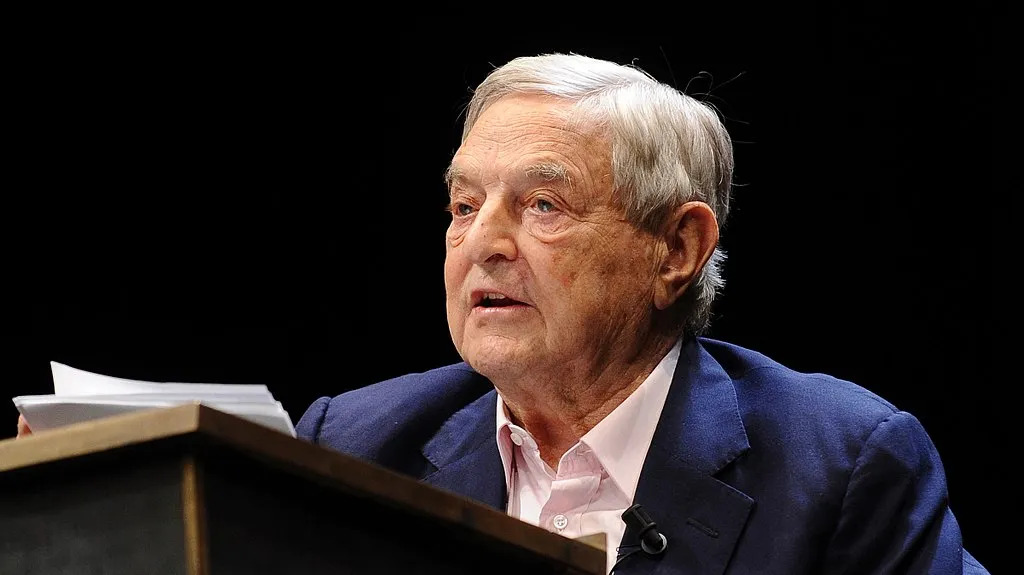
The philanthropic arm of billionaire George Soros — the Open Society Foundations (OSF) — provided a grant of $250,000 to establish a Middle East desk at the digital outlet Drop Site News, which presents itself as a “reader-supported” independent platform but allegedly advances a consistently anti-Israel narrative.
Funding & Disclosure Gaps
OSF says the grant was awarded last year to help “bridge a crucial information gap in independent journalism” focused on the Middle East.
However, Drop Site News has not publicly disclosed this funding in its fundraising materials or donor-appeals, even though the outlet’s fiscal sponsor — the Social Security Works Education Fund — is cited in its appeals as a means for tax-deductible donations to Drop Site.
The money from OSF was reportedly funneled through Social Security Works to Drop Site, earmarked “to support establishing a Drop Site News MENA desk to bridge a critical information gap in independent journalism.”
Yet the donor disclosures offered by Drop Site present the outlet as being fully reader-supported, leaving the role of this major grant opaque.
Editorial Focus & Narrative
Founded in July 2024 by veteran left-wing journalists Ryan Grim and Jeremy Scahill, Drop Site News quickly turned its attention to the October 7 2023 attacks by Hamas and the ensuing Israel–Hamas war in Gaza.
Its initial major story was a series of interviews by Scahill with Hamas leaders, described as providing “public deeper insight into [Hamas’s] decision to launch the October 7 attacks in Israel.”
A key claim from one piece: “The past nine months of Israel’s genocidal war in Gaza have spurred an unprecedented global awakening to the plight of the Palestinian people.”
Critics argue that the editorial direction is heavily tilted:
-
Drop Site has focused primarily on coverage of Israel and Gaza, rather than broader Middle Eastern or domestic topics such as Social Security (which its fiscal sponsor name suggests).
-
Some of the outlet’s key figures have been tied to previously debunked claims — for example, Grim reportedly propagated a false narrative that Israeli forces massacred civilians at a food-distribution site, and reported incorrectly that White House staffer Merav Ceren once worked for Israel’s Ministry of Defense. Drop Site has criticized other outlets for alleged opaque pro-Israel funding while itself not fully detailing its own philanthropic backers. For instance, one article claimed 16 journalists were involved in a program to help Israel “win its information war” — a claim publicly dismissed by one of the named journalists, Van Jones, as “totally bogus.”
Implications & Concerns
The combination of a large philanthropic grant (from a well-known figure), a platform positioning itself as independent and reader-supported, and a focused editorial lens raises several concerns:
-
Transparency: Readers may assume the outlet is mainly supported by small individual donations, while major institutional funding may play a significant role.
-
Editorial influence: Funding earmarked for a specific desk (Middle East) raises questions about whether editorial priorities reflect funder intent, even if indirectly.
-
Narrative framing: The concentration on one side of a multifaceted conflict and past engagement of staff in questionable reporting suggests potential bias rather than balanced coverage.
-
Public trust: Media outlets claiming independence while receiving large grants from politically engaged philanthropic organizations may undermine trust among audiences seeking objective journalism.
Broader Context
Philanthropic funding of media is not inherently problematic — many outlets rely on foundations, grants, and donations to survive. However, when funding is not transparently disclosed or when it aligns closely with editorial priorities, it creates tensions between journalistic independence and donor interest. In the case of the Israel-Gaza war, where narratives are highly contested and polarised, the source of funding gains additional importance.
The statement from OSF emphasises a “critical information gap in independent journalism” in the Middle East. This gap is real, given the dangers, restrictions, and challenges faced by reporters in the region. Still, critics argue that filling the gap with outlets that espouse a clearly partisan perspective while calling themselves independent may blur the line between journalism and advocacy.
What to Watch
For readers and media watchers, several developments are worth monitoring:
-
Whether Drop Site News updates its donor disclosures to clearly reflect the OSF funding and other major gifts.
-
How the outlet’s coverage evolves: will it broaden beyond the Israel-Gaza conflict, how balanced will its reporting be, and how will it treat opposing perspectives?
-
Whether other philanthropic actors follow a similar model — using grants earmarked for specific regional desks — and how that might shift media dynamics in conflict zones.
-
How outlets labelled “independent” engage with funding sources: transparency policies, editorial safeguards, and reader awareness will all matter for credibility.
Conclusion
The story of Drop Site News and the Soros-related grant illuminates tensions at the intersection of philanthropy, journalism and geopolitics. On one hand, there is a genuine need for well-resourced media coverage of the Middle East. On the other, when funding is significant, targeted, and not fully transparent — and when editorial slant appears aligned with donor interests — the claim of full independence becomes harder to uphold. For readers seeking clarity, the key is not just what is reported, but who enables the reporting — and how that may shape the narrative.