
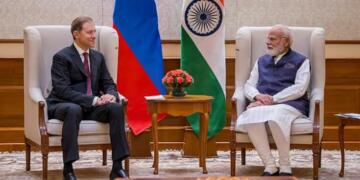








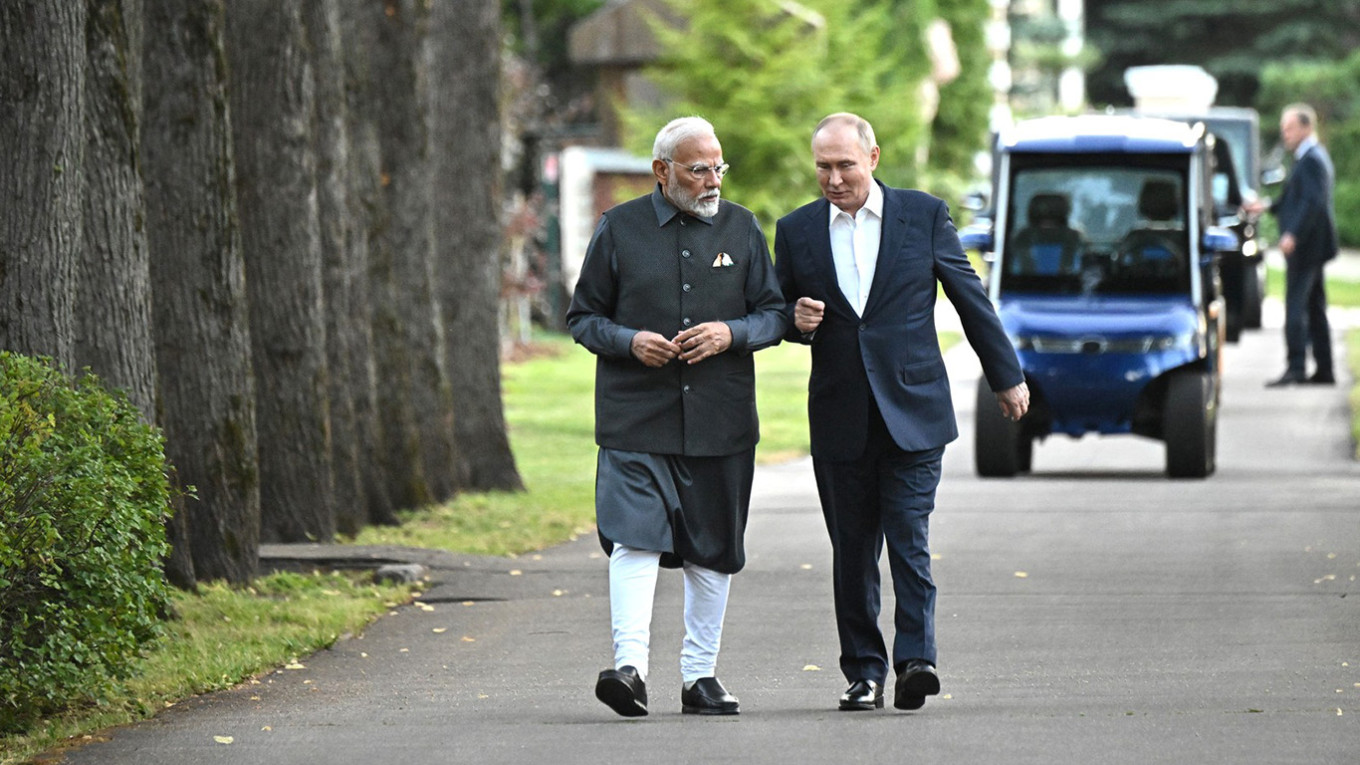
Russian President Vladimir Putin is all set to visit India on December 5. This will be Putin’s first trip to India since 2021, and yet, despite years of Western pressure, New Delhi has not only maintained the partnership with a long term ally it has also expanded it.
Earlier this week, EAM S Jaishankar held extensive talks with his Russian counterpart Sergey Lavrov.
Also S Jaishankar on Tuesday met Russian President Vladimir Putin in the Kremlin and apprised him of preparations underway for the upcoming annual India-Russia summit.
On December 5, when Vladimir Putin touches down in New Delhi, it won’t be just another ceremonial photo-op between world leaders. It will be a geopolitical shockwave, the kind that forces Washington, Brussels, and every Western capital to rethink their assumptions about India, Russia, and the future of global power. The West hoped sanctions would isolate Moscow. Instead, Putin’s arrival in India signals the exact opposite.
The 23rd India–Russia Annual Summit comes at a moment of intense global friction. After US President Donald Trump’s punitive tariffs of up to 50% on Indian goods, accusing New Delhi of “indirectly funding Russia’s war effort,” many expected India to retreat and recalibrate. It didn’t. Modi stood firm, asserting India’s sovereign right to buy affordable energy, and Putin openly praised Modi’s “refusal to be humiliated.”
Now the two leaders are preparing to unveil a slate of agreements that bluntly contradict Western predictions starting with a landmark labour mobility pact. This deal will create structured pathways for thousands of skilled Indian workers to legally work in Russia, filling labour shortages triggered by sanctions. For India, it opens new migration and income avenues. For Russia, it strengthens economic resilience. For the West, it’s a glaring reminder that their sanctions architecture isn’t working as designed.
Energy will remain the backbone of the partnership. India has emerged as Russia’s second-largest crude buyer in 2025, saving billions nearly $13 billion by purchasing discounted oil. The December summit will reinforce supply lines and expand payment systems outside the U.S. dollar, including deeper rupee-rouble settlement mechanisms.
Defence ties are set to make headlines as well. Russia, still India’s largest military supplier, is offering Su-57 fifth-generation stealth fighter technology transfers “without restrictions” a signal that Moscow trusts India in ways Washington does not always match.
Despite years of Western sanctions, India–Russia trade has soared to a record $68.7 billion in 2024–25 six times pre-pandemic levels fueled by local-currency agreements, creative logistics, and barter arrangements.
The leaders will discuss regional and global developments, including the Ukraine conflict and coordination within international bodies like the UN, BRICS, G20, and the Shanghai Cooperation Organisation (SCO), where both countries are members. Russia supports India’s demand for a permanent UN Security Council seat. A “vision” document is expected to be signed, laying out a roadmap for cooperation across various sectors including shipbuilding (such as “green shipbuilding” and ice-class vessels), space, agriculture, and infrastructure.
India and Russia have committed to boosting bilateral trade to a target of $100 billion by 2030 and exploring alternative payment solutions to circumvent Western sanctions. Key deals in oil exploration and supply, nuclear energy (e.g., increasing the number of reactors at the Kudankulam power station), and direct diamond sales are expected to be finalised.
Putin’s visit is a continuation of regular high-level exchanges and is driven by mutual strategic interests, with the goal of fostering a multi-polar order. The visit reinforces a “special and privileged strategic partnership” that has been a consistent factor of stability in international relations, allowing India to pursue its national interests on the global stage.
Ultimately, the visit is a test of India’s diplomatic skill in balancing its historic friendship with Russia and its evolving global partnerships, demonstrating its ability to engage with all major powers on its own pragmatic terms.
As December 5 approaches, one thing is clear the India–Russia partnership is not weakening under Western pressure it is hardening. And Putin’s visit may be the moment the world finally realizes that a new strategic axis is taking shape, with Delhi and Moscow at its center.