




















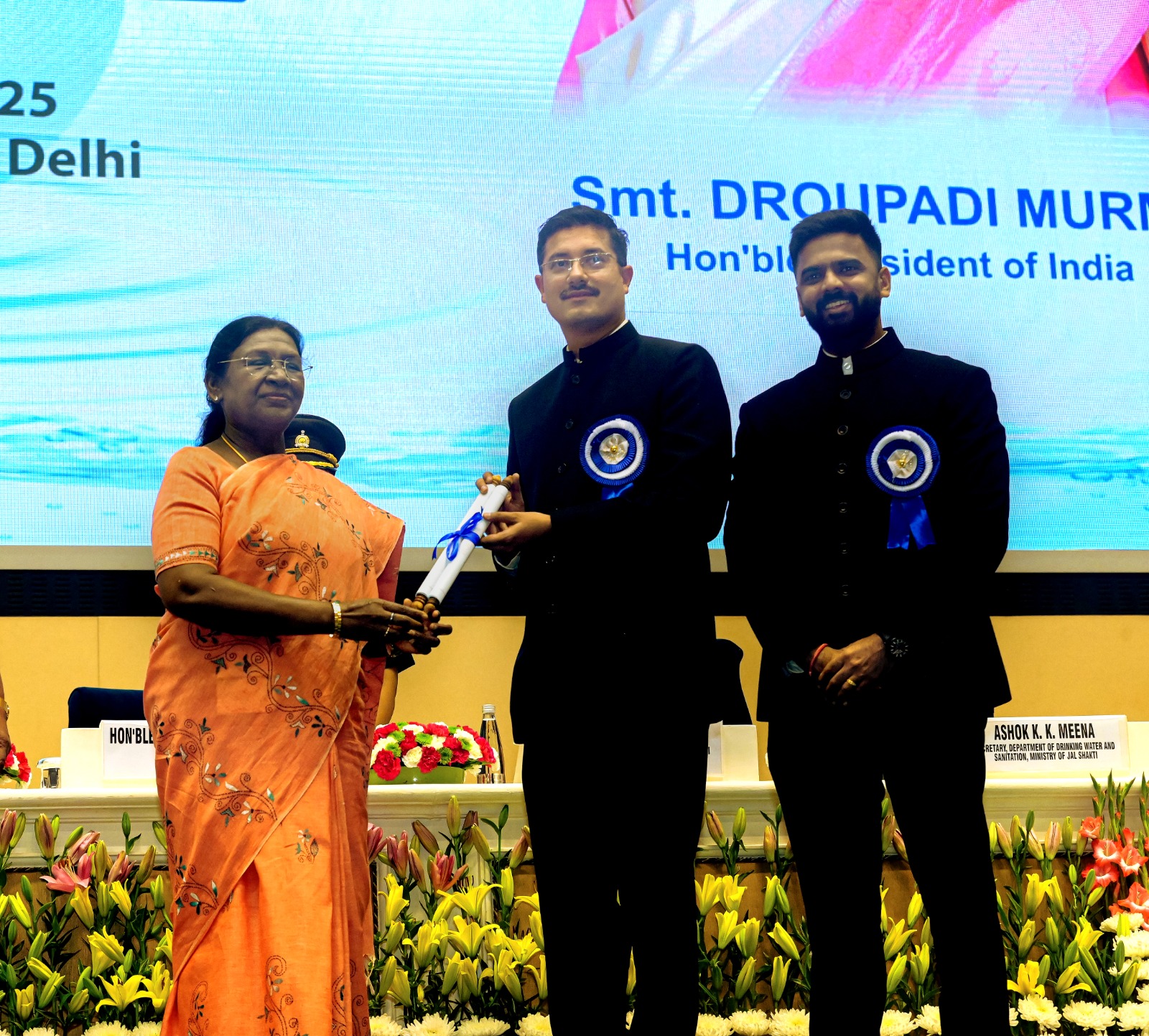
Madhya Pradesh’s Khandwa district (East Nimar) has secured the top position across India under the Jal Shakti Ministry’s flagship initiative, the Jal Sanchay–Jan Bhagidari (JSJB) campaign. At a national ceremony held at Vigyan Bhawan in New Delhi on Tuesday, President Droupadi Murmu felicitated Collector Rishabh Gupta and District Panchayat CEO Nagarjun Gowda for the district’s outstanding performance.
Khandwa Leads Western Zone With 1.29 Lakh Water Conservation Structures
Under the JSJB framework, the country was divided into five zones, and Khandwa emerged as the top performer in the Western Zone by constructing 1,29,020 water conservation structures, the highest in the country.
In other zones:
Northern Zone: Mirzapur (Uttar Pradesh) led with 35,509 structures
Eastern Zone: Balod (Chhattisgarh) topped the list
Southern Zone: Nalgonda (Telangana) reported 84,827 structures
North-East & Hilly States Zone: North Tripura constructed 11,547 structures and emerged as the winner
At the overall state level, Telangana was declared the Best Performing State.
The award falls under the Jal Shakti Abhiyan: Catch the Rain, designed to promote water conservation, rainwater harvesting, and the revival of traditional water bodies through community participation.
JSJB Campaign Exceeds National Targets With 27.6 Lakh Structures Created
The JSJB initiative was launched on 6 September 2024 in Surat, with each district assigned a minimum target of 10,000 structures. Khandwa surpassed this target by a wide margin, completing nearly 1.3 lakh structures the highest reported figure nationwide.
For its strong performance, the Government of India has awarded Khandwa a ₹2-crore incentive, which will be utilized for future water conservation and district development projects.
Across India, JSJB had initially targeted the creation of 10 lakh structures, but states collectively reported 27.6 lakh structures, reflecting widespread community involvement and effective administrative coordination.
Khandwa’s achievement is being viewed as a significant example of collaborative governance, where administrative leadership, panchayats, and local communities worked together to secure the district’s position at the top of the national rankings.