
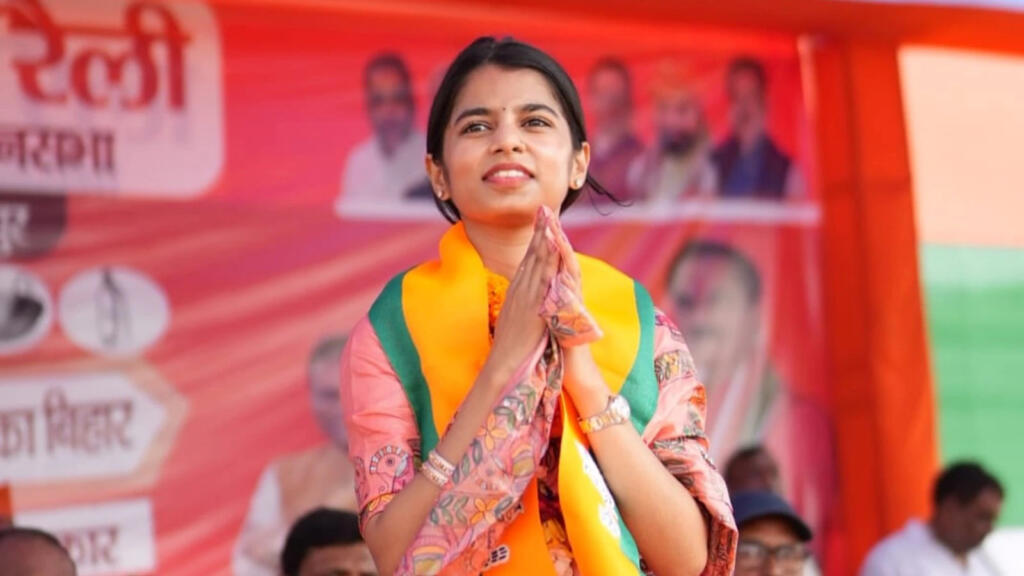
Maithili Thakur — the 25-year-old folk singer turned newly elected BJP MLA — has become the center of a fierce political storm after proposing to rename her constituency, Alinagar, to Sitanagar. What started as a cultural appeal to Mithila’s heritage has escalated into allegations of communal polarization, with critics accusing her of stirring up Hindu‐Muslim sentiment for electoral gain.
From Songstress to Symbol
Maithili Thakur is not a typical politician. A trained classical and folk singer, she shot to fame through reality shows and YouTube, and now brings that same public appeal into politics. In the 2025 Bihar Legislative Assembly elections, she won the Alinagar seat (Darbhanga district) on a BJP ticket, making history as one of the state’s youngest legislators.
Her constituency, Alinagar, is a diverse mix — home to Brahmin, Yadav, Muslim, and Dalit voters. This mix makes it politically sensitive, but also potentially ripe for symbolic gestures.
The Renaming Controversy:
During her campaign, Thakur made a striking promise: “Alinagar will become Sitanagar if I win.” Invoking Goddess Sita, she tied the region’s identity to its mythological roots in Mithila. Supporters argue this is cultural pride, a reclaiming of heritage.
Thakur later clarified that the renaming idea wasn’t originally hers. She said it came from Union Minister Nityanand Rai, during her nomination process — and she agreed, believing the name should reflect local Maithili heritage. BJP leader Prakash Reddy defended the idea too, calling it a “natural” process of restoring cultural identity and pointing to other city-name changes: Madras to Chennai, Calcutta to Kolkata, Bombay to Mumbai.
Backlash: Not Just on Social Media
But the renaming plan did not go unanswered. Critics have accused Thakur and the BJP of using it as a Hindutva strategy — a way to symbolically erase Islamic heritage or “Muslim-linked” geography. Some view it as polarization ahead of an election, rather than genuine cultural revival.
Opponents argue that changing the name of Alinagar won’t solve real issues: jobs, infrastructure, education. As one rival candidate put it, people are more interested in development than symbolic renaming. Moreover, observers see this within a broader BJP pattern: renaming places associated with Islamic history as part of a larger ideological push.
Trolls, Threats, and Online Fury
According to some reports and social media chatter, Thakur is also facing threats and trolling — particularly from what her supporters call “leftists and Islamists.” While concrete evidence of coordinated threats is thin, the discourse on platforms like Reddit reflects deep polarization.
Several users accused left-leaning critics of being unable to tolerate Hindutva-tinged cultural politics. One comment read:
“She knows Hindu-Muslim hate sells.”
Another argued that her renaming promise was “political gimmick … to gain votes,” rather than anything to do with real development.
Whether these are organized campaigns of harassment or merely spontaneous reactions, the intensity is clear. The clash is not just political but deeply symbolic — Thakur’s identity, her roots in Mithila, her cultural imagery — all have become tools (or targets) in this heated debate.
Cultural Pride or Polarization?
Supporters of Thakur view her as a unifying cultural figure. Her invocation of Sita and Maithili identity resonates deeply in Mithila. Outlook India But to her critics, this looks less like heritage revival and more like a Hindutva narrative packaged for electoral gain.
Analysts suggest that the renaming is more than just a name change — it is about political symbolism. In crowded constituencies, such symbolic politics can be a powerful tool to shape public memory and affiliations.
The Real Stakes for Alinagar
What’s truly at stake is not just the name of a place, but how communities see themselves, and how new political leaders navigate identity and development.
-
For Thakur, this is a statement of Maithili pride — a chance to root her politics in cultural heritage, not just party lines.
-
For the BJP, it’s a strategic move: using cultural symbolism to consolidate Hindu votes in a mixed constituency.
-
For the opposition, it’s a red flag: name changes like this could marginalise some voters or rewrite public memory.
-
For the voters, especially the youth, tourism, jobs, schools, health — the name on the map may matter less than what the MLA actually delivers.
A Young Voice Amid Ancient Symbols
Maithili Thakur’s rise from folk singer to MLA is meteoric. Her attempt to rename Alinagar to Sitanagar has opened up a bigger conversation — about identity, history, religion, and political strategy. Is it a heartfelt homage to her roots, or a calculated Hindutva gambit? The truth may lie somewhere in between.
What remains clear is that her political debut has turned Alinagar into a symbolic battleground, not just for cultural identity but for power, memory, and narrative. Whether she will deliver on her campaign promises or simply become another actor in identity politics is a story still unfolding — but one that is undeniably relevant in today’s India.