









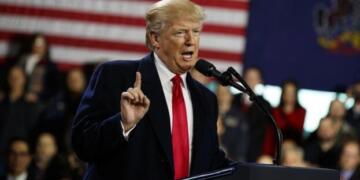












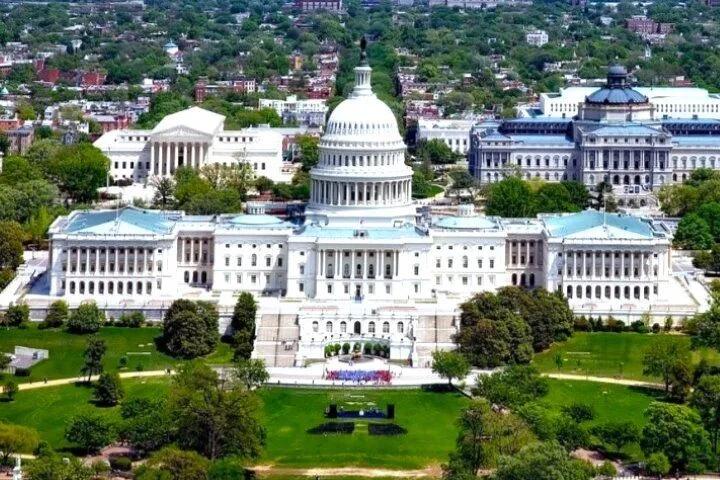
US President Donald Trump on Wednesday night signed a government funding bill, bringing an end to the nation’s record 43-day shutdown, a standoff that left federal workers without pay, disrupted air travel for thousands, and sent many Americans to food banks for assistance.
This came after 43 days of gridlock, missed paychecks, and mounting national frustration as Trump signed into law a bipartisan funding package passed by both the Senate and the House, officially reopening the federal government.
The shutdown deepened partisan divisions in Washington, as Trump took unprecedented steps, canceling projects and attempting to dismiss federal workers in a bid to pressure Democrats to back down from their demands.
A Senate Standoff Turns Stubborn
The crisis began when lawmakers failed to agree on a budget before the October 1 fiscal year deadline. House Republicans passed a short-term measure on September 19 to extend government funding through November 21, but Democrats in the Senate refused to support it without action on expiring health care tax credits under the Affordable Care Act (ACA).
Those credits, which help millions of Americans afford insurance premiums, were set to expire — a prospect Democrats argued would cause “eye-popping increases” in health costs.
Senate Republicans, led by Majority Leader John Thune, insisted on a “clean” funding extension, arguing that policy disputes should be handled separately from budget negotiations. The standoff stretched for weeks, as Senate Republicans put the House measure up for a vote 14 times, each attempt blocked by a united Democratic caucus.
Meanwhile, the shutdown’s impact deepened as airports faced chaos, millions risked losing food aid, and federal workers missed paychecks, pushing both parties closer to a breaking point.
A Bipartisan Undercurrent Emerges
Even as leaders clashed publicly, quiet bipartisan talks began behind the scenes. Moderate senators from both parties met repeatedly in October, hoping to build a path toward reopening the government.
Among them was Sen. Katie Britt (R-Ala.), who said she spoke with Senate Minority Leader Chuck Schumer on Oct. 30 to “lay the foundation” for continued work on appropriations.
Although Schumer ultimately didn’t back the final deal, the talks helped prove that Republicans were open to bipartisan budgeting — a breakthrough that became key to the final resolution.
By early November, a potential compromise was taking shape: the government would be funded through a package of three long-term appropriations bills, and Democrats would receive a guaranteed Senate vote in December on extending ACA tax credits.
But even as momentum built, the impasse stretched on after Democratic victories in off-year elections, which emboldened party holdouts to demand stronger concessions on health care.
House Speaker Mike Johnson, meanwhile, announced he would not commit to a House vote on the ACA tax credits, further complicating negotiations.
The Long-Sought Breakthrough
The deadlock finally broke on November 9, when eight Senate Democrats joined Republicans to advance a funding measure as part of a broader agreement.
The deal, brokered by Sens. Jeanne Shaheen, Maggie Hassan, and Angus King, secured the long-demanded December vote on ACA tax credits while restoring food aid at higher levels and reversing all government layoffs that had occurred during the shutdown.
Sen. Tim Kaine (D-Va.), one of the eight Democrats, said his top priority was protecting federal workers.
“It was the right provision which brought him over, which brought a couple other people over, too,” said Sen. Markwayne Mullin (R-Okla.), crediting the White House’s inclusion of the layoff-reversal language with sealing the deal.
With coordination between the Senate, House, and the White House, the measure swiftly moved through Congress. The House approved the bill late Wednesday, and hours later, President Trump signed it in an Oval Office ceremony, hailing it as a victory against political brinkmanship.
“We’re sending a clear message that we will never give in to extortion,” the president declared, applauding congressional Republicans and the moderate Democrats who helped end the standoff.
Aftermath and a Path Forward
The bipartisan accord not only reopened the government but also laid the groundwork for a more cooperative appropriations process going forward.
It brought a close to six weeks of uncertainty that tested the endurance of millions of Americans and the patience of Washington lawmakers alike.
While both sides claimed elements of victory, one thing was clear: after 43 days of gridlock, the American people were the ones who finally forced Washington to act.





