
The attack on the Indian Army’s 166 Field Regiment camp in Nagrota on November 29, 2016, did not unfold like an ordinary infiltration.
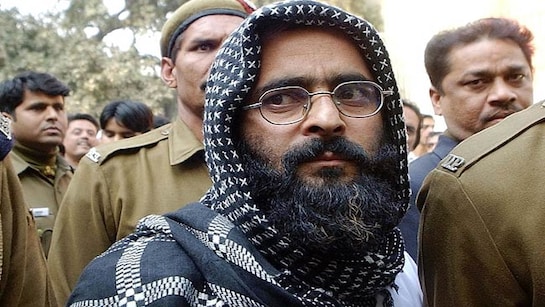
It was the work of a dedicated Jaish-e-Mohammed unit, a group Pakistan’s own handlers had branded the “Afzal Guru Squad” — created for operations that carried both symbolic value and strategic weight.
The three terrorists who stormed the camp that morning were not acting out of ideology alone. They were the operational edge of a chain that began in Pakistan and ended inside a residential block of an Indian Army installation.
For years before Nagrota, security agencies had picked up references to the Afzal Guru Squad during attempted infiltrations along the Line of Control.
JeM had been using the label as part of its propaganda machine, invoking Afzal Guru to present its attacks as spontaneous “revenge”, even though the operational design of these missions always pointed to senior-level direction from Pakistan.
Nagrota removed any ambiguity about that connection. The terrorists crossed into India from the international border sector — a route historically used by Pakistan-backed groups — and were moved across Jammu and Kashmir through a familiar underground network. Safe houses were arranged.
Transport was coordinated. Local over-ground workers monitored patrol timings and identified approach routes. The journey was not improvised. It was engineered by a system that has long operated under Pakistan’s protection.
Once the terrorists reached Nagrota, their movements inside the camp showed clear preparation. They wore police uniforms to bypass the first layer of scrutiny. They headed directly toward the living quarters, choosing the area of the camp most likely to trigger panic and create a hostage crisis.
Their behaviour reflected training in close-quarter combat and instruction from handlers who understood that a high-profile strike on family accommodation would carry emotional and political impact far beyond the tactical outcome.
What the terrorists did not achieve was the prolonged siege they had planned. Indian soldiers, many of them reacting from nearby quarters with little warning, fought room to room to hold off the assault and evacuate families.
Seven soldiers were killed in the effort, but the terrorists failed to gain control of the residential area. The encounter ended within hours, a stark contrast to what JeM intended.
Two years later, the National Investigation Agency’s chargesheet revealed the structure behind the attack. Maulana Abdul Rouf Asgar — brother of JeM chief Masood Azhar and one of the organisation’s most powerful operational commanders — was identified as the planner and director of the Nagrota assault.
According to the NIA, Asgar oversaw the training of the terrorists in Pakistan, arranged their infiltration and coordinated with JeM operatives in Jammu and Kashmir who handled the logistics required for the attack.
The chargesheet made it clear that the Afzal Guru Squad was not a rogue cell. It was a Pakistan-backed assault unit acting with senior-level approval. The ideological narrative was simply a mask.
The operational reality pointed to a deliberate attempt to reassert Pakistan’s proxy capabilities after India’s surgical strikes in September 2016 disrupted the previous equilibrium.
Nagrota exposed something many within India’s security establishment had long argued: Pakistan does not merely allow groups like JeM to operate; it uses them.
The Afzal Guru Squad was a product of that approach. Its existence demonstrated how Pakistan crafts symbolic labels to give emotional cover to attacks that are, in fact, strategically timed and centrally directed.
The squad may no longer exist in name, but the network that created it continues to survive inside Pakistan. Leadership figures remain sheltered. Training infrastructure disperses and reappears. New fronts, like The Resistance Front, emerge to preserve deniability.
Nagrota remains a reminder that as long as these structures are intact, the danger they pose is not a matter of past tense.
India prevented the attack from becoming the high-casualty, long-duration crisis it was designed to be. But the message Nagrota delivered still stands: Pakistan’s proxy units may change names, but their purpose remains the same — to strike when it suits Rawalpindi’s strategic needs.
Ashu Mann is an Associate Fellow at the Centre for Land Warfare Studies. He was awarded the Vice Chief of the Army Staff Commendation card on Army Day 2025. He is pursuing a PhD from Amity University, Noida, in Defence and Strategic Studies. His research focuses include the India-China territorial dispute, great power rivalry, and Chinese foreign policy.